
10 Underrated but Brilliant Netflix Original Suspense Dramas
tarumaki
Enter the Moment
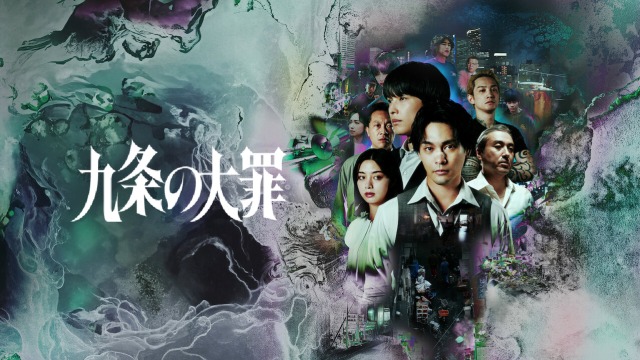
This story follows Taiza Kujo, an attorney who takes on criminals and societal outcasts as clients, and Shinji Karasuma, an elite attorney who ends up working under him.
Possessing polar opposite values, the two confront cases that waver on the precarious boundary between the law and morality.
Protagonist Taiza Kujo is an unconventional attorney who takes on cases from troublesome individuals dwelling in the underbelly of society—including semi-organized criminal gangs (“han-gure”), the yakuza, and adult entertainment operators.
Shinji Karasuma, an elite attorney graduated from the University of Tokyo who joins the Kujo Law Office, grapples with deep doubts and ethical conflicts over Kujo’s methods, which maximize client interests while completely disregarding conventional morality and ethics.
A barrage of relentless cases is brought to their doorstep: hit-and-run incidents, taking the fall for yakuza syndicates, fraud and abuse within nursing homes, and young women entangled in the dark side of the adult video industry. As persistent investigations and past grudges driven by Detective Arashiyama intertwine complexly, Kujo and his associates are dragged ever deeper into the dangerous, cascading cycle of violence in the criminal underworld.
Does a lawyer become evil by defending people who have done terrible things?
Netflix’s Sins of Kujo repeatedly brings us back to that uncomfortable question. Based on the manga by Shohei Manabe, the ten-episode crime drama follows Taiza Kujo, an attorney who accepts cases involving delinquents, organized crime members, ex-convicts, and other clients rejected by mainstream society. Yuya Yagira stars as Kujo, while Hokuto Matsumura plays Shinji Karasuma, a young elite lawyer who begins working at his office. The series premiered worldwide on Netflix on April 2, 2026.
From that premise alone, the drama may sound oppressively grim. Its cases are certainly raw, and the series never hides the painful reality that legal correctness and human emotion do not always align. Yet its appeal goes far beyond shock value. The contrast between Kujo and Karasuma, the ominous plot gradually converging on Kyogoku, the unexpected humor of its underworld characters, and its carefully controlled, cinematic imagery all work together. The result is a story that pulls the audience into a world that cannot be neatly divided into good and evil.
Here are the three qualities that impressed me most about Sins of Kujo, discussed without revealing its central twists or conclusion.
Taiza Kujo is far removed from the image of a conventional hero. He believes that a lawyer’s duty is to protect the client. Accordingly, he offers the strongest defense available within the law, regardless of whether that client is a delinquent or a member of organized crime. From the perspective of a victim—or of ordinary morality—his work can appear brutally cold. It is easy to understand why people label him a corrupt lawyer who saves criminals.
And yet, Yagira gives Kujo a curious sense of warmth. Kujo does not deliver grand speeches about justice or perform obvious acts of virtue. Still, his expressions, pauses, and casual responses reveal a compassion that refuses to reduce a human being to the word “criminal.” This compassion is not simple indulgence. It feels closer to an acceptance of contradiction: protecting one person may cause pain to another, but someone must still bear the responsibility of providing a defense.
What makes Yagira’s performance so absorbing is his refusal to explain Kujo too easily. One moment he appears detached; the next, a glance or a silence exposes an inner conflict. We are constantly tempted to ask what he is truly thinking. The public image of an unethical attorney and the private gaze of a man who still sees the humanity of his clients exist within him at once. That tension turns Kujo into a dangerous, magnetic protagonist.
Standing opposite him is Karasuma, played by Matsumura. A brilliant young attorney who graduated at the top of the University of Tokyo’s Faculty of Law, Karasuma values professional ethics and his own clear idea of justice. He observes Kujo from a position close to that of the viewer. He is confused by Kujo’s decisions and sometimes pushes back against them. However, as he witnesses Kujo confront the lives behind each case, he gradually begins to understand the conviction beneath those decisions.
They are not a perfectly synchronized duo from the beginning. Their opposing beliefs give their conversations tension and, at times, understated humor. Karasuma’s effort to understand Kujo also becomes the path through which the audience approaches Kujo’s inner world. In an interview, the actors explained that, later in filming, they discussed whether Karasuma would notice and respond to Kujo’s smallest gestures of kindness. That process can be felt in the delicate shifts of distance between the two characters on screen.
One of the series’ greatest strengths is that it explores the darker side of society without covering every scene in the same emotional weight. Its delinquents are dangerous people; the drama never turns them into harmless mascots. At the same time, their conversations and behavior are strangely human and occasionally very funny.
The humor is more than a device to make the story easier to watch. A character may seem almost likable in one moment, then participate in violence or crime in the next. That contrast reinforces the central idea that people cannot be comfortably sorted into “good” and “evil.” Because unease returns immediately after the tension relaxes, the danger can feel even closer and more real.
The series also excels at connecting cases that initially seem independent. As the story progresses, scattered characters and incidents are gradually drawn into a larger current. Waiting at the center is Kiyoshi Kyogoku, a senior member of the Fushimi crime syndicate, played by Tsuyoshi Muro. Kyogoku does not need to shout or become visibly violent to alter the atmosphere of a scene. There is something almost gentle in his manner, yet beneath it lies the fear that he could do anything. His presence casts a dark shadow over Kujo’s past and his beliefs.
The drama works both as a legal procedural about individual cases and as a sustained mystery moving toward the relationship between Kujo and Kyogoku. The short-term question—how will the current case be handled?—runs alongside the larger one: why did Kujo become the man he is now? That dual structure makes it extremely difficult to stop watching.
Nor does the series offer the clean emotional release of a simple morality tale. A legal resolution may leave deep emotional damage untouched. One person’s rescue may remain inseparable from another person’s pain. Was Kujo’s choice right? Can Karasuma preserve his ideals when they collide with reality? By refusing to dictate an answer, the series leaves a heavy and productive unease after each episode.
Viewed from the perspective of someone working in 3D animation and visual production, the image-making in Sins of Kujo feels exceptionally deliberate. This is not merely a matter of high resolution or an expensive production. The position of a character within the frame, the layering of foreground and background, and the choice of what remains in light or disappears into shadow all communicate power relationships and psychological distance.
Even dialogue scenes avoid becoming purely functional. Instead of simply following whoever is speaking, the camera lets us read empty space and the physical distance between characters. Many shots remain compelling as still images; I often wanted to pause and study the composition or the direction of the light. Crucially, this beauty never feels detached from the narrative. It is always tied to a character’s emotional state or to the social unease surrounding them.
The opening sequence is another essential part of the drama. It condenses the atmosphere of the series into a brief, stylized passage without settling for superficial coolness. Its imagery suggests the animal instinct within people and the distortions beneath society. “Dogs,” the theme song written for the series by Hitsujibungaku, carries both power and fragility, making it a perfect fit. Rather than separating heroes from villains, the opening seems to expose impulses and weaknesses that can exist inside anyone. It resets the viewer’s senses and prepares us to re-enter Kujo’s world at the beginning of every episode.
The series was directed by Nobuhiro Doi, Takeyoshi Yamamoto, and Hiroshi Adachi, with scripts by Nonji Nemoto. The cast has discussed how movements were carefully staged during longer takes while room was still left for improvisation within the performance. That balance may explain the drama’s particular tension: the frame is precise, yet the human reactions inside it remain unstable and alive.
Netflix’s Sins of Kujo is far more than a story about an unconventional lawyer who defends criminals. Through Kujo’s compassion and contradictions, Karasuma’s ideals and growth, the delinquents’ humor and violence, the ominous path toward Kyogoku, and visual choices in which even light and composition carry meaning, the drama asks a difficult question: who is justice actually for?
Yagira refuses to reduce Kujo to a straightforward dark hero. He makes him a man in whom kindness and cruelty can appear to coexist. Matsumura’s Karasuma is both a mirror for Kujo and a second protagonist who unsettles the viewer’s values. Because these opposing men gradually attempt to understand each other, the audience can enter the complex debate between law and morality without feeling lectured.
Despite its difficult subject matter, the series remains compelling entertainment thanks to its darkly comic exchanges and unpredictable suspense. Visually, it has enough density to reward pausing and looking closely. What remains after the final episode is not the relief of a clear answer, but the question of how we ourselves would judge these people. That refusal to resolve the contradiction is, for me, the greatest strength of Sins of Kujo.
A completely original feature film continuing the Netflix story is scheduled for release in Japan on January 8, 2027. After everything the series builds between Kujo and Karasuma, it will be fascinating to see how their relationship—and this ruthless ecosystem—expands on the big screen.