[The Ultimate Guide] 10 Masterpiece Netflix Original Movies You Absolutely Must Watch!
tarumaki
Enter the Moment
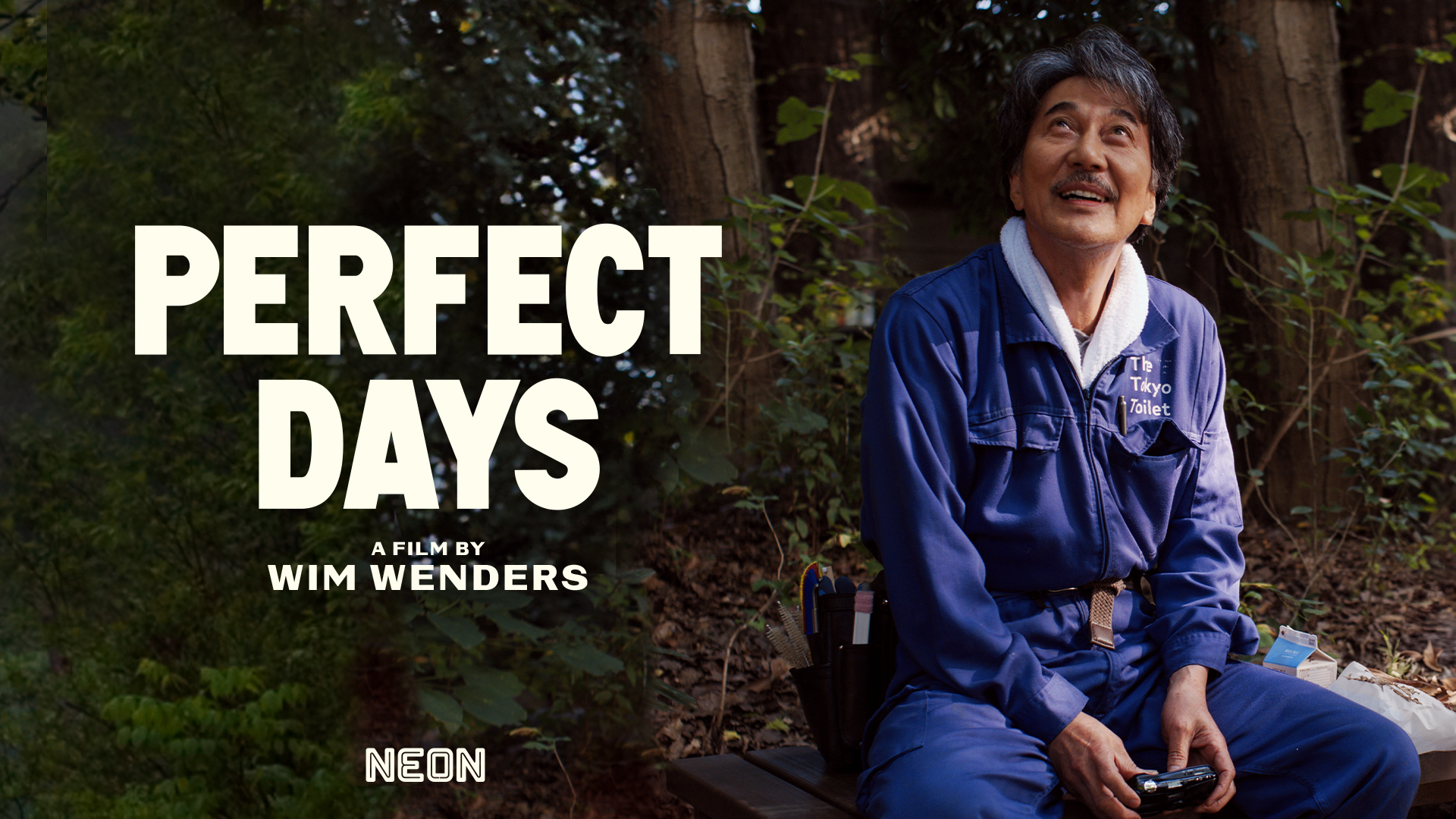
Perfect Days follows Hirayama, a public toilet cleaner in Tokyo. If you are unsure whether a quiet film will hold your attention, start with his morning routine. His work, his music, and the light he sees through the trees offer three ways into Wim Wenders’s direction and Kōji Yakusho’s performance. This review keeps the story’s turning points out of view.
Produced in 2023, released theatrically in Japan in December 2023. Directed by Wim Wenders, written by Wim Wenders and Takuma Takasaki, starring Kōji Yakusho.
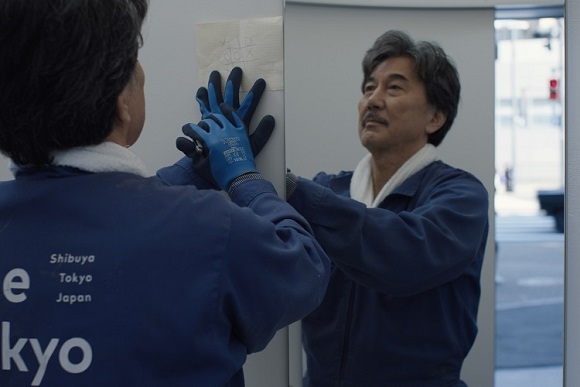
We learn about Hirayama through the order of his work. The Japanese film site describes a man who wakes at the same time and goes through the same preparations each day. The opening gives us time to see what he reaches for and what he does next. The first morning teaches us the sequence. When a similar morning comes around, we can watch his pace and attention because we already know what his hands will probably do.
The work scenes make his standards tangible. He carries his equipment, lowers himself to the level of the fixture, and uses a small mirror to inspect a place he cannot see directly. A view of the cleaned room would leave out that decision. Watching him make it tells us something about how he works when nobody is there to judge the result.
Public buildings are also places that people have to keep usable. A visitor spends a brief time in a stall and goes on with the day. The worker has a sequence of tasks that makes that brief visit possible. The film attends to the height at which Hirayama works and to where he reaches. It gives some of the time usually spent admiring a building to the person who looks after it.
Yakusho makes the tools feel familiar to Hirayama. He lowers himself, checks the surface, and returns to work without making a show of handling the mirror. That fluency also makes a pause easier to see. Once we know how the ordinary movements fit together, a momentary stop can register on its own.
This pacing may take some getting used to if you enjoy films that establish their central conflict quickly. Try watching the work itself during the opening. At first you may ask what he does. Later you may find yourself asking what changed. The repetition gives you a basis for noticing details that would have little weight on the first pass.
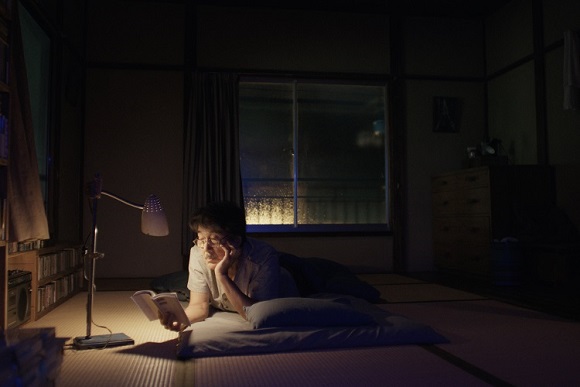
Hirayama listens to cassettes in his van and reads at night. The Cannes film entry identifies music, books, and photographing trees among his interests. Going to work and ending the day give his time a structure. Choosing what to hear or read is something he can do within that structure.
The moment when he reaches for a cassette tells us something that playing a song over the image would leave implicit. We can see that what follows is music he chooses and hears where he is. You can notice that even if the song is unfamiliar. The drive then gives us two things to attend to at once. There is the city he travels through on the way to work, and there is the piece of music he brings into that time.
Reading gives his attention a different shape. The city keeps passing the windows of a moving van. At night the page stays in front of him, and he can set his own pace. We can see how he uses that part of his day without having to read what is on the page. The physical objects help the film show the moment of choice through a hand moving, a cassette going into a player, or a book opening.
Compare those movements with the way he uses a tool at work. His cleaning is for other people who may never see him. A song or a book is something he chooses for himself. He takes care with both. That difference in whom the time is for tells us more about his life than a list of favorite songs and authors would.
Tokyo feels like Hirayama’s city because we learn what he stops to look at. The film’s descriptions mention his habit of looking at trees and photographing them. The trees could have passed as background. Once he looks up, there is time for us to attend to the light between the leaves as well.
A photograph asks for a different kind of patience from reading or cleaning. The page is within reach. The light moves on its own. Having learned the order of Hirayama’s workday, we can feel the difference when he pauses for an image. He uses a film camera, so making the exposure and seeing the result happen at different times. That makes the moment when he chooses to take the picture worth watching in its own right.
The places are connected by use. The toilets are where he works, the streets take him between jobs, and the places he can sit belong to the breaks in his day. As these spaces become familiar, we begin to recognize one person’s route through a large city. The picture can stay with a modest stretch of street because the film has given that stretch a place in his day.
It is tempting to describe his routine as an example of how to live well. What interests me more is that we can watch the same face concentrate on work and turn toward the light without being told exactly what he feels. His schedule gives us a way to follow his actions. Yakusho’s shifts in expression leave room for things we cannot know from the schedule alone.
One way to watch is to notice what the film shows immediately after Hirayama looks at something. If you see his face first, you wonder what caught his eye. Once you see the place or object, you can ask what it might mean to him. If you discuss the film afterward, compare one thing he stopped to look at with one thing that caught your own attention. You may remember quite different parts of the same day.
Start with the order in which Hirayama picks things up and leaves for work. Once you recognize that routine, the moments when he chooses a song or stops to look at a tree carry more weight.
Film details and opening premise checked November 16, 2026. Official Japanese film site, Festival de Cannes film entry, and Japanese Film Database release and credits.