
[The Ultimate Guide] 10 Masterpiece Netflix Original Movies You Absolutely Must Watch!
tarumaki
Enter the Moment
Every movie fan eventually hears someone say, “I haven’t seen that one yet.” Usually, it is simply an opportunity to recommend a favorite. Occasionally, however, the response is genuine envy.
That person still knows nothing about the characters. They cannot predict where the story is going. They have not noticed the significance of a casual line, an object in the background, or an awkward pause. They can enter the film completely unprepared and experience the moment when scattered details suddenly form a complete picture.
This list brings together ten Japanese movies that inspire the thought, “I wish I could erase my memory and watch that again for the first time.”
They are not simply films with surprising endings. Some manipulate the assumptions we make while watching a story. Others turn a modest idea into an intricately designed narrative. Several solve their central mystery only to leave us with a deeper emotional question.
This article avoids major revelations and endings. Even telling viewers that a movie has a twist can become a spoiler, so the focus is not on what happens, but on the kind of experience each film offers.
If one of these titles catches your attention, resist the temptation to search for a detailed explanation. Watch the film first. You only get one chance to open a story without knowing what waits on the other side.
The films are not ranked.
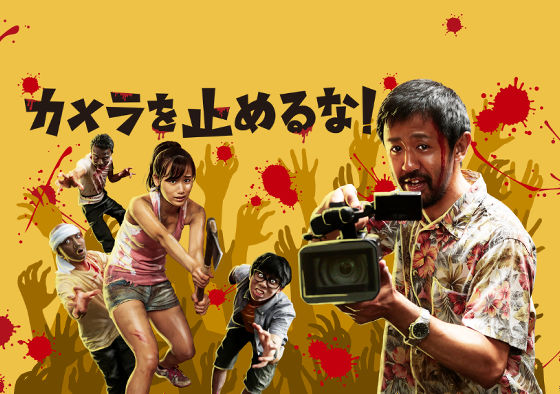
Produced in 2017; wider theatrical release in 2018 / Written and directed by Shinichiro Ueda / Starring Takayuki Hamatsu, Mao, Harumi Shuhama, and others
A crew shooting a low-budget zombie movie at an abandoned location is attacked by what appear to be real zombies. That is where One Cut of the Dead begins.
There is one essential piece of advice for anyone who has not seen it: if the opening leaves you confused, keep watching. Something about the camera, performances, dialogue, and movement may feel slightly wrong. That friction is part of the experience. As the film continues, images that initially seemed clumsy or arbitrary begin to acquire a different character.
The film’s appeal is greater than its structural ingenuity. At its heart are people trying to finish a production while time, money, and circumstances work against them. Their desperation is funny, but it is also a recognizable expression of creative commitment.
Anyone who has worked in film, animation, games, or another collaborative medium will recognize the chain of decisions behind a finished scene. One person improvises, another provides support, and a mistake must somehow be transformed into something usable. By the end, even apparent imperfections can feel affectionate and human.
The movie’s real-world journey—from a tiny initial release to a nationwide hit driven by word of mouth—feels perfectly suited to the film itself. It delivers both a first-watch surprise and a warm celebration of the people behind the camera.
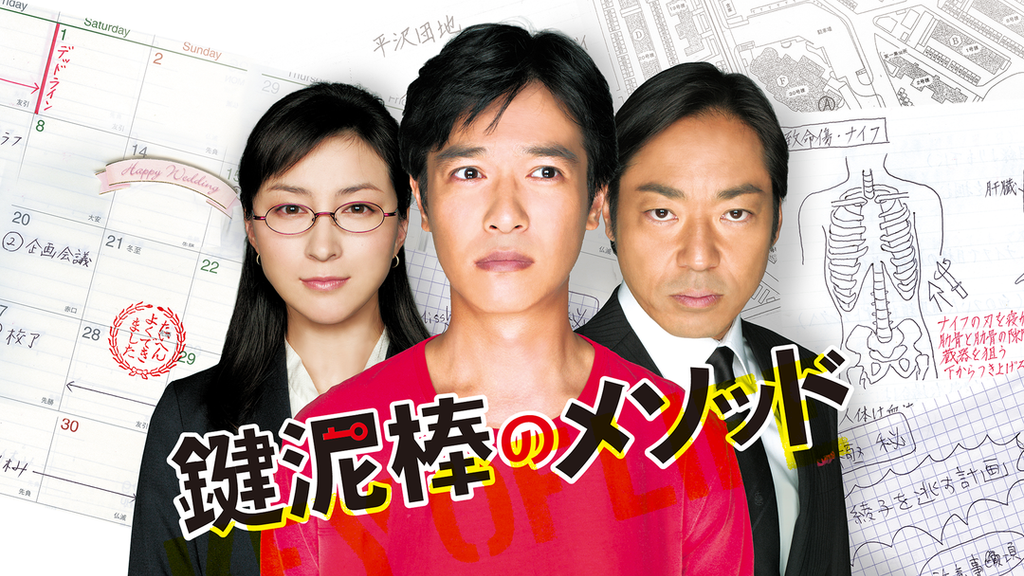
2012 / Written and directed by Kenji Uchida / Starring Masato Sakai, Teruyuki Kagawa, Ryoko Hirosue, and others
Sakurai, an unsuccessful actor, sees an apparently wealthy man suffer an accident at a public bath and lose his memory. Acting on impulse, Sakurai switches their locker keys. Unfortunately, the stranger—Kondo—is involved in an extremely dangerous profession.
The identity-swap premise is immediately entertaining, but the deeper pleasure of Key of Life comes from the way personality drives the plot.
Sakurai survives through improvisation and short-term decisions, yet cannot make good use of his newly acquired circumstances. Kondo, even while believing himself to be a penniless actor, carefully studies his situation and begins working to improve it. Give two people the same life, the film suggests, and character will still send them in completely different directions.
Kanae, an editor who manages marriage as if it were a professional project, completes the trio. Their seriousness, dishonesty, and social awkwardness collide until small misunderstandings connect with apparently unrelated events.
Kagawa’s controlled physicality contrasts beautifully with Sakai’s unstable lightness, while Hirosue gives Kanae a directness that prevents her from becoming merely eccentric. The result works as a comedy, keeps the momentum of a suspense story, and leaves an encouraging view of personal change.
[c]2012「鍵泥棒のメソッド」製作委員会
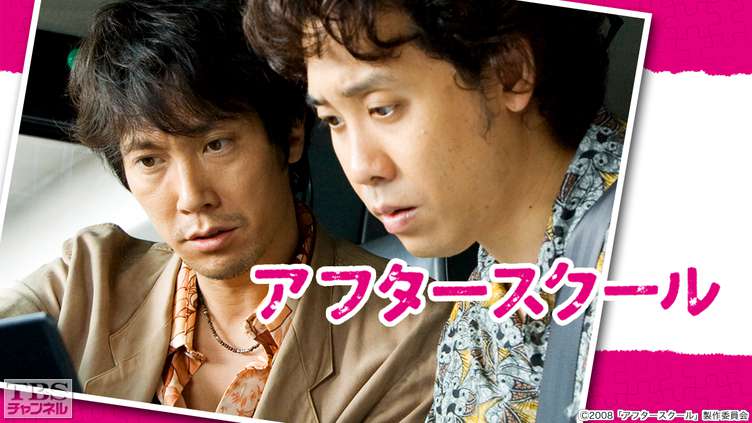
2008 / Written and directed by Kenji Uchida / Starring Yo Oizumi, Kuranosuke Sasaki, Masato Sakai, and others
Jinno, a teacher working at his former junior high school, is approached by private investigator Kitazawa. The investigator is searching for Jinno’s old friend Kimura, and Jinno reluctantly agrees to help. As the search continues, unfamiliar sides of Kimura’s life begin to emerge.
When watching a film, we use clothing, locations, conversation, and framing to complete what has not been stated. Without noticing, we decide what kind of relationship two people have and what sort of story we are watching.
After School turns that habit into its central device. Rather than flooding the audience with false information, it carefully controls the order in which limited facts are presented. Our own assumptions do much of the work.
That is why lines and glances that seemed unimportant can later take on a different meaning. The special pleasure of the film is realizing that we were looking directly at the story without fully seeing it.
Oizumi’s approachable presence, Sasaki’s elusive tension, and Sakai’s gentle ambiguity all help shape expectations. Do not treat the film as a puzzle to defeat; let its conversations guide you. The first viewing delivers surprise, while the second reveals precision.
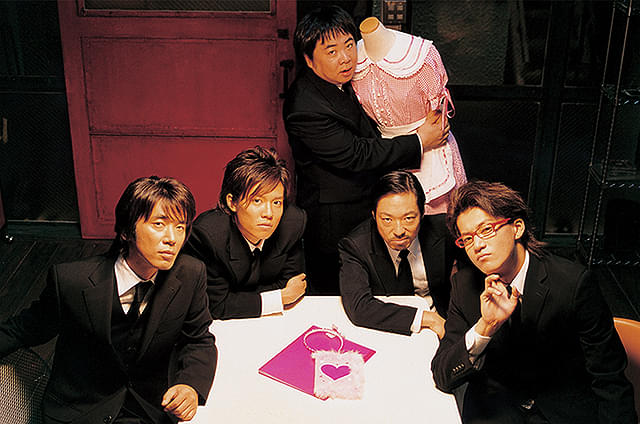
2007 / Directed by Yuichi Sato / Written by Ryota Kosawa / Starring Shun Oguri, Yusuke Santamaria, Keisuke Koide, Muga Tsukaji, and Teruyuki Kagawa
One year after the death of struggling idol Miki Kisaragi, five men who met through an online fan community gather in a room to remember her. Their friendly memorial changes course when one attendee suggests that her death may not have been a suicide.
Most of the film takes place in a single room, and conversation provides nearly all its momentum. It remains gripping because every new piece of information changes both the relationships among the men and the balance of power inside the room.
One accusation produces a defense, which creates another question. A suspected enemy becomes an ally, and a promising theory collapses under new evidence. Ryota Kosawa’s screenplay accelerates through dialogue, achieving the tightness of an accomplished stage play.
The five men are eccentric in different ways, and the gaps between their levels of enthusiasm generate comedy. The suspense never becomes unbearably heavy, while the humor never destroys the mystery.
Keeping an audience engaged in one location requires more than good lines. Positioning, eye contact, silence, and the timing of each revelation all matter. Kisaragi proves that a movie does not require massive action or visual effects to feel rich and dynamic.
(C)2007「キサラギ」フィルムパートナーズ
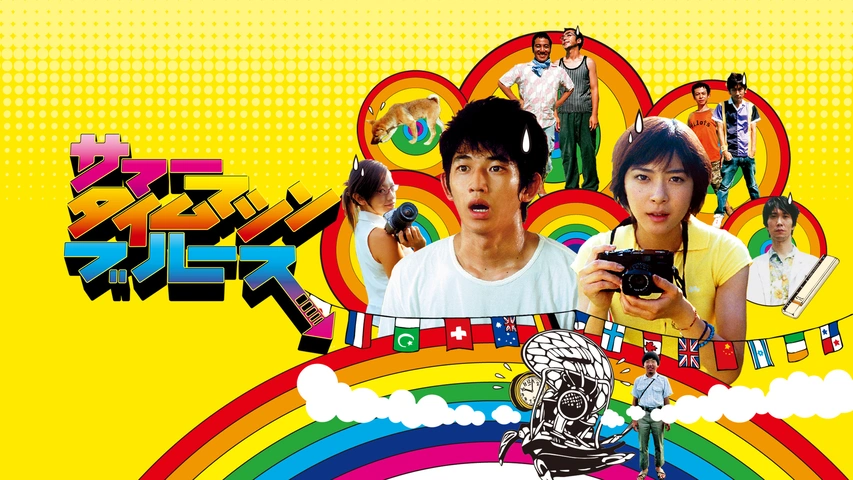
2005 / Directed by Katsuyuki Motohiro / Written by Makoto Ueda / Starring Eita, Juri Ueno, Tsuyoshi Muro, Yoko Maki, and others
During a university summer vacation, the remote control for the science-fiction club’s air conditioner is broken. The students are left to suffer in the heat—until what appears to be a genuine time machine suddenly arrives. Their first idea is to return to the previous day and retrieve the remote before it is damaged.
They do not save the world, prevent a war, or meet a historical figure. Their grand use of time travel is to make the room cool again. The distance between the scale of the invention and the triviality of the goal is immediately delightful.
The plan quickly becomes complicated. Careless behavior in the past might alter the present. The students must avoid meeting their earlier selves while ensuring that events they have already witnessed still take place.
Objects in the club room, casual remarks, and apparently strange behavior begin connecting like pieces of an elaborate puzzle. Yet the film never becomes an exhausting exercise in science-fiction exposition. Its priority remains the foolish conversations, minor romances, and lazy atmosphere of a summer spent on campus.
Repeated visits to the same places and moments also change the visual experience. A person or prop in the background can acquire new significance. The film becomes more rewarding with repetition, but nothing can reproduce the first moment when its details lock into place.
(C) 2005 ROBOT/東芝エンタテインメント/博報堂DYメディアパートナーズ/IMAGICA
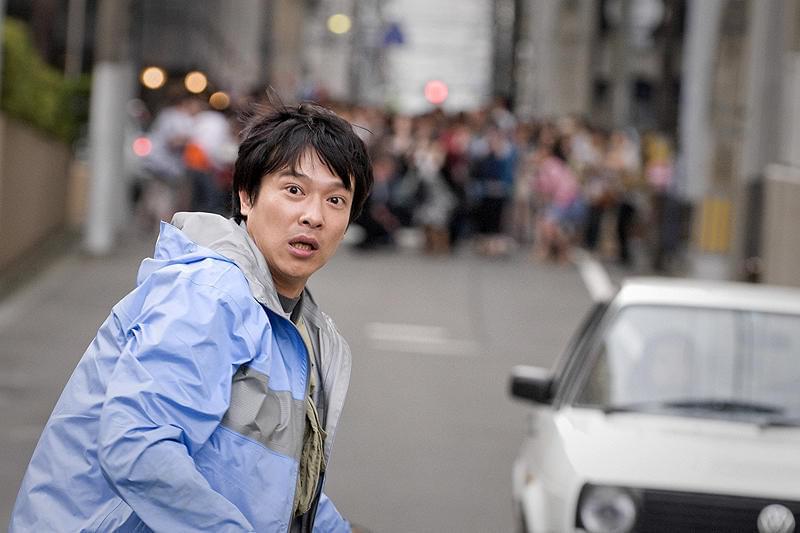
Ⓒ 2010「ゴールデンスランバー」製作委員会
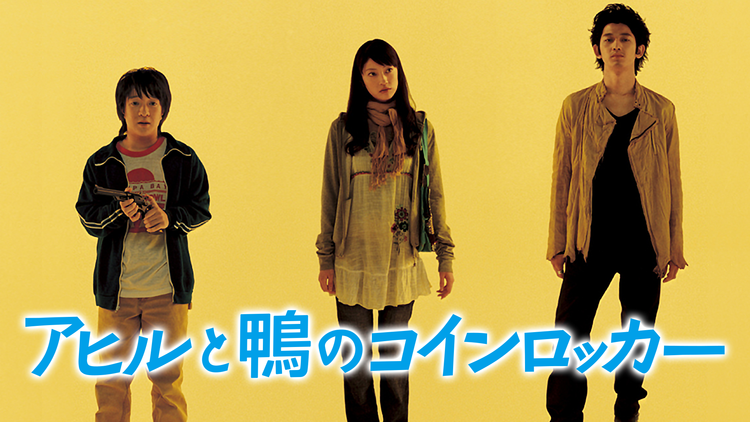
2007 / Directed by Yoshihiro Nakamura / Based on the novel by Kotaro Isaka / Starring Gaku Hamada, Eita, Megumi Seki, Ryuhei Matsuda, and others
Soon after moving to Sendai for university, Shiina receives a bizarre invitation from his neighbor Kawasaki: help rob a bookstore so they can give a Japanese dictionary to a foreign student living in the same building. The idea makes little sense, yet Kawasaki’s confidence pulls Shiina into the plan.
The opening has the relaxed absurdity of an offbeat youth film. There is a reckless proposal from a stranger, the uncertainty of a new life, and Bob Dylan’s music floating over the story. As Shiina learns more about Kawasaki and the people around him, the emotional temperature slowly changes.
The film explores the danger of believing we understand another person, the distances created by language and culture, and the difficulty of imagining pain that is not our own.
The meaning of the title—its ducks and coin locker—is best discovered inside the film. Once understood, early conversations and images appear different. Hamada’s open presence makes him an ideal guide, Eita brings lightness and danger to Kawasaki, and Ryuhei Matsuda contributes a quiet emotional weight.
When structural revelation and genuine feeling arrive together, a mystery becomes more than a puzzle. This is the kind of film that stays in the mind—and makes Bob Dylan’s “Blowin’ in the Wind” sound different afterward.
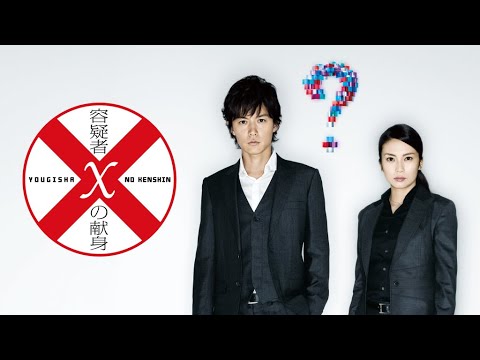
2008 / Directed by Hiroshi Nishitani / Based on the novel by Keigo Higashino / Starring Masaharu Fukuyama, Kou Shibasaki, Shinichi Tsutsumi, Yasuko Matsuyuki, and others
Suspect X adapts a story from Keigo Higashino’s Galileo series. Physicist Manabu Yukawa encounters a formidable mind from his university past: mathematician Tetsuya Ishigami, a man Yukawa considers a true genius. A murder investigation gradually places their forms of logic in opposition.
The film does not depend solely on who committed the crime. Its deeper concern is why a person would go so far for someone else.
Yukawa tries to reveal the design of the case. Ishigami tries to protect the quiet life of a mother and daughter living nearby. Because the two men understand one another’s intelligence, their restrained encounters carry more tension than an openly dramatic confrontation. This is both a battle of reason and a painful dialogue between former friends.
Tsutsumi’s Ishigami rarely explains himself. His rounded posture, lowered gaze, and quiet voice reveal isolation and an emotion he cannot express. Fukuyama’s Yukawa preserves his familiar composure, but the closer he moves toward his friend, the more that composure begins to hurt.
The case may be built through mathematical thought, yet the final impact is emotional. What does it mean to love someone? What is a person permitted to do in the belief that they are saving another? Previous knowledge of the television series is not necessary; the film stands on its own as both a mystery and a serious human drama.
(C)2008 フジテレビジョン /アミューズ/S・D・P/FNS27社
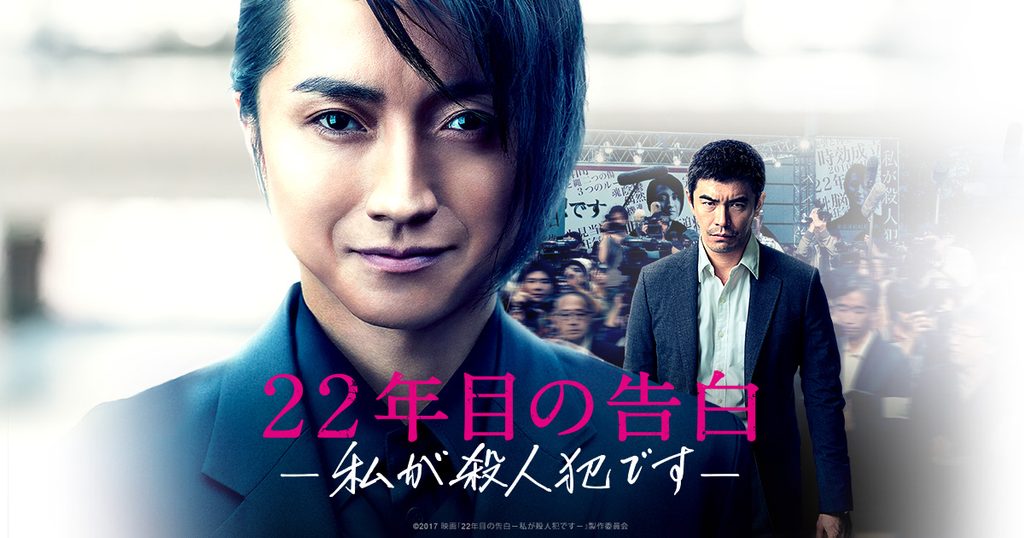
2017 / Directed by Yu Irie / Starring Tatsuya Fujiwara, Hideaki Ito, Toru Nakamura, Kaho, and others
Five linked murders took place in 1995. The killer was never arrested, and the cases eventually passed the statute of limitations. Seven years later, in 2017, Masato Sonezaki appears in public and claims responsibility.
Sonezaki publishes a book describing the crimes and presents himself at press conferences and on television. With his polished appearance and provocative behavior, a self-declared murderer is consumed by the media as if he were a celebrity.
Most mysteries begin with the search for a culprit. This film begins with someone claiming to be that culprit. Victims’ families, detectives, journalists, and viewers all look at a man the law can no longer punish from different positions. That disturbing situation gives the film its momentum.
Fujiwara performs Sonezaki as someone acutely aware of every camera, using his gestures and expressions to provoke the public. Hideaki Ito plays Makimura, the detective who has pursued the case from the beginning, with years of anger and regret held in his body.
The transformation of crime into entertainment through social media and television adds a critical layer. Learning the truth, delivering justice, and consuming a spectacle are not the same act. The film moves quickly, but advance knowledge weakens its tension. The premise is all you need before watching.
(C)2017映画「22年目の告白一私が殺人犯ですー」製作委員会
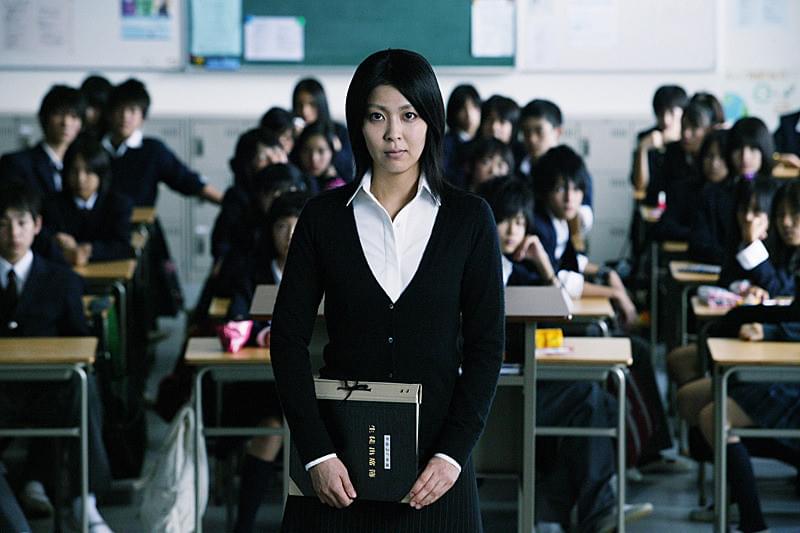
2010 / Written and directed by Tetsuya Nakashima / Based on the novel by Kanae Minato / Starring Takako Matsu, Masaki Okada, Yoshino Kimura, and others
On the final day of the school term, teacher Yuko Moriguchi begins speaking calmly to her students. She tells them that she is leaving, that her young daughter died, and that members of the class were involved. Her controlled words dismantle the ordinary atmosphere of the classroom.
What makes Confessions so powerful is its refusal to rely on emotional outbursts. Takako Matsu’s quiet delivery, the students’ casual reactions, coldly composed images, slow motion, and music that sometimes contrasts with what we see create a world that is both beautiful and deeply unsettling.
The story does not remain with one narrator. The same events are described by different people, revealing their private versions of justice, weakness, and self-importance. What is tragedy to one person becomes a completely different story to another. The distance between those perceptions produces further harm.
This is not an easy film. It deals with juvenile crime, bullying, grief, and revenge, and includes violent and psychologically distressing material. It belongs on this list because its writing, acting, cinematography, editing, and sound are sharpened toward a single, uncompromising experience.
Particularly striking is the refusal to make visual beauty correspond with moral beauty. The elegance of the images makes the cruelty inside them more visible. Anyone interested in visual storytelling will want to examine the framing, pacing, and placement of sound as closely as the plot.
Viewers may disagree about the film, but forgetting it is difficult. For those prepared for its subject matter, Confessions demonstrates how thoroughly direction can control the emotional temperature of a movie.
(C)2010 「告白」製作委員会
These ten films span mystery, comedy, science fiction, youth drama, and crime thriller. What connects them is the way the viewer’s initial understanding changes during the experience.
One Cut of the Dead begins with the texture of a low-budget zombie movie and becomes an affectionate portrait of creative work. Summer Time Machine Blues takes the enormous possibility of time travel and applies it to a broken air-conditioner remote. Suspect X places an intricately designed case in front of us, then ensures that human feeling matters more than the mechanics of the solution.
Today, searching a title immediately produces explanations, theories, and endings. That access is useful, but it can remove the private interval in which we are surprised and decide for ourselves what a movie means.
If you have not seen one of these films, stay away from detailed explanations and watch it first. Even if the opening feels different from what you expected, give the movie enough time to reveal where it wants to take you.
For films you have already seen, a second viewing can reveal behavior, visual information, and structural choices that were invisible when you were busy following the plot. The strongest first-watch movies are often among the most rewarding to revisit.
Still, there is no replacement for entering a story without knowing anything. That is why anyone discovering these movies for the first time is genuinely enviable. I hope this list leads you to at least one unforgettable first viewing.