What "Plastic Memories" Etches in Time: A Love and Life of 9 Years and 4 Months — The Warm Salvation Found Beyond the Job of Tearing Memories Apart
tarumaki
Enter the Moment
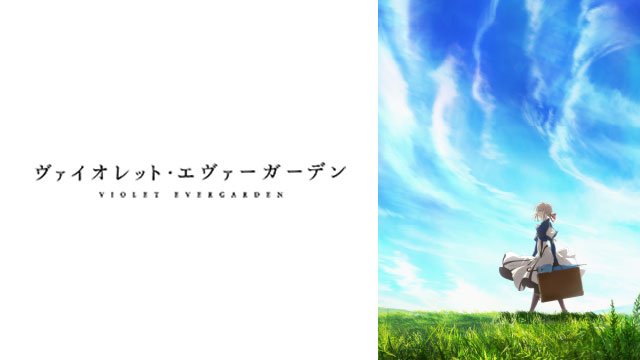
Based on the light novel by Kana Akatsuki, “Violet Evergarden” is a moving human drama adapted into a TV anime by Kyoto Animation in 2018.
Violet, who possessed no emotions and could only move by “orders,” encounters various clients through her work. From romantic feelings directed at a cherished one, to the thoughts a dying parent leaves for their daughter, to messages for the families of soldiers fallen in battle—she comes into contact with many forms of “love.”
By touching the diverse emotions of her clients and weaving them into words, Violet gradually learns human emotions and the true meaning of the words “I love you,” which Major Gilbert told her at the very end. The greatest appeal of this work lies in her process of growth as a human being, as if a soul is slowly taking residence within her.
Weaving thoughts into words, to know what love is. There was a girl who possessed no emotions. Her name was Violet Evergarden. She is searching for the meaning of the words told to her by someone dear in the midst of the flames of war.
As the war ended, the job she found was to put others’ thoughts into words and deliver them. — A letter to an only brother who survived the war. — A letter from a daughter who started working in the city to her parents back home. — A letter spelling out unadorned, honest romantic feelings. — A final letter from one who is departing to those who are left behind.
The countless thoughts enclosed in these letters etch love into Violet’s heart. This is the story of an emotionless girl who comes to know love.
“I love you.” Have you ever felt that these simple words carry such weight and yet feel so distant?
In our daily lives, we easily consume words through texts and social media. However, when we want to convey our truly important feelings, our fingers stop, and we find ourselves standing still, unable to find the right words. To us living in such modern times, Kyoto Animation’s Violet Evergarden questions the “weight of words” and the “preciousness of conveying them” that we had almost forgotten, along with overwhelming visual beauty.
The protagonist is Violet, a girl who was raised as a “weapon” and knew only how to fight. Having lost both arms on the battlefield and separated from her beloved superior, Major Gilbert, she takes on the job of a ghostwriter (Auto Memory Doll) to understand the meaning of the words “I love you” that he left her at the end.
A story where an inorganic, emotionless girl touches the “feelings” of various clients and gradually acquires a “heart.” It is a record of rebirth that cannot be watched without tears, and a challenge to universal themes that we must face in our lives. This time, we will dig deep into this masterpiece anime from three perspectives.
We cannot talk about this work without avoiding the heavy background of “war.” While it is easy to be captivated by the beautiful animation, the reality depicted is extremely cruel. Violet’s past is gruesome; she was picked up in a state like a beast unable to speak and raised as a fighting machine. The prosthetic arms she wears are a symbol of that fierce past.
There is an interesting theory about the material of the prosthetics, referred to as “Adamant Silver” in the story. The motif “Adamantite” (Adamant) comes from the Greek word “adamas” (unconquerable) and is said to imply meanings like “diamond” and “loving stone.” In other words, her prosthetics are symbols of “destruction” (war), but at the same time, they are hands for grasping “love.”
Episode 10, in particular, has been passed down as a legendary episode in anime history. Violet attends to a dying soldier on the battlefield and delivers the letter he left for his family. Seeing her accept the family’s gratitude and sorrowful cries, we see her swaying between her self as a “weapon” that once took many lives and her self as a “Doll delivering feelings,” but certainly taking a step forward as a “human.” This balance of “crime” and “punishment,” “atonement” and “salvation,” gives deep shading to the story and gouges the viewer’s heart.
Initially, Violet could not understand human emotions and could only write dry, report-like letters. “She can only speak in military terms,” “She cannot guess the other person’s feelings.” Why was such a girl able to save the hearts of so many people?
It was because she was more sincere about “words” than anyone else. She searches for “what they really want to convey” hidden deep in the hearts of clients, which even they are unaware of, with pure eyes. Love for a brother, gratitude to parents, messages left by the dying. In the process of picking them up one by one and typing them on a typewriter, she herself learns the colors of emotions such as “lonely,” “happy,” and “sad.”
Some viewers might have felt they “couldn’t empathize” in the first few episodes and stopped watching. However, please watch until Episode 4, or rather, Episode 9. Seeing her realize her past (= the weight of the lives she took), going through suffering like being burned by fire, and yet standing up while asking “Is it okay for me to live?” will inevitably burst your tear ducts. “You cannot run from the past. But even if you cannot erase the past, you can choose the future.” Such a powerful message is conveyed straight through her growth.
And above all, what makes this work a masterpiece is the overwhelming visual beauty and direction by Kyoto Animation.
The delicate lines drawn by character designer Akiko Takase, the precise world-building by director Taichi Ishidate, and the magnificent musical score by Evan Call. These fuse in a miraculous balance. The expression of “light” is particularly divine. Sunlight filtering through trees, the light of lamps, the flames of the battlefield, and the light dwelling in Violet’s eyes. All of them eloquently speak of the characters’ emotions.
The voice acting is also wonderful, and Yui Ishikawa’s (voice of Violet) change in acting, from an initial mechanical voice to one where emotions gradually seep out, gives you goosebumps. The OP theme “Sincerely” and ED theme “Michishirube” also snuggle up to the worldview of the story and amplify the lingering finish after watching many times over.
Also, the path to the conclusion shown in the movie version was excellent. In the TV series, the relationship with Major Gilbert was depicted as the center of absence, “wanting to meet but unable to.” In the movie version, that conclusion is drawn. There may be pros and cons, but I think that was the best happy ending where Violet truly understood “I love you” and chose her life with her own will.
Violet Evergarden is not just a workplace anime or a war anime. It is a road movie of the soul that transforms the shapeless thing called “love” into a tangible form called a letter and delivers it.
“To wish for the other person’s happiness without asking for anything in return.” Here is a simple and pure form of love that is easily forgotten in modern society. After watching, you will surely want to write a letter to someone precious. Or you might want to look up at the night sky thinking of someone you can no longer meet.
If you haven’t seen this work yet, that is a very happy thing. Because you can experience that emotion for the first time from now on. Prepare a bath towel instead of a handkerchief, and please watch over Violet’s journey.