The Pulse of "Evolution" Depicted in "Haikyu!! Second Season" — Why Do the Crows Who Know Defeat Aim for the Sky Again?
tarumaki
Enter the Moment
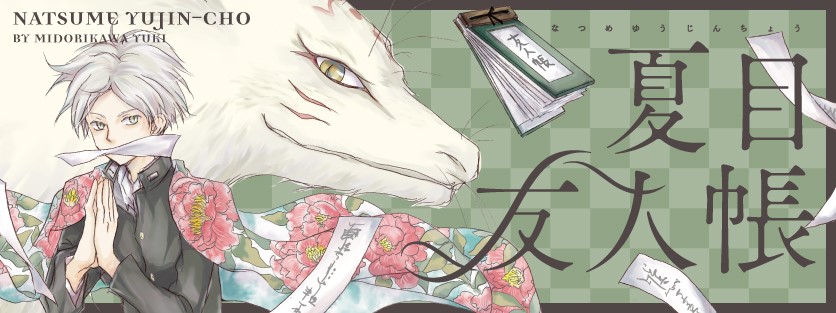
Based on the manga by Yuki Midorikawa, “Natsume’s Book of Friends” (Natsume Yuujinchou) is a fantasy series with enduring popularity that has been adapted into anime intermittently since 2008. It depicts the warm yet bittersweet interactions that unfold between humans and Ayakashi (spirits/yokai).
The appeal of this series lies in the coming-of-age story of the kind-hearted and sensitive Natsume, who gradually finds connections with people and warmth through his interactions with spirits. The episodic stories featuring Ayakashi—who can be frightening or humorous, but often harbor their own loneliness and kindness—evoke a gentle, deep emotion that resonates in the heart.
Precious days spent with kind-hearted friends… A beautiful and fleeting story of humans and spirits.
Takashi Natsume, a boy who has been able to see yokai (spirits) since he was young, inherits the “Book of Friends” from his grandmother Reiko. Together with his self-proclaimed bodyguard, Nyanko-sensei, he spends his days returning the names to the yokai bound within the book.
Through his encounters with spirits and the people involved with them, Natsume begins to search for his own path. While being supported by friends with whom he can share his feelings, he tries to find a way to protect these precious days.
Have you ever felt a presence in an empty room or heard the rustling of trees on a windless day? In modern society, we often forget “respect for the unseen” and “awe of nature.” There is a work that reminds us of these feelings gently and sometimes sorrowfully.
That is Natsume’s Book of Friends (Natsume Yuujinchou).
The story follows Takashi Natsume, a boy who inherits the “Book of Friends” from his grandmother, and returns names to spirits (yokai) along with his self-proclaimed bodyguard, Nyanko-sensei. There are no flashy battles or grand missions to save the world. However, there is certainly “something” there that shakes our hearts.
The delicate psychological portrayal unique to shoujo manga adaptations, the beautiful scenery of the Japanese countryside, and the interactions between humans and spirits as they clumsily connect their hearts. Today, from the perspective of a veteran columnist, I will unravel the charm of this masterpiece that has been loved for a long time since the anime began broadcasting. By the time you finish reading, you will surely find yourself desperately wanting a plush toy of Nyanko-sensei.
The greatest feature of this work, which sets it apart from other yokai stories, is the setting of the “Book of Friends.” The Book of Friends is a contract book in which Natsume’s grandmother, Reiko, defeated spirits and made them write their names. Spirits whose names are held cannot disobey the owner’s orders. However, the protagonist Natsume uses that mighty power not to “enslave spirits,” but to “return their names and set them free.”
At the moment of returning a name, Natsume glimpses Reiko’s memories (memories with the spirits). It is not merely a cancellation of a contract. Through the act of returning a part of the soul called a “name,” it is a ritual to inherit the bonds, misunderstandings, and poignant feelings that once existed between his grandmother and the spirits.
The episode “The Dew God’s Shrine” (Episode 2) is a symbol of this. “Once you have been loved, once you have loved, you can never forget it.” A god disappearing as he loses faith, and the human who continued to believe in him until the end. Their final exchange cannot be watched without tears. Spirits are sometimes terrifying and sometimes comical, but they are uniformly “human-like.” Clumsy, lonely, and somehow lovable. Through interactions with them, Natsume’s lonely heart gradually melts, lighting a warm lamp in the viewer’s heart.
Since he was young, Takashi Natsume has been called a “liar” and passed around among relatives because of his constitution to see spirits. His eyes, like a pinhole camera, reflect truths invisible to ordinary people. However, because of that ability, he was always lonely.
The story begins when he is taken in by the kind Fujiwara couple. There are people who call him “Takashi-kun” and love him as family. And human friends like Tanuma and Taki appear, who share his secret and try to understand him.
Despite the title “Book of Friends,” Natsume was initially alone. However, as the story progresses, the “footprints” around him certainly increase. The myriad footprints carved in the snow seen in the ending of the second season. What was initially just one person’s footprint eventually intersects with Nyanko-sensei’s and lines up with friends’ footprints. This depiction beautifully expresses the theme of “connection” in this work.
In the modern “Book of Friends” called the internet society, we who share impressions with someone we don’t know might also be seeking a “connection” similar to Natsume’s in a sense. Natsume, who knows loneliness, interacts with others clumsily, gets hurt, but learns kindness. His growth story seems to question how we face our own human relationships.
And we absolutely cannot leave out the existence of Nyanko-sensei (Madara) when talking about this work. Usually, he looks like a round “maneki-neko” (beckoning cat), loves sake, and is a glutton. He has a foul mouth and protects Natsume with the promise that “if Natsume dies, he gets the Book of Friends as payment for being a bodyguard.”
However, his true form is a powerful great spirit. The gap between the divinity of his true form (Madara) shown in times of need and his usual ugly-cute appearance is foul play. While threatening Natsume saying “I’ll eat you,” he rushes faster than anyone when Natsume is in a pinch and protects him with his body. That “tsundere”—or rather, guardian-like behavior—makes us grin.
The relationship between Natsume and Nyanko-sensei is neither master-servant nor friends; it is a strange “complicity.” They exchange light banter but are tied by absolute trust. Nyanko-sensei’s character, which is somehow more human than humans despite being a being beyond human knowledge, gives the entire work an exquisite “relaxed feel” and “healing.”
Even in serious developments, there are always comical exchanges prepared. “It has more flavor if it’s somewhat lacking.” The kindness to love such imperfection flows at the root of this work.
Natsume’s Book of Friends might be unsatisfying for those seeking flashy stimulation. From a realistic perspective, there may be points to retort in the work. Like being too careless for a high school student or being too soft on spirits. However, beyond such minor contradictions, the reason this work continues to be loved by many lies in its thorough “kindness.”
When Natsume returns a name to a spirit, he is not just being kind. It is because he has the “strength” to accept the pain of others, knowing the pain of the past, that he can be kind.
Beautiful background music, pale and delicate animation, and a story that permeates the heart. On a tired night, when you suddenly feel lonely, please open this Natsume’s Book of Friends. There, nostalgic yet new “friends” just for you should be waiting.
Now, shall I go look for a Nyanko-sensei plush toy soon? Surely, I will be healed again by that grumpy-looking face.