What "Angel Beats!" Taught Us: A "One-Time Youth" Shining in the Afterlife
tarumaki
Enter the Moment
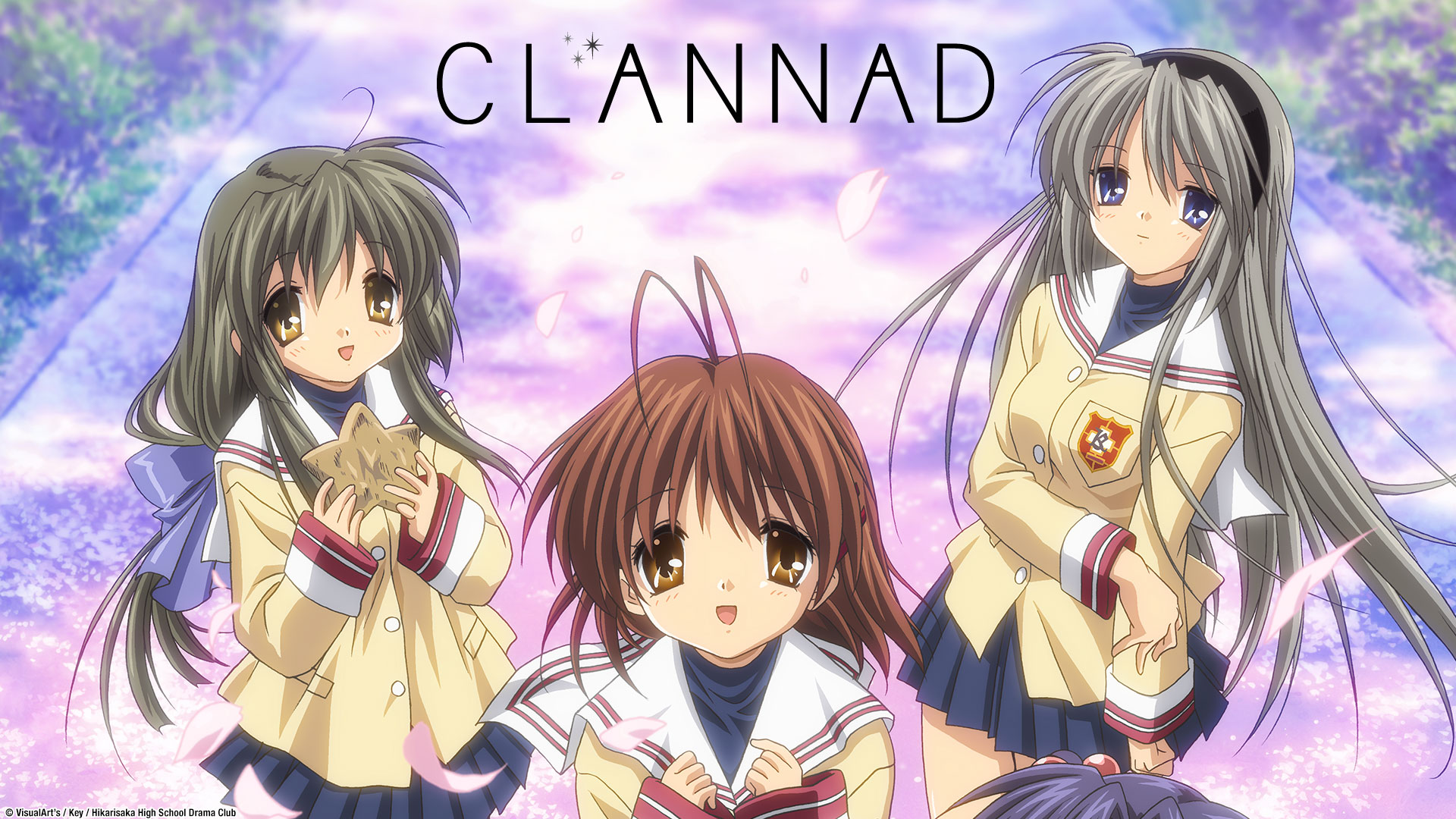
Based on the romance adventure game (visual novel) by the game brand Key, “CLANNAD” is a moving coming-of-age family drama adapted into an anime by Kyoto Animation. The first season aired in 2007, followed by the sequel “CLANNAD ~AFTER STORY~” in 2008.
Highly acclaimed as an epic narrative, this series goes far beyond a mere high school romantic comedy to fully depict the entirety of life: encounters, romance, marriage, childbirth, and parting. In particular, the portrayal of Tomoya becoming a father and struggling for the sake of his beloved family amidst difficult circumstances brought a flood of tears to many viewers.
Tomoya Okazaki, a third-year student at a college preparatory high school, leads a listless and apathetic life. Every day is just a repetition of the same things. Unable to enjoy school life like everyone around him, he is late for school every single day. Perhaps because of this, he has become an outcast within the school. One day, at the bottom of the long slope leading up to the school, Tomoya meets a girl.
“CLANNAD is life.” This phrase is often consumed as internet slang, but no other expression fits so perfectly after finishing this series.
Many years have passed since its broadcast in 2007, but CLANNAD remains a monumental work shining brightly in anime history. Created by the golden tag team of Key/Visual Arts (original work) and Kyoto Animation (production), this work lightly leaped over the framework of a mere anime adaptation of a romance simulation game (gal-game).
From casual everyday life in school days to employment, marriage, childbirth, and the unavoidable “loss.” Is there any other work that depicts the joys and sorrows of a life one would walk through so carefully, and so cruelly beautifully? If you are avoiding it because “the art style is a bit…”, it is too wasteful. It is no exaggeration to say that you are missing out on half of your life, or even more.
Today, from the perspective of a veteran columnist, I will unravel why this rare masterpiece continues to shake people’s hearts so much.
First, we absolutely cannot leave out the music when talking about this work, especially the ending theme “Dango Daikazoku” (The Big Dango Family).
What did you think when you first heard it? “What is this loose song?” “Is it a rip-off of ‘Dango 3 Brothers’?” To be honest, I thought so too at first. I even felt uncomfortable with this idyllic melody playing after serious developments.
However, as the story progresses, that impression changes 180 degrees. Because you realize that within that bright and cheerful melody lies the warmth of family and “nostalgia for things being lost.” Especially when this song played at the climax of the story, the discomfort I once held turned into tears and overflowed like a torrent. A song that sounds like a nursery rhyme on its own transforms into the strongest tear-inducing device by gaining the context of the story. This is the wonder of sound direction and the reason why it is praised as “godly sound.”
The background music is also excellent. The switching of BGM in scenes that make you cry or feel poignant is exquisite, gently snuggling up to the viewer’s heart and sometimes shaking it violently. It can be said to be a rare example where music functions not just as BGM but as a “character.”
CLANNAD consists of the first season (often called “Mujirushi”), which depicts the high school life of the protagonist Tomoya Okazaki, and the second season CLANNAD ~AFTER STORY~, which depicts his life after that. It is often said that “AFTER STORY is the main event” or “It gets crazy from there,” but I want to say it loudly: “Without watching the first season, the emotion of AFTER STORY is impossible.”
The first season depicts school life centering on Tomoya and the heroine Nagisa Furukawa, and interactions with unique friends. At first glance, it might look like a common school anime based on a gal-game. Some parts might feel like tracing the capture routes of each heroine. However, Tomoya’s idle daily life depicted here, the feud with his father, and the bonds built with friends become the “lifeline” to overcome the harsh fate that attacks him in the later story.
What happens if you watch AFTER STORY without watching the first season? “Why is the protagonist so depressed?” “Why is he so obsessed with Nagisa?” You won’t be able to understand the depth of that pain, and the emotion will be diluted to a fraction. Because of the careful character deepening in the first season, especially the ridiculous friendship with Youhei Sunohara and the warmth of the Furukawa family (the comedy-like interactions between Akio and Sanae), the later loss pierces the viewer as a more real pain. There are plenty of famous scenes that tighten your chest even in the first season alone, such as the heartbreak scene in Episode 18 and Akio’s yell on the stage in the final episode.
The themes of CLANNAD are simple: “Family,” “Comrades,” “Friends.” However, the way they are depicted is never just pretty words.
The relationship between the protagonist Tomoya and his father Naoyuki. The relationship between Nagisa and her parents. And the form of the new family Tomoya builds himself. Lying there are realities one wants to look away from, such as a parent drowning in alcohol, a past where dreams were given up, and the death of a beloved one. The muddy depiction with a sense of life urges intense empathy from the viewer. Developments where “It’s decided you’re going to cry” are challenge letters from the production side saying “Take this,” and we have no choice but to cry at that affectionate violence.
In particular, the story of Tomoya and his father Naoyuki will pierce deeply into the hearts of many male viewers. The suffering of parents and clumsy love that could not be understood as a child. When they are reconstructed from the perspective of Tomoya (and the viewer) who has become an adult, we learn the meaning of “forgiveness” and “gratitude.” The lines to his father in the final episode are proof that Tomoya has truly become an adult, and the culmination of the “growth” depicted throughout the series.
Also, mysterious fantasy elements (such as the Illusionary World) are involved in this work, but all of them function as important devices to depict “people’s feelings” and “miracles.” Regarding the development of the ending, evaluations may be divided depending on whether it is perceived as “opportunism” or “the price of a miracle,” but because the process leading up to it is overwhelming, many people should be able to honestly bless that conclusion.
CLANNAD is a work where you discover something different every time you watch it. If you watch it as a student, you empathize with Tomoya’s youth, and if you watch it after becoming a parent, you cry at the parental love of Akio and Sanae. You even feel the illusion that the work itself is growing according to the stage of your life.
Some people may resist the character design (so-called “Key style”), but once you start watching, you will stop caring immediately. Rather, the delicate facial acting and movements by Kyoto Animation’s godly animation can be said to be a state reached precisely because of that art style.
It is a long haul of over 40 episodes, but it is well worth spending that time. Because it is not just time consumption as entertainment, but an investment to enrich your view of life.
To you lucky person who hasn’t watched it yet. Prepare a bath towel instead of a handkerchief. And please dive into this story called “Life” that is muddy, warm, and poignant. After watching, surely you will want to see your family, look up at the sky, and hum “Dango Daikazoku.”