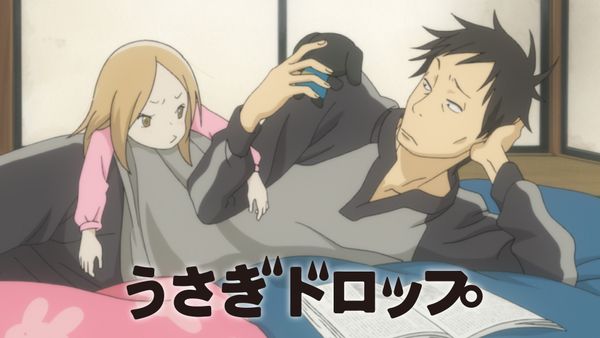
The "Resolve to Be a Parent" Thrown by "Bunny Drop" — A Record of the Birth and Rebirth of a Family Beyond Blood Ties
tarumaki
Enter the Moment
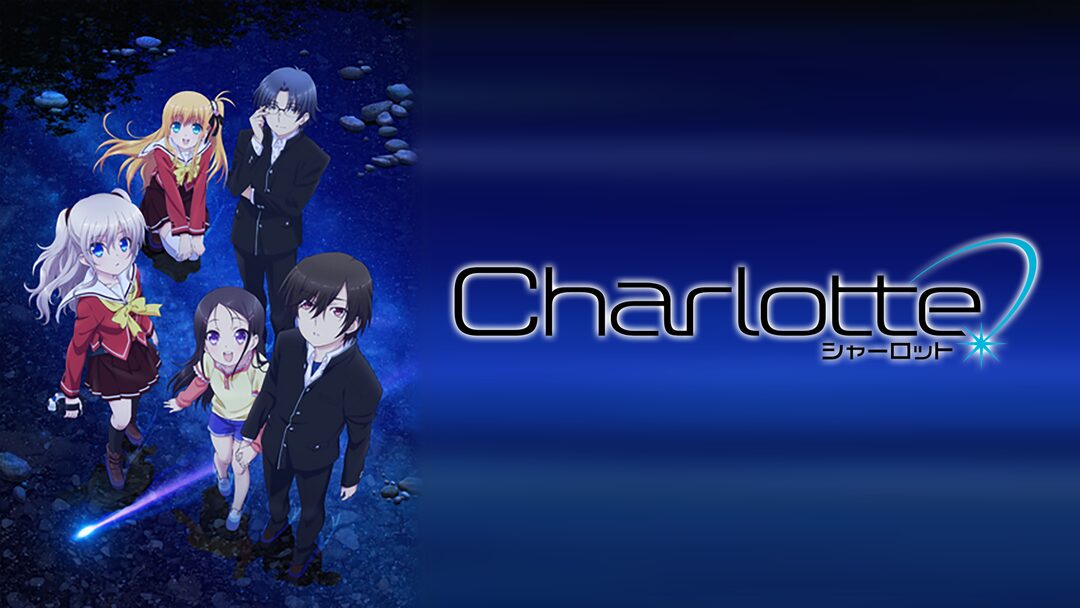
About the Work Broadcast in 2015, “Charlotte” is an original anime created and written by Jun Maeda of Key, with animation production by P.A.WORKS. Directed by Yoshiyuki Asai, the series depicts the harsh fate surrounding “imperfect special abilities” that manifest only in adolescent boys and girls.
The greatest appeal of this work lies in its unpredictable narrative shifts. Initially, the story unfolds as a comical school life featuring the student council members and the protagonist, Yuu Otosaka, who abuses his powers. However, following a certain incident in the middle of the series, the story takes a drastic turn, accelerating into a serious and fierce battle with the fate of the world on the line.
These abilities are fragile and precarious, destined to disappear once the users become adults. It is precisely because of this limitation that the bonds with friends and a single “promise” shine all the more brightly. The journey of a boy who resists an unreasonable fate and attempts to save the world, even as he becomes battered and broken, is sure to leave a deep, lingering emotional impact on viewers.
Special abilities that manifest in only a small percentage of boys and girls during puberty. Yuu Otosaka leads a smooth-sailing school life, secretly using his ability to his advantage. However, a girl named Nao Tomori suddenly appears before him. His encounter with her exposes the cruel fate of special ability users.
This is a story of ability users racing through their youth, depicted by Jun Maeda. Five years after the broadcast of TV anime Angel Beats!… A completely new original animation written and created by Jun Maeda finally begins.
To call it a “perfect masterpiece” might be a bit distorted. It is true that there are moments when you are swayed by the tempo of the story and tilt your head at the convenient developments. However, I still cannot help but love this work.
What I am introducing today is Charlotte, the second original anime by Key × Aniplex × P.A.WORKS. Based on the original story and screenplay by Jun Maeda of Angel Beats!, this work is a harsh yet beautiful record of youth revolving around special abilities that manifest only in adolescent boys and girls.
The story, which begins with the scumbag behavior of the protagonist, Yuu Otosaka, transforms into a grand scale involving the world after a shocking development in the middle. The heat is enough to swallow even the roughness of the composition as the unstable momentum peculiar to adolescence. And the music that grabs your heart. Why does this work make us want to watch it again casually, despite the pros and cons? From the perspective of a veteran columnist, I will unravel the reason.
The protagonist of this work, Yuu Otosaka, is by no means a praiseworthy person. He abuses his ability to “take over others’ bodies for only 5 seconds,” pretends to be an honor student by cheating, and stages accidents to attract the attention of the opposite sex. His refreshing trashiness is, in a sense, human-like and leaves a strong impact on the viewer.
What changed him was his encounter with the heroine, Nao Tomori. She is also a “fighting heroine” who runs around with a video camera in hand to protect ability users while being tossed about by an unreasonable fate. She never offers sweet words. However, when Yuu stood on the brink of despair due to his sister’s death and was about to become desperate, it was Tomori who saved him. Her devotion may be closer to a “complicity” as someone who knows the same pain rather than mere romantic feelings.
Towards the end of the story, Yuu goes on a harsh journey to steal abilities from ability users all over the world. In the process, what kept him tethered as he lost his memory and his ego began to collapse was the promise he made with Tomori to “come back” and the small flashcard deck she made. The ironic and beautiful contrast of a “boy who used his ability for cheating” becoming one who “uses his ability to save the world and loses everything.” This process of growth is the greatest catharsis of this work, and a drama that could be depicted precisely because he is an imperfect protagonist.
The true value of Jun Maeda’s works lies in the collapse of daily life and the rebirth from it. In this work too, the protagonists lose precious things one after another. A sister, a brother’s best friend, one’s own eye, and memories. The principle of equivalent exchange, “to gain, you must lose,” is depicted cruelly enough.
The development of the final episode is a point where opinions are particularly divided. The part where he travels around the world collecting abilities proceeds in a rush like a digest due to time constraints. I understand the voice saying they wanted it depicted more carefully. However, that rapid development can also be said to link with the speed at which Yuu’s spirit wears down, bringing a kind of trance state to the viewer.
Yuu, who finished everything and returned, had even forgotten Tomori, with whom he had promised to become lovers. It is a very bitter ending, hardly a happy one. However, I feel that this ending is the proof of the “way of life without cheating” which is the theme of this work. Yuu, who used to take the easy way out using his ability, finally walks towards the future on his own feet (though in a wheelchair), covered in mud and tattered. Even if memories are lost, the “something” engraved does not disappear. That lingering finish leaves a human and realistic warmth different from Angel Beats!.
And we absolutely cannot leave out “music” when talking about this work. The numerous songs written and composed by Jun Maeda function as part of the story, going beyond the framework of mere BGM.
The sense of speed of the OP theme “Bravely You” and the powerful lyrics that seem to resist fate. The sadness and inclusiveness like twilight of the ED theme “Yakeochinai Tsubasa” (Wings That Won’t Burn Down). And the songs of the in-story band “ZHIEND.” Especially the post-rock sound and Marina’s singing voice determine the sci-fi and decadent atmosphere of the story.
The music played in the last scene of the final episode was beautiful as if purifying all the emotions up to that point. It is not an exaggeration to say that “anime exists for the sake of music,” as the visuals and sound are closely linked. Even if there is roughness in the story composition, the power of this music subdues everything and leads to emotion. That might be the Jun Maeda magic.
Charlotte may be a work whose evaluation changes greatly depending on the viewer’s age and situation. If analyzed calmly, flaws such as the sweetness of the sci-fi setting and lack of time will be found. However, the desperate way of life of the characters, the pain of losing, and the preciousness of keeping promises press upon the chest beyond logic.
If you are about to be frustrated by something now, or are disgusted by your own weakness, please watch this work. You don’t have to be perfect. Even if you are tattered, as long as you have a promise with someone, people can live on. The figures of Yuu Otosaka and Nao Tomori should light such a ray of hope in your heart.
And after watching, surely you will want to listen to that song again. Please listen carefully to the reverberation of their youth.
(C)VisualArt’s/Key/Charlotte Project