What "Angel Beats!" Taught Us: A "One-Time Youth" Shining in the Afterlife
tarumaki
Enter the Moment
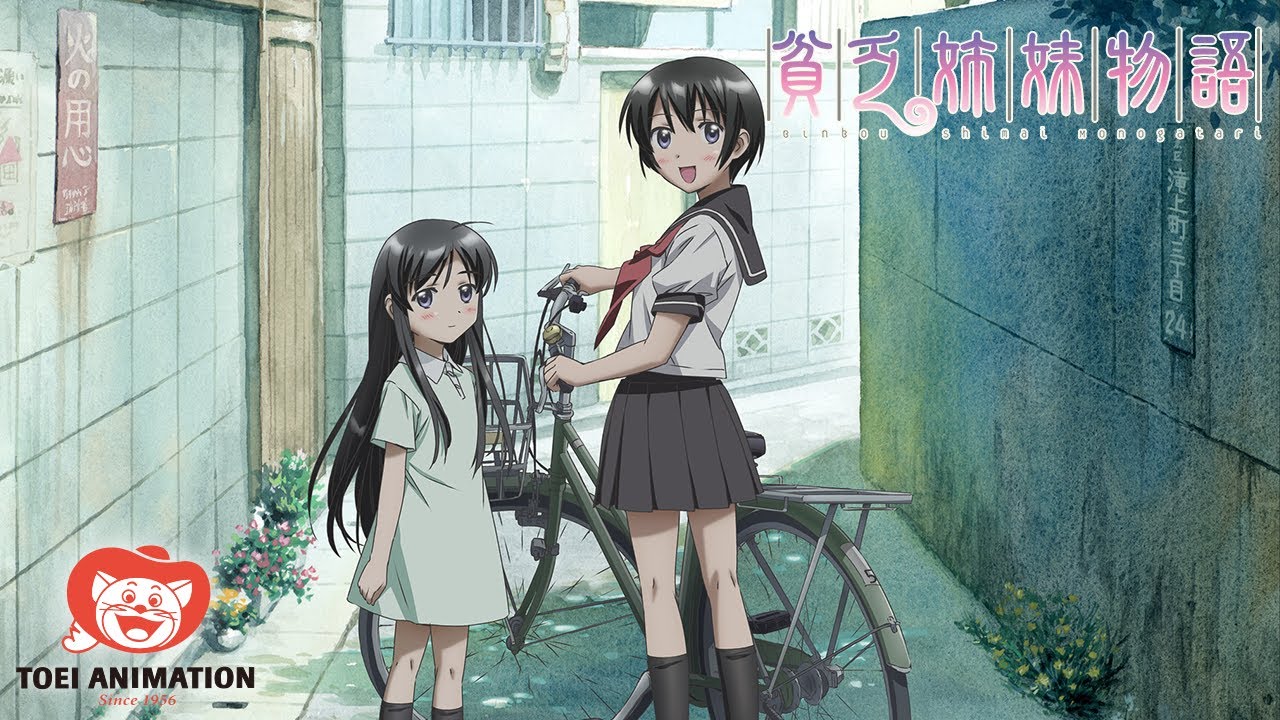
Produced by Toei Animation, this series depicts the daily lives of Kyo and Asu Yamada, two sisters living alone in the absence of their parents.
The greatest appeal lies in the warmth of “mutual support”—something the modern world has nearly forgotten—unfolding within a 40-year-old apartment. The older sister supports the household by delivering newspapers, while the younger sister devotedly handles the housework. The sight of these two, who never stop smiling even amidst extreme poverty and are supported by the kindness of those around them, is a supreme “healing” (Iyashikei) masterpiece that quietly questions the true meaning of material wealth.
Kyo and Asu Yamada are two sisters living all by themselves, still only in middle school and elementary school respectively. Despite the hardships of their father disappearing with gambling debts and their mother passing away, they live every day brightly and energetically, never letting depression take over.
Thanks to laws that changed a few years ago allowing minors to work, Kyo supports the household finances by delivering newspapers, tutoring, and sometimes taking on temporary part-time jobs while attending middle school.
Asu is in charge of all household chores, cooking meals, cleaning, and strictly managing their money to help her big sister.
Surrounding the two are many people who watch over them, including their landlord, the novelist neighbor Mr. Saegusa, the lady at the public bathhouse, and the people of the shopping district. Although they face many difficulties and troubles, for them, the greatest happiness above all else is simply having “my little sister” and “my big sister” by their side.
Binbou Shimai Monogatari (The Story of Poor Sisters). Some people might flinch for a moment at this title, which is too direct and even feels a bit raw. “It’s just going to be a tear-jerker tragedy, isn’t it?” “I’m not into stories that make me feel painful…” If you are hesitating to watch because of such thoughts, I want to say this loudly: “Please, throw away that prejudice and watch the first episode.”
This anime, broadcast in 2006, certainly depicts sisters in poverty and harsh circumstances. However, there is no sense of tragedy there. There is only the figure of the two holding hands and surviving each day with smiles no matter the difficulties, and the warmth of the people watching over them. “What does it mean to be truly fulfilled?” “What is the definition of happiness?” This work is packed with important questions that we living in modern society are forgetting.
Today, from the perspective of a veteran columnist, I will unravel the true charm of Binbou Shimai Monogatari, which is handed down as a hidden masterpiece. Please don’t forget to prepare a handkerchief, or rather, a box of tissues.
The protagonists of the story are the elder sister, Kyou Yamada (3rd year of junior high), and the younger sister, Asu Yamada (3rd year of elementary school). They lost their mother, and their father evaporated leaving debts behind. They live alone together in a 40-year-old apartment. Normally, it’s a situation where one might despair, but they never brood over it.
Kyou, the elder sister, supports the household budget with newspaper delivery and tutoring part-time jobs. Asu, the younger sister, handles all the housework despite being only 9 years old, supporting her sister. They rejoice or worry over eggs on special sale or meat for 88 yen, and run to the supermarket in the rain. They even seem to be somewhat enjoying such “poverty.”
The reason their figures are beautiful is probably that they do not perceive poverty as “misfortune.” “Being together is the greatest happiness.” That unwavering value straightens their backs and purifies the hearts of the viewers. Maaya Sakamoto’s simple and warm voice and Tomoko Kaneda’s cute and brave acting give persuasiveness to the bond between the sisters. Especially Kyou’s “doting on her sister” is heartwarming to watch, sometimes to the point of amazement (laughs). Their smiles are the most powerful supplement of all.
Another charm of this work is the gentleness of the “world” surrounding the sisters. The landlord, the people in the shopping district, and the residents of the same apartment. Their brave figures move the hearts of the people around them, and hands of salvation are naturally extended.
That is never out of “pity.” The adults are encouraged by the sisters living positively and come to wish to be kind themselves. Such a “chain of goodwill” is depicted. The episodes with sub-characters, such as the clumsy kindness shown by the seemingly scary landlord and the interaction with another pair of sisters, Kaneko and Ginko, are also excellent.
Especially, the introduction of this work shakes the heart so much that some say they cried from the opening narration of the first episode. However, those are not “sad tears.” They are “warm tears” shed when touching human kindness. When you are tired of the strained human relationships in modern society, the “gentle world” depicted in this work will be an oasis that permeates your dry heart.
Although the original manga is compact with a total of 4 volumes, the anime version adds unique direction and arrangements. For example, the scene where flowers bloom during the sisters’ conversation. This is not in the original work, but it functions as a method unique to anime to visually express “richness of heart” within a bleak life of poverty (although some may find it slightly annoying, that is also part of its charm).
Also, the episode of the father, which was not depicted in the original work, was imported back, showing the deep understanding and love of the anime staff for the work. The freshness of the OP theme “Shinkokyuu” (Deep Breath) and the cuteness of the ED theme “Soyokaze Life” (Breeze Life) also match the atmosphere of the work perfectly, deepening the afterglow after viewing.
Of course, there are episodes not animated (such as “Last Present”), so if you liked the anime, please pick up the original manga as well. Although the medium is different, the preciousness of the “bond between sisters” flowing there does not change.
Binbou Shimai Monogatari is by no means a flashy work. It is a story of ordinary daily life where neither magic nor miracles occur. However, that is precisely why the “happiness” depicted there is genuine.
Even without high-class meat or the latest game console, if there is a dining table where you can laugh with your loved ones, it becomes a feast. Even without mobile phones or the internet, if you hold hands, hearts can communicate. Kyou and Asu teach us the “richness of heart” that we have left behind in our pursuit of material wealth.
After watching, surely you will want to say “thank you” to your family and loved ones. And you will not be able to help but sincerely wish that the future of these sisters will be bright.
A hidden masterpiece, a monumental healing anime. Please take a look at the Yamada family’s small dining table. There, the best “feeling of fullness” that money can never buy is waiting.
(C)かずといずみ・小学館/貧乏姉妹物語プロジェクト