The "Gray Youth" and "Rose-Colored Mysteries" Depicted in "Hyouka" — The Pinnacle of Daily Life Mystery Reached by Kyoto Animation
tarumaki
Enter the Moment
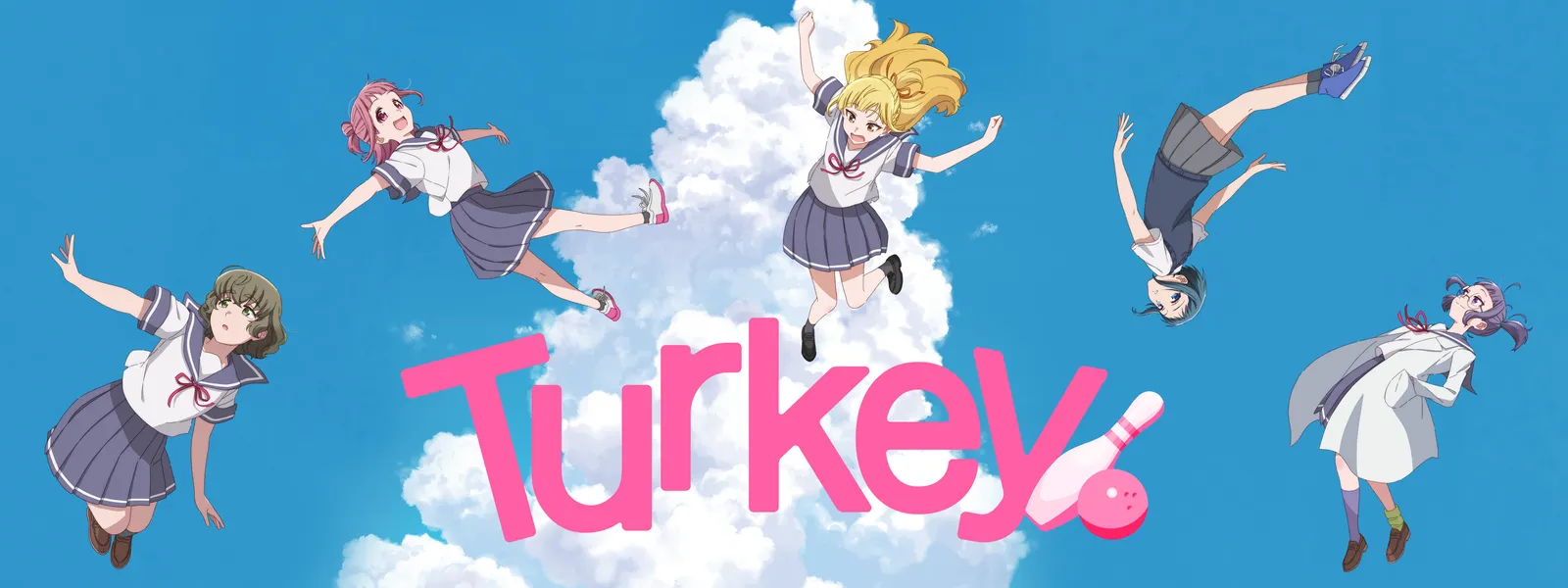
Produced by Tatsunoko Production and BAKKEN RECORD, this series is set in Chikuma City, Nagano Prefecture. It tells the story of girls, each harboring their own worries and setbacks, who face themselves through bowling.
The greatest appeal lies in its drama, which goes beyond a mere “club activity series” to depict the “raw emotions” of the girls. Behind the exhilaration of knocking down a pin, a thrilling narrative involving obsession with friends and feelings of inferiority intersects, resonating with the characters’ delicate facial acting. Amidst the atmospheric scenery of a regional city, the dry sound of pins being struck becomes a signal for the girls’ rebirth. It is a work that is both fresh and sharp.
–Will you believe me? A story of ours that is mysterious, beloved, heartbreaking, precious, and cannot be told just by “fun”–
Turkey… A bowling term for getting three consecutive strikes.
Mai, a second-year high school student and captain of the Ikkokukan High School Bowling Club, is a genius who cannot win matches. Whenever she gets a Turkey, for some reason, she inevitably ends up leaving the impregnable split, “Snake Eyes,” right after.
Rina, the only first-year member, says to Mai: “You’re doing it on purpose, aren’t you?” “Captain, you are running away from winning. I want to win. If you have no intention of winning, I will quit the club.”
This is the story of Mai, Rina, Sayuri, Nozomi, and Nanase… the five members of the Ikkokukan High School Bowling Club. It is a story of the end of summer, where they lose and fight, lose and fight, and finally win.
“Bowling x High School Girls.” When you hear these keywords, what kind of story do you imagine? A life-sized youth club activity story where girls compete for scores at a bowling alley after school, worrying about love and friendship, and growing little by little… It would be a common sensical reaction to imagine such a thing. The PVs and key visuals before the broadcast certainly foreshadowed that route. The beautiful scenery of Chikuma City, Nagano Prefecture, and refreshing girls. Ah, this is a work in the context of “Kirara-kei” that can be watched with peace of mind, I thought.
However, as a veteran columnist, let me assert this. That preconception is shattered into smithereens in the last few minutes of Episode 1. Just as a thrown ball sends pins flying, our common sense is destroyed.
The original anime “Turkey!” suddenly appeared in the anime scene of 2025. This work is a monster and a masterpiece that achieved a “genre fraud”… no, a “transcendence of genre” that will remain in anime history. Viewers who started watching thinking it was a youth sports anime are suddenly thrown into the carnage of the “Sengoku period” (Warring States period). The bowling ball glows, and before they know it, they are in the middle of a battle. A world where severed heads roll and rogue samurai attack. This bold and fearless development is reminiscent of the shock School-Live! and Brave Bang Bravern! gave to viewers. However, the true value of this work is not just in the impact of the “opening punchline.”
Flowing deep beneath the absurd setting is a painfully desperate craving for a “place to belong” and the philosophy of “retry (the second throw)” in life. Today, I would like to thoroughly unravel from three perspectives why this seemingly chaotic panic-movie-like anime heats our hearts so much and stimulates our tear ducts.
First, what cannot be avoided when talking about this work is the question, “Why bowling in the Sengoku period?” Thinking normally, if high school girls time-slip to the Sengoku period, they should be in the Kendo club or Archery club. However, the protagonists of this work are the Bowling Club. The weapons they use to protect themselves in the war-torn world are not swords or spears, but lumps of synthetic resin weighing over 10 pounds (about 5 kg) — bowling balls.
“Because it’s the Sengoku period, it’s permissible to throw balls at people.” I couldn’t help but slap my knee and burst into laughter at this oblique idea. However, what is surprising is that the production team depicts this surreal picture with “dead seriousness.” To save Suguri, the head of the Togura family who rules the place corresponding to modern Chikuma City, Nagano Prefecture, the protagonist Mai Otonashi and her friends throw balls. There is no hesitation in their figures.
This style of “subduing unreasonable logic with heat and momentum.” This somehow reminds me of the “torrent of passion” possessed by director Nobuhiko Obayashi’s movies and Kadokawa movies of the 80s. If you scrutinize reality and consistency, there are mountains of points to retort. However, the creator’s initial impulse of “doing it because it’s interesting” and “drawing it because I want to draw it” overflows from the screen, and the viewer is swallowed by that heat.
Also, the high adaptability at the time-slip destination is a charm of this work. Surprisingly, they build a “bowling alley” in the Sengoku period in no time. If any trouble occurs, “solve it with bowling.” You might think, “That’s ridiculous.” But as you watch, you strangely find yourself convinced. It feels less like the production side is “intentionally making it chaotic” and more like they are making it believing earnestly that “this is necessary for this story,” with raw madness and sincerity. That sublimates this work into a one-and-only entertainment without any strange awkwardness.
Behind the absurd settings, what this work depicts extremely carefully is the “emotional wounds” of the characters. In particular, the characterization of the second-year student, Rina Godai, will pierce deeply into the hearts of many people living in modern society.
She received gifted education in bowling from childhood, and her skills are top-class in the club. However, she lost her place in the family due to her parents’ divorce and remarriage, and is trapped by the obsession that “I am an existence that is only good at bowling” and “If I am not useful, I have no value.” That is why she gets irritated with, clashes with, and isolates herself from the lukewarm club policy of Mai and others who prioritize “fun.”
Under the extreme situation of the Sengoku period, Rina’s loneliness reaches its peak. “You’re going to leave me behind anyway, right?” Her scream is not just selfishness. It is a sorrowful SOS of a wounded girl who wishes to be needed and loved by someone. Her figure trying to seek a place in the past world even by throwing away the chance to return to the present time is so desperate that it tightens the chest just watching.
To such Rina, the answer shown by Mai and the others was simple. “We don’t like you because you’re useful. We like you because you’re Rina.” It’s not logic. It’s not profit and loss. We go home together just because we are friends. Because it is the Sengoku period, an era where the value of life is light, the “friendship without logic” held by modern high school girls stands out. A girl who thought she was worthless meets friends who seek her without calculating profit and loss, and finds a “place to belong” in the true sense. This drama of “rebirth” can be said to be the soul of this work that connects the chaotic worldview with a single core.
In the climax of the story, they challenge literally “life-staking bowling.” A crazy death game where everyone will be executed unless they all get strikes. Here, the greatest message presented by this work is the rule that “Bowling has a second throw.”
Against the Sengoku warlord, Mai begs for a “second throw.” Everything does not end with one failure. There is a chance to aim again for the pins (issues) that could not be knocked down. That is the essence of the sport of bowling and the life philosophy itself that this work tried to depict.
There is a saying “A samurai has no second word (never goes back on his word),” but this work brilliantly counters it with “There are gods who have a second word (second throw).” The result of the first throw is not asked. It’s okay to fail. What is important is not to give up and throw the second throw. This logic moves the stubborn heart of the Sengoku warlord and also shakes the hearts of the viewers.
The title “Turkey!” means three consecutive strikes, but it might also contain slang meanings such as “coward” or “failure.” However, no matter how many times they threw gutter balls or got snake eyes (an unlucky leave), they continued to throw the second throw. Recovering the emotional wounds borne before the start of the story (failure of the first throw) through the experience in the Sengoku period (second throw), and changing it into a spare, or a strike. When you realize the beauty of this composition, you should be surprised that all the settings that looked absurd were inevitable metaphors.
Whether the recipient “swallows or doesn’t swallow” this unique rule. The viewer’s intelligence and sensibility are being tested, but beyond that hurdle, supreme catharsis awaits.
Turkey! may not be a work that appeals to everyone. For those who watch with a deduction method saying “The logic doesn’t fit” or “Impossible,” the heat of this work will not reach them. However, for those who can receive the “passion” of the production team trying to push through this unreasonable plot with hot enthusiasm, it should become a treasure they will never forget in their lives.
Bowling, the Sengoku period, and the youth of high school girls. At first glance, elements like oil and water fuse in a miraculous balance, and finally bring refreshing emotion and tears. It is truly a viewing experience like a daydream.
If you are tired of predictable stories. Or if you are hesitating to throw the “second throw” for fear of failure. Please, dive into the world of Turkey!.
After watching, you will surely want to go to a bowling alley. And while throwing a heavy ball, you should think: “Life has a second throw too.”
The scenery of Chikuma City, delicious apricot sweets, and their smiles. I promise that all of them will score a “strike” in your heart.
ⒸBAKKEN RECORD PONY CANYON INC./「Turkey!」製作委員会