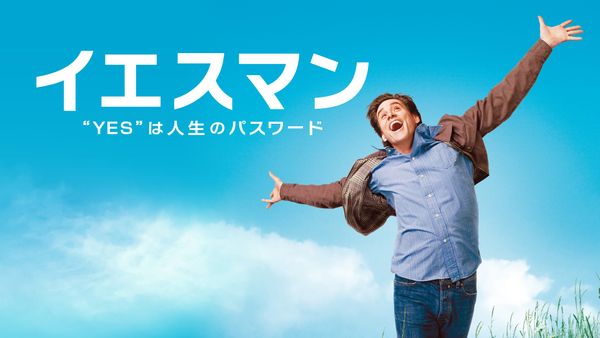
「イエス」で広がる世界!映画『イエスマン “YES”は人生のパスワード』の魅力
tarumaki
Enter the Moment
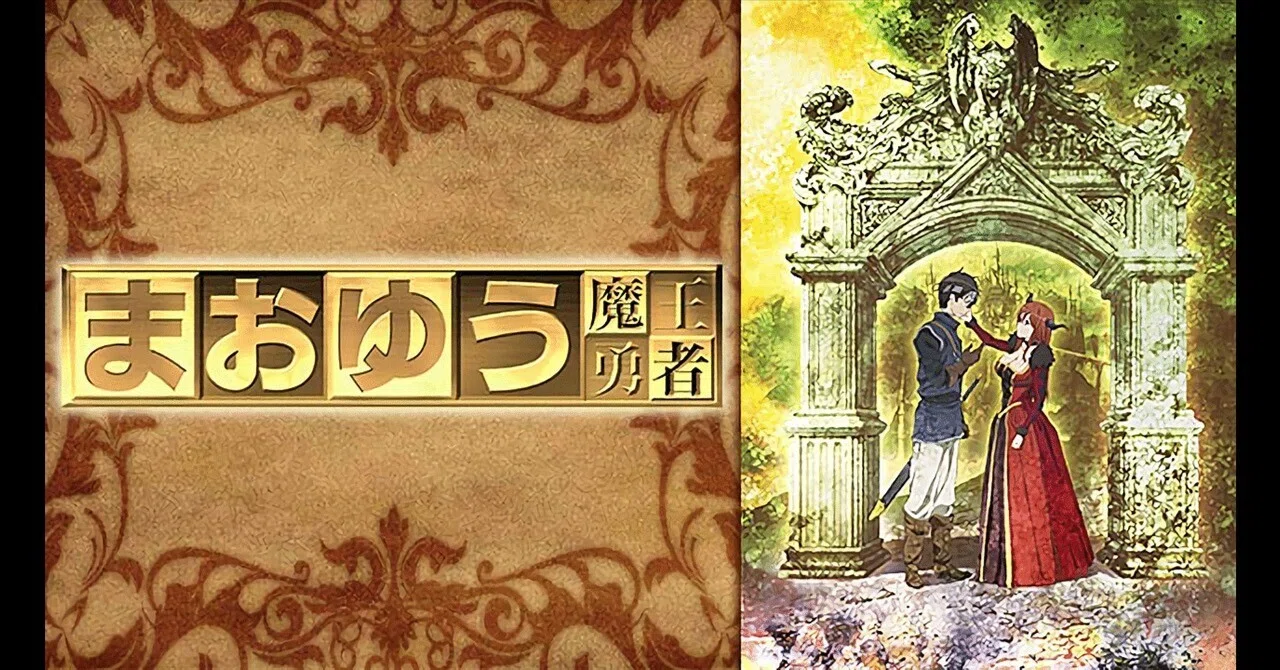
About the Work Based on a novel by Mamare Touno that originated on an internet bulletin board, “Maoyu: Archenemy & Hero” (Maoyuu Maou Yuusha) is a unique fantasy series adapted into a TV anime in 2013, themed around “Economics and Geopolitics.”
The greatest appeal of this series lies in its approach to the question, “How can we end a war?” not through force, but through the lenses of macroeconomics and geopolitics.
Fifteen years have passed since the war between Humans and Demons began. Although the Human Army charged through the gate into the Demon Realm and captured a key stronghold, the Demon Army seized the opportunity to occupy part of the human territory. In the freezing Southern Kingdoms, skirmishes between Demons and Humans occur frequently, and the people suffer from the chaos and damage caused by monsters.
Amidst this nightmarish confusion, a single Hero rose up and set out to defeat the Demons with three companions. Their rapid advance became a beacon of great hope for the people living in the Central Nations. However, perhaps frustrated by the slow progress of the invasion into the Demon Realm, or perhaps for another reason, the Hero left his companions behind and headed alone toward the castle where the Demon King resides…
“Become mine, Hero.” “I refuse!”
The story begins with a conversation like the final battle of an RPG. However, what unfolds there is not a sword fight or magical battle, but a “presentation” based on vast amounts of data. Maoyu Maou Yuusha (Maoyu: Archenemy & Hero). Originating from an internet bulletin board, this work is an extremely intellectual “historical and economic drama” disguised as fantasy.
If you defeat the Demon King, will the world become peaceful? If the war ends, what will happen to the people who made a living from the military industry? What is needed to save the regions suffering from exploitation by the central nations?
While there are heartwarming romantic comedy elements like the Hero being used as a body pillow by the Demon King, a sharp questioning that applies to modern society flows at its foundation. Gathering the staff and cast of Spice and Wolf (the golden duo of Ami Koshimizu and Jun Fukuyama!), this work is a masterpiece that adults interested in history and economics, as well as anime fans, should definitely watch. Today, from the perspective of a veteran columnist, I will talk about the hope “beyond the war” depicted in this work.
The Demon King in this work is not a terrifying monster with horns. She is an intelligent, cute woman who worries a bit about flab (the horns are a headband). However, her true terror lies in her intellect.
She explains to the Hero that defeating the Demon King will not end the war but rather invite civil war among humans and economic collapse. And she proposes: Let’s change the world together to see “what lies beyond that hill.” Hiding their identities and living in a frontier village, the two carry out reforms one after another, tracing the modernization of medieval Europe, such as agricultural reform (introduction of potatoes and the three-field system), establishment of educational institutions, and sharing of knowledge through movable type printing.
Not solving everything with magic in one go!… but by fundamentally extinguishing the “sparks of war”—poverty and starvation—through steady technological innovation and the improvement of economic distribution. The perspective of this realist Demon King is extremely exhilarating. The process of allying with merchants who move based on profit and loss, and changing a world of prejudice and conflict into a world of “transactions and rationality,” is truly the real thrill of an economic drama.
In Maoyu, characters do not have proper names. They are called by their titles such as “Hero,” “Demon King,” “Female Knight,” and “Head Maid.” This suggests that while being “individuals,” they are also symbolic beings carrying “roles” in society.
Among them, the one who achieves the most dramatic growth is the “Elder Maid.” Originally an oppressed serf picked up by the Demon King. At first, she was lethargic and frightened, but by receiving education from the Demon King and gaining knowledge, she awakens to her own dignity.
In Episode 9, the speech she gives before the masses when she is about to be executed as a heretic is a famous scene remaining in anime history. “Kill me! Even so, I am not a bug, I am a human!” Her scream not to abandon thinking for oneself and not to let go of freedom is a strong question to us living in the modern age. Have we stopped thinking and become “bugs”? Are we just following the justice decided by someone else? The moment a former serf stands up as a “human” obtaining the weapon called knowledge. There should be no viewer whose heart is not shaken by her tears and pride.
The demons appearing in this work are surprisingly human-like creatures. They are not absolute evil but depicted as neighbors who just have different cultures and positions. Unlike the demons in Frieren: Beyond Journey’s End who are “absolute predators who cannot be understood,” it is closer to the feeling of people in the past fearing people from foreign lands calling them “oni” (demons).
While “human power holders” like the church and central nations try to continue the war for their own interests, the Demon King and the Hero explore a path of coexistence transcending species. Even though we know “war is bad,” the reality is that it cannot be stopped easily. There lies “Karma” and “Unreasonableness” that also apply to modern warfare where people die at the push of a button.
However, they do not give up. The Hero, while possessing overwhelming military power, uses it for “reconciliation,” and the Demon King continues to challenge a “bloodless battle” using wisdom. Their relationship is a bittersweet romantic comedy, but also the strongest partnership where they entrust their backs to each other. The “world without war where everyone is affluent” that they ultimately aimed for. It might be idealism, but the figure of struggling muddily towards that ideal is more beautiful than anything.
Maoyu Maou Yuusha is a work that gives us “learning” beyond mere entertainment.
Knowledge makes people free. Economics connects people. And dialogue becomes the first step to stopping conflict. It is packed with educational and passionate messages that could even be shown in middle or high school world history classes.
If you feel helpless watching daily news or have doubts about the structure of society, please watch this work. The Demon King’s wisdom, the Hero’s ability to act, and the Elder Maid’s pride might light the “fire of reform” in your heart.
And after watching, surely you will want to say to someone: “Become mine.”