The Miracle Named "Beyond the Boundary" — A Dark Fantasy of "Blood" and "Love" by KyoAni, and Its Unfading Brilliance
tarumaki
Enter the Moment
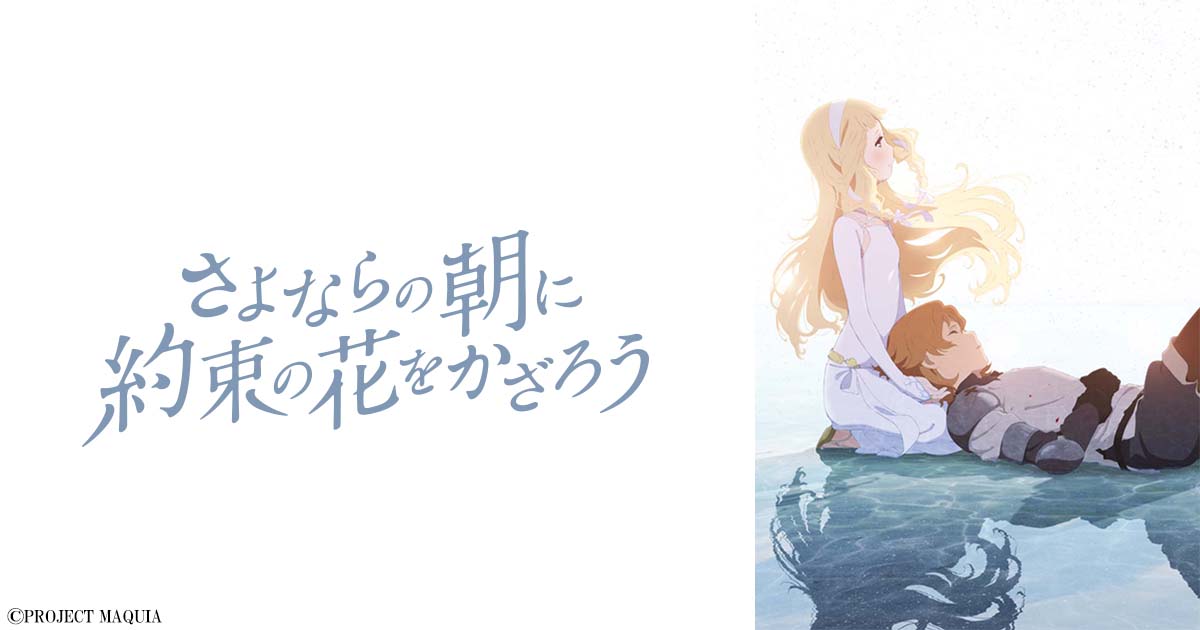
The directorial debut of Mari Okada, produced by P.A.WORKS, this film is an eternal fantasy chronicling the life of Maquia, an immortal girl who rescues and raises an orphaned baby named Ariel amidst the fires of war.
The greatest appeal lies in its portrayal of the cruel yet beautiful passage of time between a mother who never ages and a son who grows toward adulthood. This is brought to life through breathtaking background art and meticulous cinematic compositions that speak volumes about the characters’ inner emotions. It is a guaranteed tear-jerker that powerfully affirms the preciousness of “loving someone,” even within an encounter destined for eventual parting.
The vertical threads are the passing days. The horizontal threads are the lives of people.
The people of Iorph live in a secluded land, quietly weaving their daily events into a cloth called Hibiol. With lifespans spanning hundreds of years and physical aging that stops in their mid-teens, they are known as the “Clan of the Separated” and regarded as living legends.
Maquia, an orphaned Iorph girl, spent her peaceful days surrounded by friends but always felt “alone” somewhere deep inside. That peace is shattered in an instant when the Mesarte army invades, riding ancient beasts called Renato, seeking the immortal blood of the Iorph. In the despair and chaos, the most beautiful girl of the clan, Leilia, is abducted, and Krim, the boy Maquia secretly loved, goes missing. Maquia manages to escape but loses both her kin and her home.
Wandering through a dark forest with a hollow heart, she finds herself drawn to an “alone” baby who has just lost his parents. Ariel grows into a young man, while Maquia remains a young girl as time passes. The same seasons, yet different flows of time. Within a changing era, the bond between the two shifts its colors. This is a story of irreplaceable time, spun when one lonely soul meets another.
“The deeper you love, the harder the inevitable parting becomes.” Has there ever been an animated work that so beautifully and mercilessly depicts this cruel truth, which everyone knows in their heads?
Mari Okada is a rare scriptwriter who has shattered people’s tear ducts with numerous masterpiece anime, such as Anohana: The Flower We Saw That Day and The Anthem of the Heart. Her directorial debut, the original animated film Maquia: When the Promised Flower Blooms (Sayonara no Asa ni Hana wo Kazarou), was released in 2018.
Maquia is a girl of the Iorph, a race known as the “Clan of the Separated” because they stop physically aging in their mid-teens and live for hundreds of years. Ariel is a human baby she finds in the midst of war and decides to raise. Humans and Iorph. When these two, whose lifespans flow at fundamentally different speeds, become “mother and son,” what awaits them is a paradoxical and tragic conclusion: a mother watching her child die of old age.
While borrowing the worldview of royal high fantasy, this work places extremely universal and personal emotions—”becoming a mother” and “loving someone”—at its core. Today, from the perspective of a veteran columnist, I will delve deeply into the charm of this film, which stirred intense emotions and sparked mixed reviews, and the true nature of “Okada Mari-ism” flowing beneath it.
The worldview of this work is a medieval European-style high fantasy featuring swords and magic (or rather, dragons). However, the focus of the story is not on “saving the world from crisis,” but entirely on “how Maquia and Ariel become a ‘family’.”
Orphaned Maquia fills her own loneliness and finds meaning in life by raising Ariel. This dynamic of “the weak raising the weak” is extremely precarious and therefore beautiful. However, if you peel away the veil of fantasy, what is depicted is an extremely realistic process of parenting.
The unconditional attachment of infancy. The rebellion of boyhood. And the adolescent conflict, akin to the Oedipus complex, towards a “mother” who remains forever a teenage girl in appearance. As Ariel grows, he is confronted with the differences between himself and Maquia (their race and lifespan). He suffers from the dilemma of wanting to “become a man who can protect her” while knowing “he is not her real son.” The rawness of this psychological depiction is the true essence of Director Mari Okada. Combined with the meticulous and overwhelming visual beauty by P.A.WORKS, the wavering emotions of the characters speak directly to the viewer’s heart.
To deeply appreciate this work, the presence of “mothers” other than Maquia is indispensable. Particularly, Leilia, Maquia’s best friend who is kidnapped by the nation of Mezarte and forced to bear the prince’s child. And Dita, a general of the Mezarte army and a mother herself.
While Maquia is depicted as “a mother who raises a child not related by blood with unconditional love,” Leilia is portrayed as “a mother who loves her biological child but is torn apart and driven to madness.” For Leilia, her daughter Medmel is an object of love, but at the same time, a “curse” that binds her to the royal palace. The decision she makes at the end of the story and a certain word she directs at her daughter leave a powerful impact as “another form of a mother’s love,” completely opposite to the relationship between Maquia and Ariel.
The cloth woven by the Iorph people, “Hibiol,” represents their daily lives and is the record of their lives itself. Just as the warp and weft intersect to form a single piece of cloth, people meet, part, and weave their feelings together. “Even knowing the fate of parting, meeting and loving is not in vain.” Through the lives of these three mothers, this work strongly presents one “answer” to that harsh question.
One of the factors that divide opinions on this work is the sentiment that “its intent to make you cry is too blatant.” Indeed, the ending is known from the start. Just hearing the premise of “a long-lived mother watching her short-lived (human) son pass away,” anyone could predict the final scene. In a sense, it can be said to be a very classic, cliché story progression.
However, the awesomeness of this work lies in its overwhelming directorial power and intense passion that makes you cry “even though you know what’s coming.” In the final act, the scene where the elderly Ariel draws his last breath. Maquia breaks the promise she once made to “never cry again” and wails like a child. That sight violently shakes primal emotions within the viewer’s heart, such as “gratitude towards parents” and “feelings for lost loved ones.”
It is easy to cynically dismiss this as “inspirational porn” (kandou poruno). However, Director Okada’s “romanticism” approach—baring human emotions and throwing them straight at us in an almost unrefined manner—is a powerful antithesis to the cynical atmosphere of the modern age. The crystal-clear singing voice of rionos’s “Viator” playing during the ending gently purifies the viewer’s heart, which has been filled with sorrow. This catharsis reaches the realm of “art” that could only be achieved through the medium of animation.
Maquia: When the Promised Flower Blooms is a film that strikes people in entirely different ways depending on their age and circumstances—especially those preparing for marriage, parents who have experienced raising children, and those who have lost someone precious.
Having eternal life is by no means happiness. It is a “curse of loneliness” where loved ones pass away one after another, leaving you alone in the world. Even so, Maquia did not regret meeting Ariel and loving him. Rather than living without connecting with anyone out of fear of the pain of parting, she chose the path of living while holding the memories (Hibiol) of loving and being loved in her heart, even if it meant getting hurt.
If you are troubled by your relationship with a loved one or are standing still in the sorrow of parting. Please watch this film and touch the clumsy yet beautiful “Hibiol” they wove. Surely, the time you spend with the person next to you right now will feel more precious and irreplaceable than ever before.
(C)PROJECT MAQUIA