“This Art Club Has a Problem!” — A Wholesome, Clumsy Love Story Hidden Beneath Everyday Chaos
tarumaki
Enter the Moment
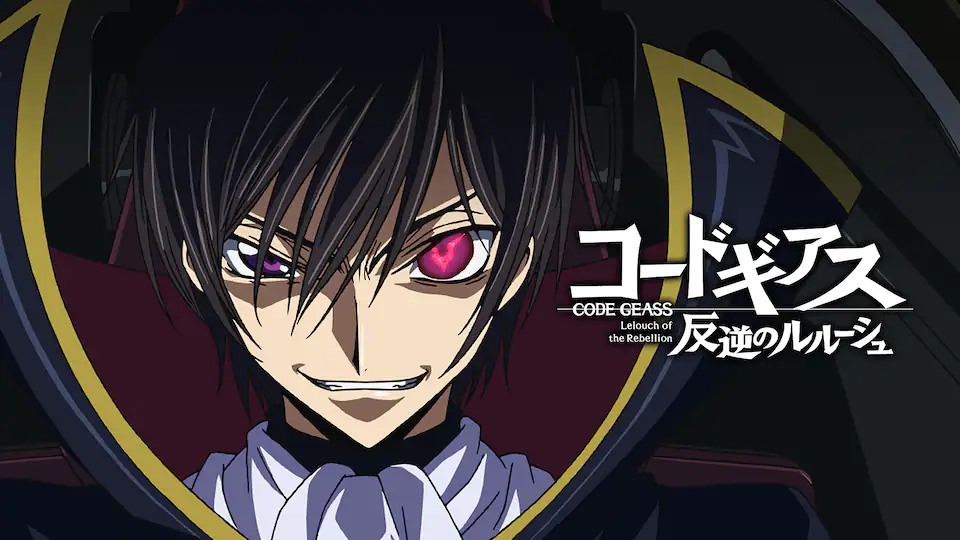
Produced by Sunrise, this series is set in a Japan ruled by the massive Holy Britannian Empire. It tells the story of Lelouch, a former prince who obtains “Geass”—the power of absolute obedience—and plots a rebellion.
The greatest appeal lies in the meticulous psychological warfare reminiscent of real-world geopolitics, and the cruel conflict between Lelouch, who seeks results, and his best friend Suzaku, who pursues ideals. Visual techniques such as dramatic composition and bold camerawork, which highlight the characters’ emotions, deeply portray the lonely resolve of a protagonist walking the path of carnage. It is a masterpiece that violently shakes the viewer’s sense of ethics.
In the fall of 2006, Code Geass: Lelouch of the Rebellion opens the door to destiny!
Japan, occupied by the superpower Britannian Empire, is now known as Area 11. Living there are two boys: Lelouch and Suzaku. Lelouch, who obtains the power of “Geass” and seeks to destroy the world. Suzaku, who pilots the Knightmare Frame “Lancelot” and seeks ideals and truth in the world.
Their contrasting ways of life eventually become a massive surge that shakes the empire. A new legend of the 21st century is about to begin.
There are countless masterpiece anime in the world, but there are only a few that remain vividly in our memories regardless of how many years have passed since their broadcast, making us want to discuss them passionately at a moment’s notice. Code Geass: Lelouch of the Rebellion is undoubtedly at the top of that list.
This work is a picaresque romance in which a single boy raises the flag of rebellion against the Holy Britannian Empire, a massive superpower that rules one-third of the world. The relentless success story and unpredictable plot twists, which can be described as the pinnacle of entertainment, threw fans into a vortex of enthusiasm during its original broadcast.
The protagonist, Lelouch vi Britannia, is by no means an “innocent and righteous ally of justice.” He is a dark hero who lies for his goals, makes ruthless decisions, and unhesitatingly destroys existing vested interests. But that is exactly why he exudes overwhelming charisma and strongly captivates our hearts.
Today, from the perspective of a veteran columnist, we will unravel the universal appeal and profound themes of this work, dividing the reasons why it is so incredibly fascinating into three key points.
Code Geass is a mecha anime featuring humanoid weapons called “Knightmare Frames.” However, I highly recommend this work especially to those who say, “I’m not really interested in mecha anime.” This is because the true essence of this work lies not in simple physical brawls between robots, but in the “mind games” where Lelouch dominates the board.
If we were to break down the composition, it consists of a perfect balance: “Mind Games (50%) > Geass (30%) > Mecha (20%).” The power of absolute obedience, “Geass,” seems like a cheat ability at first glance, but because there are strict limitations—such as it only working once per person—it is by no means omnipotent. Lelouch devises meticulous tactics as if playing chess, toying with the armies of a great nation despite starting with nothing but himself.
However, his perfect strategies are constantly disrupted by the intervention of “irregular characters.” When cornered, he doesn’t just solve the problem with the magical power of Geass, but figures out how to survive through intense, edge-of-your-seat intellectual warfare. This continuous stream of unpredictable developments creates the ultimate sense of excitement. The battle scenes, intertwined with heroines and unpredictable rivals, reflect the characters’ ways of life, making it impossible to look away for even a second.
An indispensable element in discussing this work is the existence of Lelouch and his best friend, Suzaku Kururugi, and the drama of their misunderstandings born from their differing ideologies.
In contrast to Lelouch’s revolutionary approach of “destroying the old order to achieve results,” Suzaku argues that “results gained through wrong means are worthless,” choosing a conservative path to aim for peaceful reform from within the military. The sight of these two, who both desire a peaceful world but are forced to become enemies due to their ideological differences, possesses a frustrating beauty akin to watching a Greek tragedy.
At the center of this structural conflict stands Euphemia (Euphy), a pure and innocent princess. She is the symbol of love and ideals, and by joining forces with her white knight, Suzaku, they become a light of hope that surpasses any military might or machinations. However, the story is cruel. The shocking episode known as “Bloodstained Euphy,” which remains etched in anime history, was a tragedy brought about by a momentary lapse in Lelouch’s guard and a rampage of his Geass. This raw, unvarnished development mercilessly forces viewers to confront “the powerlessness of justice without power” and “the isolation of drowning in power.”
In the final stages of the story, Lelouch must face the sins of using many people as pawns for his own convenience and taking countless lives. He never truly repents to become a “good person.” To create the peaceful world he believes in, he sticks to his own methods until the very end, even if it means producing sacrifices.
The culmination of this is his final plan, the “Zero Requiem.” It is a spectacular act of self-sacrifice: becoming a dictator who gathers all the hatred of the world upon himself, and severing the chain of hatred by allowing himself to be struck down. It was the moment Lelouch literally embodied the ultimate philosophy he had proclaimed since the first episode: “The only ones who should kill are those who are prepared to be killed.”
What we must pay attention to here is the scene where his younger sister, Nunnally, holds his hand as he collapses. Throughout the story, it was depicted that Nunnally could “see through lies or truth” by holding someone’s hand. The moment she holds Lelouch’s hand, she realizes all the lies her brother had told—the truth that he deliberately played the evil emperor to free the world from hatred. Her agonizing realization that he was still her beloved, “kind older brother” brings tears to our eyes no matter how many times we rewatch it.
Code Geass: Lelouch of the Rebellion transcends the boundaries of mere entertainment, throwing deep themes at us such as “the meaning of human life” and “the resolve for revolution.”
Lelouch’s way of life—repeating lies and violence “to create a world where his precious loved ones can continue to live with smiles”—is full of contradictions. However, seeing him suffer, struggle, and yet move forward amidst those contradictions, while accepting the reality that even the most precious people will eventually die, makes us uncontrollably empathize with him.
Whether you have never seen it before, or have watched it in the past, I urge you to experience this profound story once again. By revisiting it as you grow older, the pain and philosophy carried by the characters will surely resonate even more deeply in your heart. Please witness the trajectory of the dark hero shining brilliantly in anime history with your own eyes.
(C)SUNRISE/PROJECT L-GEASS Character Design (C)2006-2017 CLAMP・ST