The Painfully Pure Realism of Youth Depicted in "true tears" — Searching for the "True Tears" Lost in the Snowy Landscapes of Toyama
tarumaki
Enter the Moment
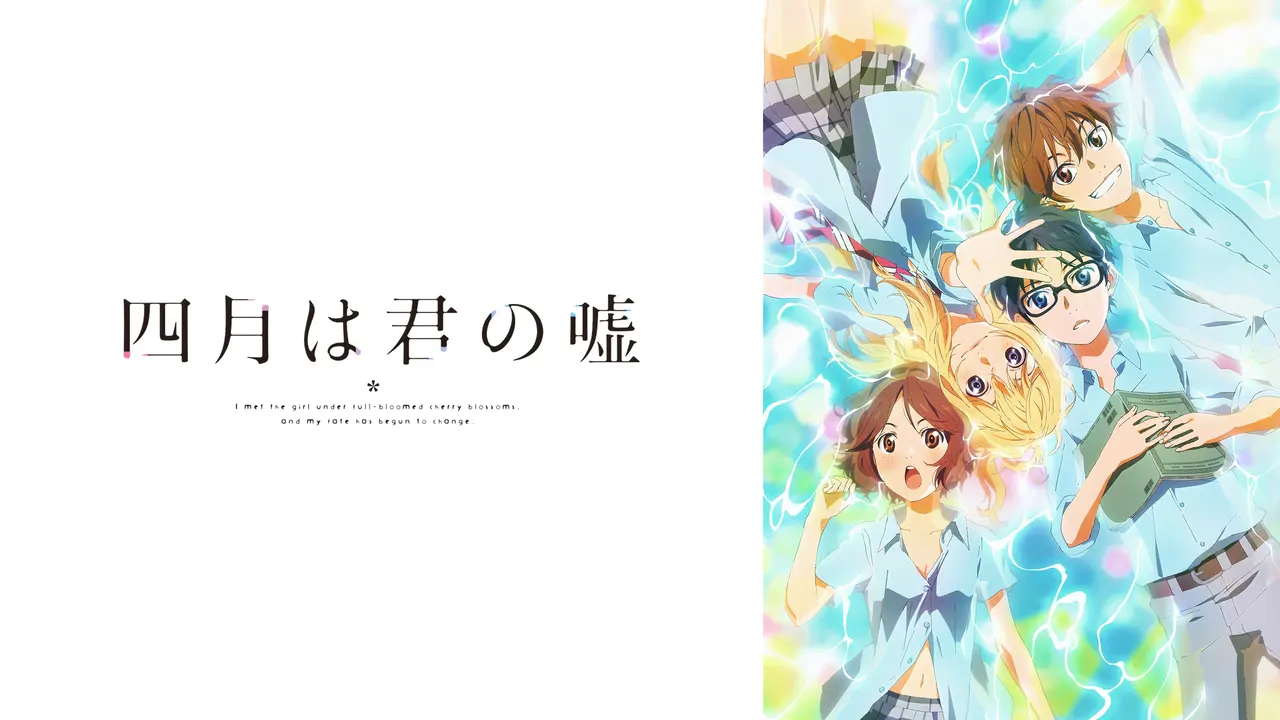
Based on the manga by Naoshi Arakawa, “Your Lie in April” is a smash-hit coming-of-age musical story that was adapted into an anime in 2014. Themed around the light and shadow of music and youth, it depicts a narrative that is as heartbreaking as it is beautiful.
The appeal of this work lies in its deep portrayal of beautiful classical music, the bittersweet romantic feelings of youth, and the themes of talent and internal conflict. The passion the characters pour into their music, and the way they support each other as they grow, evokes an emotional response that you cannot watch without shedding tears!
Kousei Arima is a former child prodigy who lost the ability to play the piano following the death of his mother. His daily life, once monochrome, begins to take on color after a chance encounter with a certain violinist…
Kaori Miyazono: an audacious, free-spirited musician overflowing with personality. Captivated by this girl, Kousei begins to move forward on his own two feet through his fourteenth year.
Winner of the 37th Kodansha Manga Award, this is a “Coming-of-Age x Music x Love Story”!
“Have you ever watched an anime that left you so stunned you couldn’t move for a while?”
If you haven’t experienced that sensation yet, or if you want to immerse yourself once again in that heart-wrenching poignancy, I would unhesitatingly suggest Your Lie in April (Shigatsu wa Kimi no Uso).
This work is a masterpiece that cannot be categorized simply as a “tear-jerker.” It is a visualization of the intensity and fleeting brilliance of youth itself. Kousei Arima, a former child prodigy who lost the ability to play the piano after his mother’s death, and Kaori Miyazono, a free-spirited and unique violinist. Their meeting sets frozen time in motion and repaints a monochrome world into something colorful.
In this column, I will thoroughly delve not only into the brilliance of the story but also into the visual techniques, the voice acting, and the truth behind the “Lie” in the title. This is a record of their lives, sprinting forward without fear of loss.
First, we cannot talk about this work without mentioning the high level of perfection in its animation. What immediately catches the eye is the beauty of its “colors.” The background art is not just beautiful; it functions as a mirror reflecting the characters’ emotions. Cherry blossoms in spring, the sea in summer, autumn leaves, and winter snow… The expression of light changing with the seasons is gentle, sometimes cruelly vivid, and appeals directly to the viewer’s heart.
Furthermore, the “performance scenes” are remarkable. You might have wondered, “How on earth did they make this?” In fact, these scenes involved tremendous effort: model artists were filmed from multiple angles using several cameras, and animators hand-drew the movements based on that footage. It’s not just simple 3D CG tracing; the trembling of fingertips, the movement of shoulders with breathing, and the shifting of body weight onto the instrument are vividly expressed as animation. The link between the bowing of the violin and the emotional surge is, in a word, a masterpiece.
The music layered on top is also magnificent. Classical masterpieces synchronize perfectly with the characters’ psychological descriptions (monologues), conveying their “screams” more effectively than words. The voice acting is also superb. Natsuki Hanae, who plays the protagonist Kousei, pulls viewers into Kousei’s inner world with delicate and poetic monologues. And Risa Taneda, who plays the heroine Kaori. Her delicate acting, which hints at the “shadow of death” hidden within her brightness, possesses a depth that makes it impossible to listen without tears when watching for the second time.
The story of this work lightly leaps over the boundaries of genres like “Boy Meets Girl” or “Music Anime.” There lies an intersection of two major narratives (plots).
One is the “story of a frustrated genius regenerating and growing.” The other is the “story of a girl who realizes her death is near and runs through her remaining time with all her might.”
These two intertwine like a winding road, giving the story depth and thickness. To Kousei, Kaori appears audacious and forceful, but hidden behind that is the heartbreaking resolve to “burn out this moment because there is no future.” Viewers initially follow the story from Kousei’s perspective, but as the second half progresses, they notice Kaori’s perspective—that is, “love for those left behind”—and their emotions are shaken.
Here, the consideration of the way they address each other as “Kimi” (You), which is also in the title, is interesting. There are many scenes where Kousei and Kaori call each other “Kimi” instead of by name. It’s a way of addressing that seems intimate but keeps a definitive line, maintaining a slight distance. “I want to get close, but I can’t.” This phrase from Kousei’s monologue symbolizes their relationship. Kaori might have intentionally tried to keep a distance so that Kousei wouldn’t be too sad after her death. Still, the sight of the two being drawn to each other must have looked painfully “special” in the eyes of their childhood friend Tsubaki and best friend Watari.
The conclusion of the story is not a happy ending where everyone rejoices without reservation. Kaori passes away, and Kousei loses a loved one again. However, it would be premature to interpret this simply as a “tragedy.”
The “Lie” of Kaori Miyazono revealed in the final episode. It was a gentle lie, told once in a lifetime, to become part of Kousei’s life. To bring the boy she once admired back to the world of music. And so that he could walk alone even after she was gone. Her actions were all calculated, yet at the same time, they were pure love itself.
Kousei perceived his mother’s death as a “curse,” but through his encounter with Kaori, he realizes that his mother’s love, though clumsy, was also directed at him. “Loved ones continue to live inside you even after they are gone.” When he arrives at this truth, “color” will never be lost from Kousei’s world again. His dream of playing with Kaori again did not come true. However, the sounds she gave him and the scenery he saw with her are forever dissolved into Kousei’s piano.
“Your Lie” was the strongest magic to send Kousei, and us, off into a new season.
Your Lie in April is a story of loss and rebirth. What remains after watching might be a sense of loss so strong you can’t stand up for a while. But more than that, isn’t it the positive energy of “Let’s live this moment to the fullest” that remains strongly?
Middle school is a time when the world is still small, and therefore everything is dense. The sight of them devoting themselves to something, clashing with someone, worrying, and overcoming walls reminds us adults of the “passion” we had almost forgotten.
I know of no other work that, while being a bitter end, has such a refreshing and beautiful final scene. If you haven’t seen this work yet, or if you’ve only seen it once, please listen to their performance again. There, you will surely find your own “color.”