What "Violet Evergarden" Taught Us — A Beautiful yet Cruel Journey to Understand "I Love You"
tarumaki
Enter the Moment
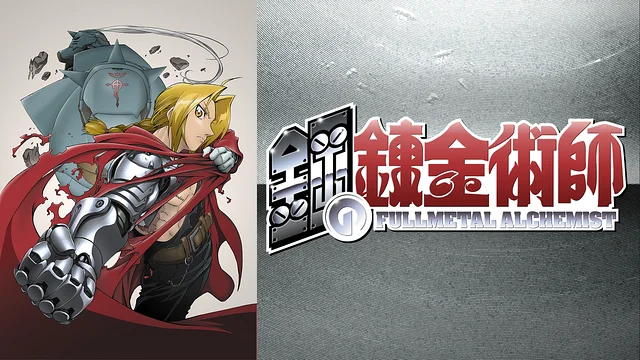
About the Work Based on the original manga by Hiromu Arakawa, this series produced by Director Seiji Mizushima and BONES is known for steering into a spectacular, anime-original narrative from the midpoint onwards.
Ed and Al committed a taboo out of longing for their late mother. At the end of a grueling journey that transcends the “Law of Equivalent Exchange,” the boys face cruel truths that question the very nature of “justice” and the “soul.”
The appeal of this version lies in its “lack of salvation and the hymn to humanity found beyond it,” which differs significantly from the original manga. The profound drama, which gives even the opposing Homunculi tragic origins and is packed with raw love and hate, violently shakes the viewer’s sense of ethics. The earnest prayer emitted by the finale, which seems to intersect with the real world, remains a shock that deserves to be spoken of even today.
Edward and his younger brother Alphonse, missing their mother who died when they were young, perform the greatest taboo in alchemy: “Human Transmutation” to bring the dead back to life. However, the transmutation fails. Edward loses his left leg, and Alphonse loses his entire body.
In exchange for his own right arm, Edward barely manages to transmute his brother’s soul and bind it to a suit of armor, but the price paid was far too great. To regain everything they lost, Edward sets out on a journey with Alphonse to find the “Philosopher’s Stone,” which is said to possess immense power. With his right arm and left leg replaced by steel prosthetics known as “Automail,” people call him the “Fullmetal Alchemist.”
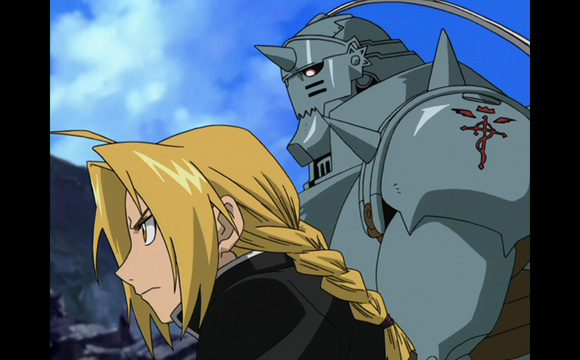
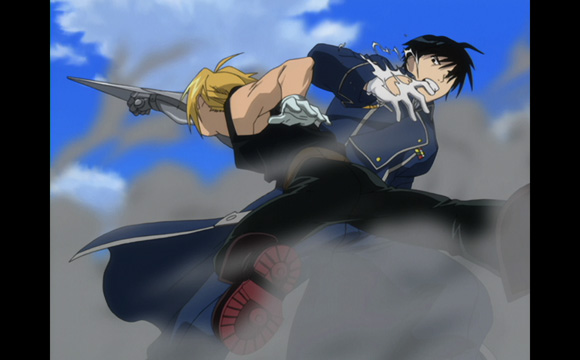
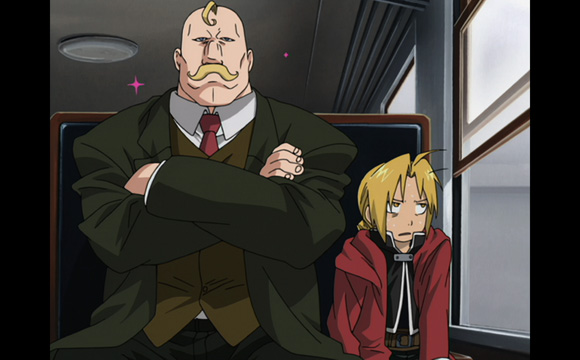
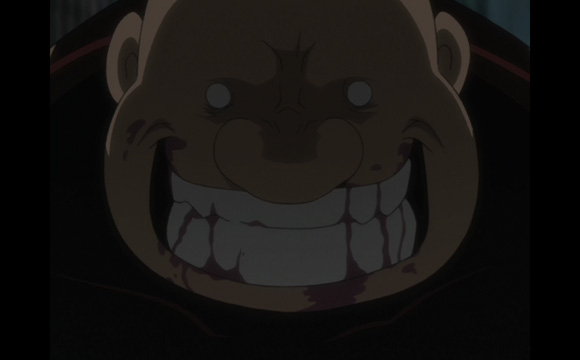
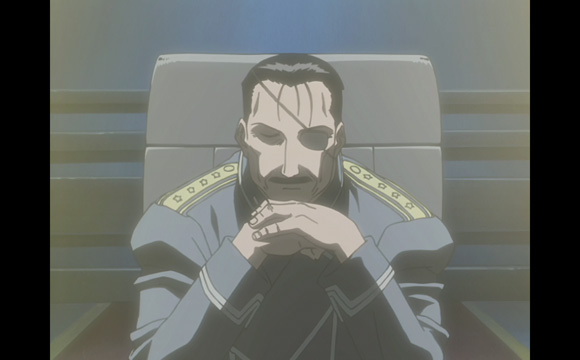
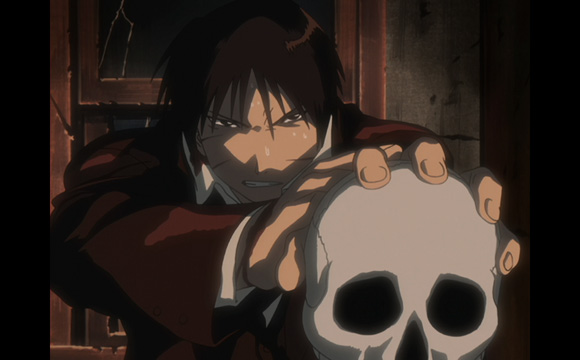
2003, Saturday at 6 PM. What flowed into the living rooms was not an adventurous action story of boys… but an overly heavy and painful story of “Crime and Punishment.”
This work (commonly known as “Old Hagaren” or “Mujirushi”), the first anime adaptation of the smash-hit manga Fullmetal Alchemist, entered a completely original development from the second half because the original manga was still being serialized. Its content is in stark contrast to the “heat and exhilaration typical of shonen manga” of FULLMETAL ALCHEMIST: Brotherhood (FA), which follows the original manga. Depressing developments without salvation, deep insight into human karma, and a scathing antithesis to the principle of “Equivalent Exchange.”
It is too wasteful to shun it just because “it’s different from the original.” No, here lies a “monument of dark fantasy” completed with a vector different from the original. From the perspective of a veteran columnist, I will unravel the profound charm of why this 2003 version of Hagaren still boasts cult popularity and is passed down.
The greatest feature of this work is undoubtedly the anime-original development in the second half. The Homunculi, depicted as absolute evil in the original manga, are set as “failed products of human transmutation” in this work. In other words, they are the “sins” committed by the alchemists themselves, the embodiment of the “karma” that Ed, Al, and their teacher must bear.
This setting change gives the story tremendous gravity. Defeating enemies becomes synonymous with facing their own past (sins). A vortex of muddy emotions that cannot be divided by poetic justice. Especially, the weight of the cross placed on Colonel Mustang might be even heavier than in the original.
True to the words of the original author, Hiromu Arakawa, “As long as you don’t mistake the root part, feel free to do whatever you want,” this work inherits the soul of the original but focuses more on “individual pain” and “irrevocable loss.” There are not a few episodes where popular characters exit all too soon and meet endings without salvation. However, that “lack of mercy” thrusts the cold reason of equivalent exchange upon the viewer.
“Was this really broadcast on Saturday evenings?” Even rewatching it now, that question cannot be wiped away. Massacres due to war, the tragedy of chimeras, and the depiction of people being used as ingredients for the Philosopher’s Stone. This work does not try to hide human ugliness or foolishness.
However, that is precisely why Ed and Al’s journey shines with a more earnest brilliance. Ed’s words, “Stand up and walk, move forward,” sound less like hopeful encouragement and more like a blood-spitting scream to crawl up from the abyss of despair. The development of being knocked down from a fun daily life into despair is, in a sense, very realistic. It eliminates opportunism and thrusts the reality that “efforts are not always rewarded” and “what is lost does not return.” Still, we cannot help but be shaken by the figures of the brothers trying to move forward.
Perhaps due to the historical background of 2003 (remnants of eschatology or the influence of Eva?), this tingling impatience and darkness is a strong drug that can rarely be tasted in modern mass-produced anime.
Supporting the quality that does not lose to the heaviness of the story is the craftsmanship of the production company BONES. Action animation that is hard to believe was made in 2003, and the beauty of the background art. Especially in the final stages, the descent scene into the underground city and the battle scene between Ed and Wrath are powerful enough to give you goosebumps even now.
And the power of music. Melissa by Porno Graffitti, READY STEADY GO by L’Arc-en-Ciel, Rewrite by ASIAN KUNG-FU GENERATION. Just looking at the lineup of opening themes will bring back the enthusiasm of that time for many. These songs are not mere tie-ins but are perfectly linked with the sense of speed and themes of the story, becoming important factors determining the worldview of the work. The ending themes, such as Nana Kitade’s Kesenai Tsumi (Indelible Sin), are also masterpieces that permeate the heart.
In the work called Fullmetal Alchemist, there exist two masterpieces: the FA version based on the original manga and this 2003 version. If the FA version is a “royal road shonen manga where friends cooperate to defeat a great evil,” the 2003 version is a “human drama of struggling in an imperfect world while facing individual sins.”
There is no point in discussing which is superior. The achievement of the 2003 version, which presented a unique interpretation and conclusion in a situation where the original manga was not finished and completed it as a single independent work, is immeasurable. If there are those who have only seen the FA version, please witness this “other journey.”
There awaits a heavy emotion settling in the depths of your heart, different from exhilaration, and unforgettable pain. And after watching, surely you will love Ed and Al even more.
©荒川弘/スクウェアエニックス・毎日放送・アニプレックス・ポンズ・電通2003