The Radiance of "One Year Left" Shown in "Until the Death of a Certain Witch" -- Why Could She Smile at the Edge of Despair?
tarumaki
Enter the Moment
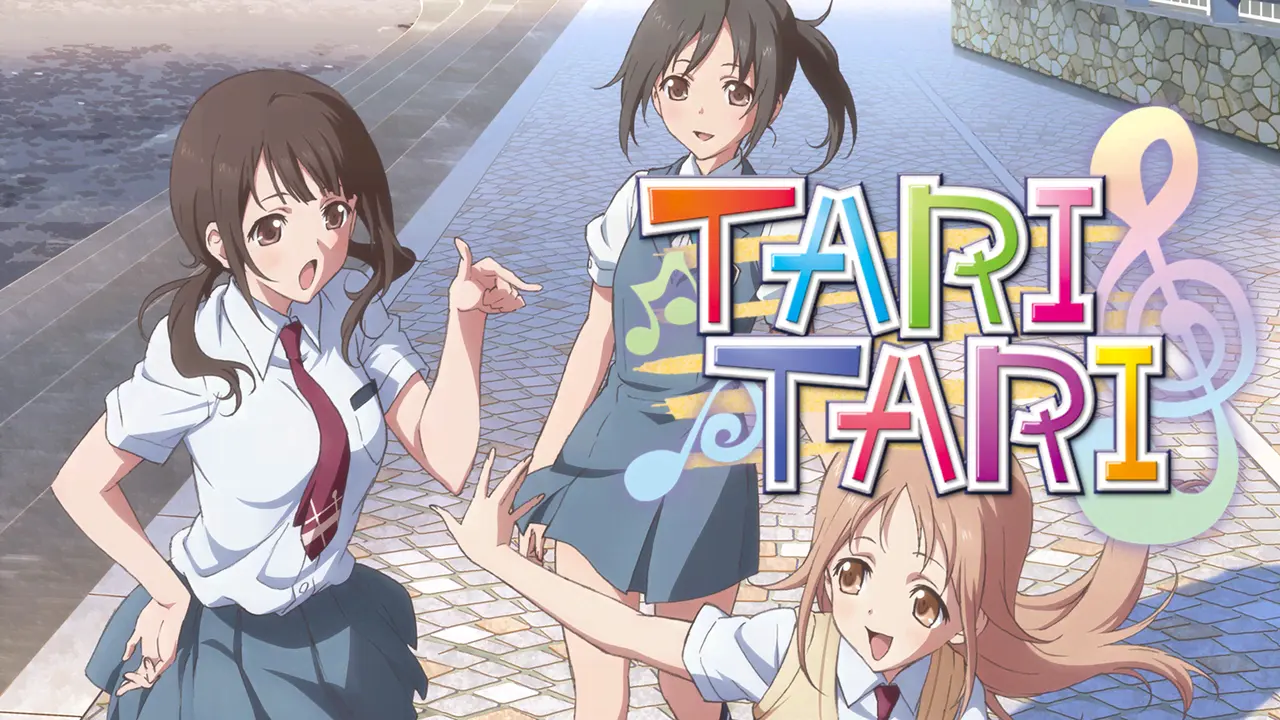
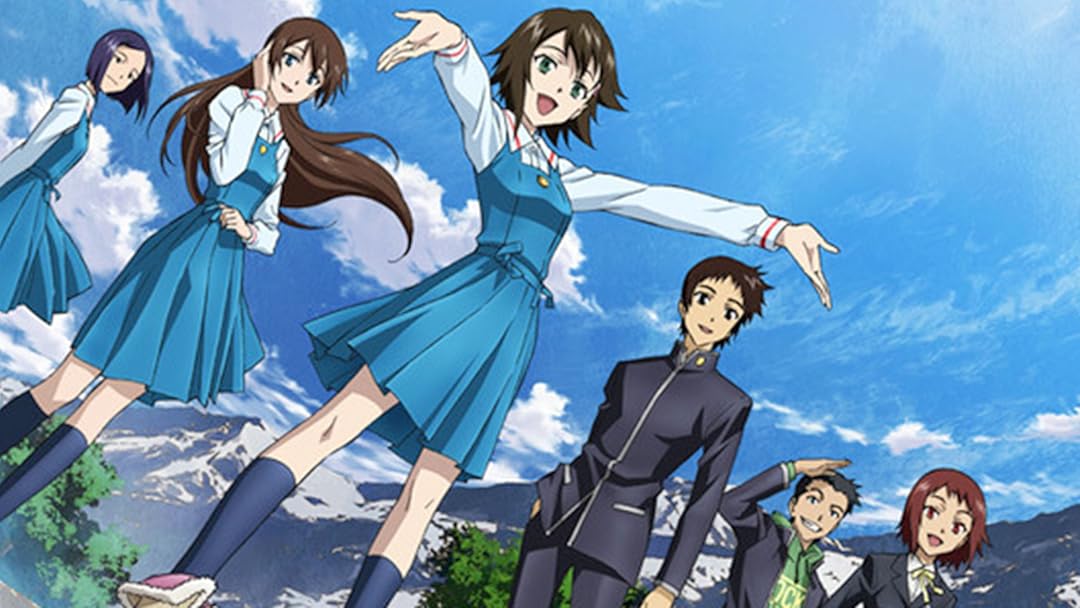
This story follows girls who cannot give up on singing as they form the “Choir and Sometimes Badminton Club” and sprint through their final summer of high school.
The greatest appeal lies in the catharsis of the moment when their harmony gently releases the “stagnation of youth,” such as regrets over a late mother or anxiety about the future. The singing voices, accompanied by beautiful background art, wash away the sediments of the viewer’s heart. It is a masterpiece filled with refreshing sensations and tears.
High school students—too young to be called adults, yet they believe they are no longer children.
Wakana Sakai, who distanced herself from music after a certain day. Konatsu Miyamoto, who cannot give up on singing. Sawa Okita, who lends her strength for her best friend.
Laughing, fighting, worrying, falling in love… While living their ordinary daily lives, the girls move forward, little by little. Sometimes taking detours, they realize that while it might be impossible alone, surely, with a best friend…
Wakana, Konatsu, Sawa, and the ensemble they play weave a small yet glittering story through the power of music. The last summer of high school. It is a season too early to give up on dreams. The singing voices echoing in Enoshima encourage us again today.
When you look back on your high school days, what do you remember? Is it the memory of throwing yourself recklessly into something? Or is it the frustration of smoldering without becoming anyone?
Summer 2012. The original anime “TARI TARI” released by P.A.WORKS was a magical work that denied neither of these, turning everything into “harmony.” The stage is Shonan, Enoshima. The sparkling sea, the sound of the Enoden train crossing, and the school beyond the slope. What is depicted there is neither a great adventure to save the world nor a glorious success story of winning a national championship.
One stops due to past trauma, another faces the harsh reality of their dream, and another yearns for heroes in a foreign land. What was born from these five disjointed individuals gathering was a place to belong with a shaky name: the “Chorus sometimes Badminton Club.”
However, as a veteran columnist, let me assert this. It is this “shakiness” and “looseness” that makes this work an unfading masterpiece. The reason why, even more than 10 years after the broadcast, many fans continue to visit Enoshima and trace their footsteps. It is because this work gently affirms the “lost items of youth that we couldn’t sort out” in our hearts.
Today, I will unravel the charm of the world of “TARI TARI,” woven by beautiful background art, music, and life-sized characters, from three perspectives.
The biggest feature in the composition of “TARI TARI” is that “the protagonist’s perspective is fluid.”
Leading the early part of the story is the bright and positive Konatsu Miyamoto. After being forbidden to sing due to a failure at last year’s recital, her rousing figure saying “Then I’ll make my own club!” is truly a royal road youth protagonist. Her ability to take action draws the scattered members together like a magnet.
However, from the middle, the center of gravity of the story quietly shifts to another girl, Wakana Sakai. She quit music despite being in the music course. Behind that was the death of her beloved mother and a deep misunderstanding that “Mother left me for music.” The process of her learning her mother’s true intentions and opening the piano lid she had closed cannot be told without tears. “I was loved so much, but I assumed on my own… and threw it away. Memories, piano, and music.” How many viewers had their chests tightened by this line?
And the friends who support them are not just supporting roles either. Sawa Okita, who worries about the wall of physique and parental opposition despite aiming to be a jockey. Taichi Tanaka, who aims for the Inter-High as the only club member. Wien (Atsuhiro Maeda), a returnee from Austria who loves Sentai heroes.
What makes this work sincere is that it does not tell the easy lie that “dreams will definitely come true if you try hard.” Sawa cannot enter the jockey school, and Taichi cannot win the match. Even the school itself cannot escape the crisis of closure. But they do not rot away. “Running, giving up, struggling” (Tari, Tari, Tari). As the title suggests, while repeating going back and forth, they still take a step toward their respective futures using the feeling of “like” as a compass. That life-sized figure pierces deeply into the hearts of adults who have stumbled over something.
What cannot be avoided when talking about this work is the overwhelming background art, which can be said to be P.A.WORKS’ specialty. Although there are many video works depicting Enoshima, works that package the “atmosphere” of this land as much as “TARI TARI” are rare.
Benten Bridge where Wakana rushes through on her bicycle, the school route where hydrangeas bloom, and the school building on the hill overlooking the sea. These are not just traces of photos. They are reconstructed “images” such as the smell of the wind, the dampness felt during location scouting, and the lighting. That is why we fall into the illusion of feeling the sea breeze from the screen.
I hear that even now, more than 10 years after the broadcast, pilgrimage notes are placed at “Shima no Chaya Aburaya,” which became the model for Wakana’s home, and fans continue to visit. This is proof that anime is shared not just as “pictures” but as “experiences” remaining in the viewers’ memories. Not pushing the holy land forcefully, but the scenery naturally blending into the story. This appropriate distance and respect might be the secret to the longevity of P.A.WORKS anime pilgrimage sites.
Although the title “TARI TARI” is said not to include the intent of musical terms, “Song” has eloquence beyond words in this work.
“Kokoro no Senritsu” (Melody of the Heart) sung by Konatsu and Sawa at the Enoden station in Episode 2. And “Shiokaze no Harmony” (Harmony of the Sea Breeze) left by her mother Mahiru and completed by Wakana. These songs unite the hearts of the five scattered members and become a bridge connecting the past and present, parent and child. The singing ability of the voice actors is also wonderful, especially the harmony of Ayahi Takagaki (as Wakana), Saori Hayami (as Sawa), and Asami Seto (as Konatsu), which was a famous performance that made us feel the “body temperature” typical of high school students, different from a professional chorus.
Also, this work is excellent in depicting “adults.” The Vice-Principal and Principal who once shared their youth and now oppose each other in different positions. Especially in the final stage, the scene where the Principal, who seemed to be a “peace-at-any-price” type, stands up against the Chairman who became a slave to money is one of the best scenes in this work. “To you, this is just an asset, but to the students, it’s a precious place!” We realize that they, who were once young people who loved music, also worry, regret, and still try to protect the students’ future. Adults are also in the middle of unending youth.
Although there are points to retort about the Chairman’s forceful school redevelopment plan (including the lack of reality of demolishing a school to build a condo in an era of declining birthrate), even that functioned as a symbol of “adult unreasonableness” and a wall for the boys and girls to overcome.
There are few works that give such rich emotional subtleties and a refreshing aftertaste within a short cour of 13 episodes.
Their activity was a club with a playful name, “Chorus sometimes Badminton.” However, because it was that ambiguous, anything-goes space, they were probably able to heal their wounds and re-examine themselves.
If you are chased by daily life and are about to forget your past dreams or things you liked. Or if you are sighing at the reality that doesn’t go as planned. Please watch this “TARI TARI.”
Under the blue sky of Enoshima, their figures singing and running while worrying will surely blow a “new wind” into your heart. And after watching, you will want to hum it. “Crying, laughing, sometimes singing.” (Naitari, Warattari, Utattemitari).
(C)tari tari project