The Dazzle and Pain of "A Summer We Can Never Return To" Reflected in "Summer Pockets" — What Does Key's Traditional Art Ask of the Reiwa Era?
tarumaki
Enter the Moment
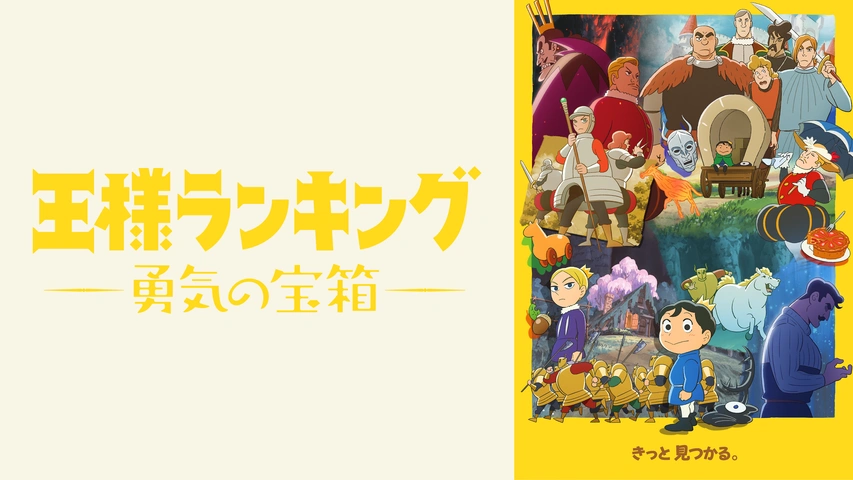
Based on the manga by Sosuke Toka, “Ranking of Kings” is a fantasy masterpiece that was adapted into an anime in 2021, becoming a massive hit. It depicts the touching and universally cheering story of “a powerless prince aiming to become the world’s greatest king.”
The allure of this series lies in the purity and courage of the protagonist, Bojji, as he faces adversity, and the unbreakable bond of friendship forged between him and Kage. The story carefully portrays the physical and emotional growth of the powerless Bojji through his interactions with Kage and the people he meets on his journey. Furthermore, the characters’ hidden pasts and the epic drama concealed behind the kingdom add profound depth to the narrative.
The wealth of the nation, the number of strong warriors it employs, and how strong the king himself is, like a legendary hero… The comprehensive ranking of these factors is known as the “Ranking of Kings.”
The protagonist, Bojji, was born as the first prince of the kingdom ruled by King Bosse, who sits at number seven in the Ranking of Kings. However, Bojji was born deaf and was so physically weak that he could not even wield a sword properly. As a result, he was scorned not only by his retainers but also by the public as being “unfit to be king.”
Then came his first friend, Kage. Through his encounter with Kage and a little bit of courage, Bojji’s life begins to move in a major way…
“It looks like a cute anime for kids, doesn’t it?” If you look at the poster visuals and decide to skip this show based on that assumption, I have to say it is a huge loss in your life.
The subject of this column is Ranking of Kings (Ousama Ranking), released as the 10th-anniversary commemorative work of WIT STUDIO. The story depicts the adventure of Bojji, a deaf and powerless prince, and Kage, a twisted shadow creature. This tale stimulated my dry tear ducts to the limit, causing dehydration from excessive crying.
At first glance, the worldview resembles a fairy tale like something from Disney or Ghibli. However, opening the lid reveals human karma, complicated fates, and a hardcore, realistic human drama reminiscent of the scripts by the legendary Showa-era writer, Taichi Yamada. Today, I would like to dig deep into this beloved masterpiece, its charms, and the controversial ending.
First, we cannot talk about this work without mentioning the intense gap between the first impression and the content.
The protagonist, Bojji, is born as the first prince of a powerful country ranked 7th in the Ranking of Kings, yet he is deaf, cannot speak, and cannot even swing a sword properly. He is despised by those around him as “not fit to be king.” However, this setting is the show’s greatest hook. The frustration of wanting to convey thoughts but failing, the vexation. These become the fuel for his growth and grip the viewer’s heart.
Of particular note is the “richness of the animation.” The character designs are extremely simple, appearing to be for children at first glance. However, once the action scenes begin, the characters move dynamically across the screen, demonstrating the true value of WIT STUDIO. Dynamic movements possible only because of simple lines, and subtle changes in facial expressions. Especially the depiction of Bojji trying to hold back tears or the moment his heart connects with Kage—because there are no words, the emotions are conveyed painfully well.
Also, this work is not a simple story of “good triumphing over evil.” A seemingly good person might be a villain, or a villainous-looking character might have incredibly deep affection. This theme of “you shouldn’t judge people solely by their appearance or first impressions” contains a message that pierces deeply into us adults living in modern society. As the story progresses, Bojji’s powerlessness is sublimated into the antithesis that “weakness is the power to understand others’ pain and save them.” This catharsis is why this work is called a masterpiece beyond a mere adventure story.
The true charm of this work lies in the “humanity” of the side characters. Among them, I want to praise Queen Hiling, the stepmother, with a loud voice—or rather, with bold letters.
If there were a “Best Mom Character Ranking in Anime History,” she would undoubtedly be a top contender. In her early appearances, she is drawn with a pointy nose and sharp eyes, seemingly burdened with the symbolic role of a “wicked stepmother.” However, as the story progresses, that evaluation is overturned 180 degrees. Her hysterical behavior is actually the flip side of her too-deep love for her sons (not only her biological son Daida but also her stepson Bojji).
Desperately casting healing magic to save the dying Bojji, showing mercy even to those in the enemy camp, and the resolve to turn a blade even against her husband King Bosse (whose soul is in Daida) to protect her son. There is the ultimate form of motherhood that cannot be dismissed with the word “tsundere.” I am surely not the only viewer whose eyes heated up every time she appeared.
Also, Kage, who becomes Bojji’s only friend, is wonderful. I take my hat off to the acting of Ayumu Murase, who provides the voice. From a raspy voice contrary to the cute appearance to delicate emotional expressions, he perfectly acts out the “proof of life” of the character Kage. Furthermore, characters like Desha, the King of the Underworld, and Despa, the master, are not mere background mobs; everyone moves with their own justice and background. That is why we are drawn to their ensemble drama.
While I want to praise this work unconditionally, as a veteran columnist, I must add a calm analysis regarding the latter half of the work, especially the ending.
In the second half of the story, Bojji climbs to become one of the “strongest” through certain training. While this provides exhilaration, it is undeniable that the early theme of “weakness becoming a weapon” was somewhat blurred by physical strength. Visuals as an action anime are superb, but for the demographic emphasizing drama, it might have been a turning point where they felt a little lonely.
And the most controversial point is the treatment of the mastermind figure, “Miranjo.” There is no doubt her past is tragic. However, regarding the crimes she committed—the murder of Bojji’s mother Sheena and the attempt to destroy the country—there is a debate that the conclusion was too “sweet.” Daida’s proposal and the grand finale where everything seems forgiven. This gave viewers a sense of being “left behind,” as if they were suddenly shown the sparkling ending of a shoujo manga while watching Bojji’s growth story.
I understand the show’s gentle theme of “hate the sin, not the sinner,” but honestly, I wanted the process of her atonement to be depicted more carefully or strictly. Also, the poor tempo in the development around the “Gate of Hell” in the final stages was a regrettable point. It felt like the momentum of the story was chipped away by delving too deeply into everyone.
Nevertheless, the “emotional shaking” this work gave us is real enough to make up for those flaws. The final scene, the future chosen by Kage and Bojji. Although there were some complaints about the process leading up to it, I could not help but cry at their departure.
Ranking of Kings may not be a flawless work. However, it is rare in recent years to find an anime that depicts human weakness, fragility, and the preciousness of relying on and helping others so straight-forwardly.
What the little king, Bojji, taught us is that deficits like “being deaf” or “unable to swing a sword” are never symbols of unhappiness. If you are crushed by your own powerlessness in daily life, please watch this work. Bojji’s earnest figure, Kage’s clumsy kindness, and Hiling’s deep love will surely become vitality for your tomorrow.
Don’t forget to stay hydrated. Prepare a bath towel instead of a handkerchief, and dive into this gentle adventure tale.