The Miracle Named "Beyond the Boundary" — A Dark Fantasy of "Blood" and "Love" by KyoAni, and Its Unfading Brilliance
tarumaki
Enter the Moment
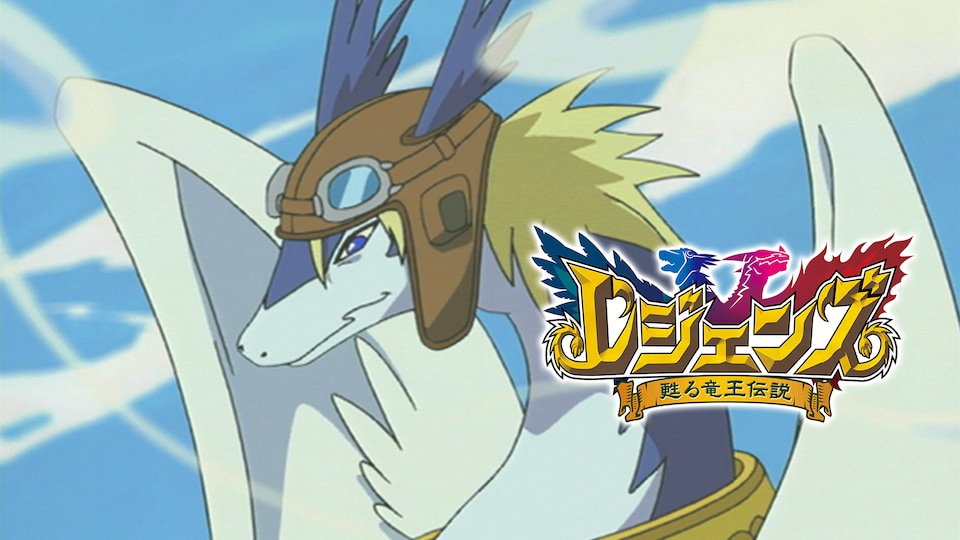
Directed by Akitaro Daichi, this work is a slapstick adventure tale of the Wind Dragon Shiron and the goofy boy Shu.
The greatest appeal lies in its overwhelming structural power. It makes a rapid transition from high-tempo gags in the early stages to profound themes such as the “weight of life” and “coexistence with others” in its turbulent final act. The bittersweet yet warm conclusion, brought about by their wind-like free bond, engraves an unfading impression on the viewer’s heart even now.
An exhilarating battle action involving monsters called “Legendz,” who reached the height of prosperity in ancient times.
Shu is a boy living in Brooklyn. Cheerful and goofy, his only redeeming quality is his energy. He spent his days carefree alongside his childhood friends, Mac and Meg. However, everything changes drastically when he receives a toy called a “Talisopod” from his father, Sasuke. Ever since rebirthing a real Legendz, he gets dragged into the battles of the Legendz War…

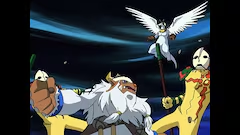
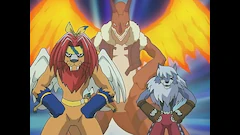
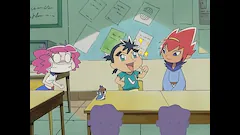
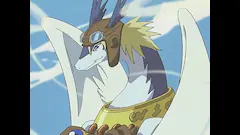
Broadcast in 2004, the TV anime Legendz: Tale of the Dragon Kings (Legendz: Yomigaeru Ryuuou Densetsu). This series depicts the adventures of a young boy named Shu and his Wind Legendz (monster) partner, Shiron the Wind Dragon. Given its visual style at the time of broadcast and its cross-media promotion with toys (the Talispod), many might perceive it as “just another promotional kids’ anime in the same vein as Pokémon or Digimon.”
However, if you are ignoring this work based solely on that preconception, it might be a significant “loss” in your life. Directed by Akitaro Daichi (known for Ojarumaru and Kodocha), this series sharply pivots from surreal, fast-paced comedy in the first half to a heavy, serious storyline in the latter half that can give even adults a stomachache. And then comes the finale—a conclusion that divided opinions, or rather, carved deep scars (trauma) and overwhelming emotion into the hearts of many viewers.
Despite its lengthy 50-episode run, every character, down to the supporting cast, feels alive, and the stylish, jazz-based BGM colors the narrative beautifully. Today, from the perspective of a veteran columnist, I will unravel the true charm of Legendz, a series passionately remembered as a “hidden masterpiece” and often asked, “Why isn’t this rated higher?”
The early parts of the story are a continuous string of fast-paced gags. The protagonist, Shu, despite being a special existence known as the Saga of Wind, is fundamentally a “likable, idiotic kid.” The trio aiming for him from the Dark Wiz Company (DWC)—BB, J1, and J2—are lovable, bumbling villains reminiscent of the little demon trio in Ojarumaru or Team Rocket in Pokémon. Add a dash of American joke flavor, and you get a slapstick comedy that never bores the viewer.
But it’s not just fooling around. The brilliant aspect of this work lies in the “three-dimensionality” of its characters (both human and Legendz). Mac, who seems like a slow, chubby character but is actually the Saga of Earth; Dino, the Saga of Fire who looks like a perfect honor student but harbors deep inner struggles; and Meg, the Saga of Water who holds a genuine fear of the Legendz. There are no “just there to sell toys” useless characters common in kids’ anime. The process of each character worrying, conflicting, and exploring their relationship with the Legendz is depicted with incredible care.
In particular, the way the positions of the Legendz maniac, Ms. Haruka, and the DWC employees drastically shift in the latter half will make adult viewers groan in appreciation. Amidst the bright daily life, the seeds of the heavy theme, “For what purpose do Legendz exist?” are slowly sown. This meticulous construction is what makes the serious developments in the second half stand out even more.
What absolutely cannot be omitted when discussing this work is the other protagonist, the Wind Dragon “Shiron.” Normally, he takes the form of an adorable mouse-like mascot, but during battle, he “reborns” into a massive, cool dragon. Above all, the sexy performance (handsome voice/ikebo) by his voice actor, Kazuhiko Inoue, pushes Shiron’s charm past its limits.
“A good wind blows here, doesn’t it?”
The moment he first opened his mouth in Episode 1, many viewers’ hearts were shot through. The relationship between Shu and Shiron is not merely “master and pet (monster).” Shiron, who initially viewed Shu as “just a kid” and tried not to involve him, gradually acknowledges him as a human being and an indispensable partner. The clumsy bond shown by these two who can’t be honest with each other—such as in the fireworks episode (Ep 23) or the hat episode (Ep 31)—is simply “precious” (toutoi).
However, the stronger that bond becomes, the more mercilessly the latter half of the story corners them. In Episode 40, as if resonating with Shu’s despair, the wind stops, and Shiron becomes enraged. It conveys how deeply he cared for Shu, while simultaneously acting as the trigger for the unavoidable tragedy of the Legendz War. The fear of mutual dependence and loss completely deviates from the boundaries of a kids’ anime. Shu’s scream, “Fighting is absolutely wrong! There’s not a single good thing about winning!” resonates as a powerful antithesis to easy battle narratives.
Note: The following contains major spoilers for the core of the story and the finale.
At the end of the fierce Legendz War, Shu and the others finally save the world. However, what awaited them was a far too cruel conclusion: “Parting with the Legendz” and “The erasure of all their memories up to this point.”
Shiron, calling Shu’s name at the very end, disappears before Shu can call back. “I liked the wind in Brooklyn,” a roundabout and clumsy confession of love. And Shu and his friends, losing all memories of the intense days spent with the Legendz, return to their daily lives as “normal kids” as if nothing ever happened.
Since its broadcast, this ending has sparked controversy. Voices cried out, “It’s too sad that the bonds they overcame together are treated as if they never existed,” and “It’s neither a happy end nor a bad end, but a complete sad end.” That feeling is painfully understandable. Because we, the viewers, hold their memories, it is agonizing to see Shu and the others remembering nothing.
However, from another perspective, this might have been the “ultimate atonement and salvation” gifted by the adults (or the Legendz themselves) to the children who were forced into a harsh battle. The memories of a battle for the survival of the world are far too heavy for normal children to bear throughout their lives. For them to live on innocently smiling as just children, that “oblivion” was absolutely necessary. When interpreted this way, this finale sublimates into the “gentlest, yet most sorrowful happy ending” in anime history.
Legendz: Tale of the Dragon Kings might indeed be a work that chooses its audience. Its length of 50 episodes, the sheer amount of information due to its fast pace, and the oppressive developments in the latter half. But when you see it through to the end, a storm of deep and beautiful emotions—ones you could never get from “just a kids’ anime”—will rage within you.
If you are looking for an ensemble drama that will shake your soul, free from easy opportunism. If you want to laugh, cry, and finally taste a heart-wrenching sorrow. Please, dive into the world of Legendz at least once.
Even if their memories have vanished, the “wind of Brooklyn” that blew through us viewers will never disappear. While praying that a new wind (a sequel or reunion) will blow from the official creators someday, for now, I simply hope that this hidden masterpiece reaches as many people as possible.
(C)WiZ・レジェンズ製作委員会 2003