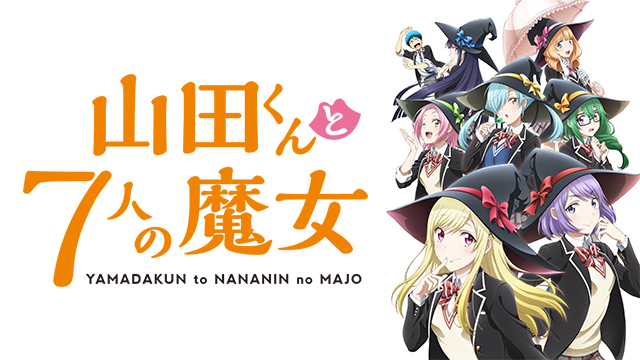
“Yamada-kun and the Seven Witches” — The Magic of Kisses, Connection, and Youthful Redemption
tarumaki
Enter the Moment
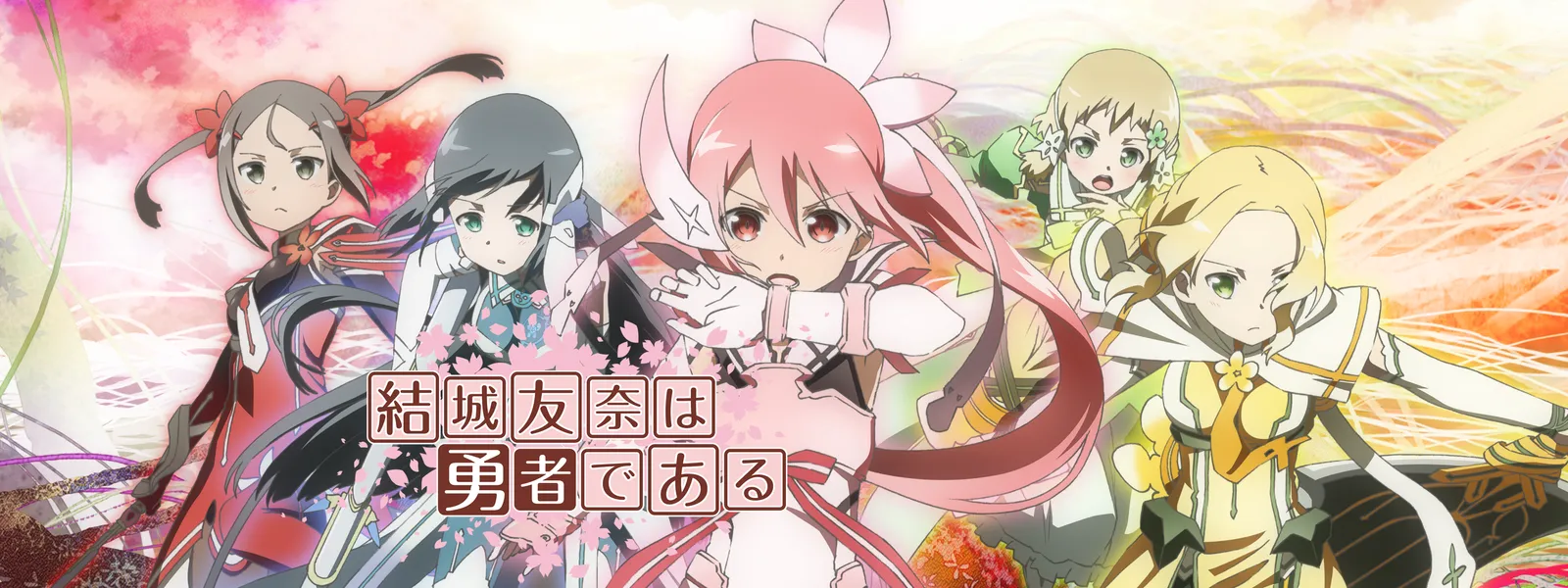
Produced by Studio Gokumi, this series tells the story of middle school students in the “Hero Club”—who normally participate in activities to help people—putting their lives on the line to fight against the enemies of humanity.
The greatest appeal lies in the stark contrast between their heartwarming daily lives and the cruel concept of “Sange”, a system where they lose their bodily functions as the price for fighting. The sight of these girls, burdened with the massive responsibility of the world’s survival, resisting such unreasonableness with painfully strong bonds is a masterpiece that violently shakes the viewer’s sense of ethics.
Yuna Yuki, age 13. She joins the Hero Club. Waking up, getting ready, going to school, taking classes, doing club activities, and hanging out with friends… Yuna Yuki is an ordinary second-year middle school student living a completely normal daily life.
If one had to point out a single special detail, it would be the club she belongs to: the “Hero Club.” What exactly are their activities? What are the mysterious beings known as “Vertex”? This is the story of girls in the year 300 of the Divine Era.
Magical girls, or battle heroines. Girls chosen to save the world fight unknown enemies with mysterious powers. In 2014, a singularity was born in this royal road genre that has been passed down continuously in anime history. That is the original anime Yuki Yuna is a Hero (commonly known as YuYuYu), directed by Seiji Kishi with the original concept by Takahiro.
“Just another Madoka Magica follower.” Before the broadcast, or looking at the heartwarming club activities (Hero Club) in the early episodes, not a few viewers probably took it lightly like that. However, when the story reached the middle, we were made to realize. The “price of magic” presented by this work contained a bottomless madness and despair, similar yet different from any past works.
It is neither physical exhaustion nor danger to life. “As the price of the enhanced transformation (Mankai/Full Bloom), one physical function is lost (Sange/Scattering).” Taste, voice, hearing, sight, and…
Today, from the perspective of a veteran columnist, I will unravel the roots of its “pain” and “kindness” regarding this masterpiece, which continues to generate enthusiastic fans (Hero Club members) and even developed into regional revitalization for Kanonji City, Kagawa Prefecture, even as time passes since its broadcast.
What absolutely cannot be omitted when talking about this work is the aforementioned “Mankai” (Full Bloom) and “Sange” (Scattering) system. Heroes do not die. By the divine protection of the Shinju (Divine Tree), they do not die no matter what fatal wound they receive, and when in a pinch, they can “Mankai” to gain immense power.
However, the price was far too cruel. Itsuki Inubozaki loses her “voice” as the price of Mankai, right after harboring a dream of becoming a singer sparked by a singing test. Yuna Yuki loses her “sense of taste,” and lies with a smile that the feast served is “delicious” based solely on its texture and how it goes down her throat. These are not mere battle penalties. It is the process by which the “joys of daily life” that they cherished are taken away one by one.
This work devotes nearly half of its 1-cour runtime to “daily life episodes.” Welcoming parties for new members, karaoke, preparations for the cultural festival. Because that peaceful and dazzling daily life is carefully depicted, the sense of loss from “Sange” gouges the viewer’s heart. Dying might be easier. However, heroes are not even allowed to die; they must continue to fight while offering their physical functions as sacrifices to the gods. The despair when the previous hero, Sonoko Nogi, appeared lying in bed covered in bandages from head to toe is no exaggeration to call a trauma that will remain in anime history.
After learning the harsh truth, intense conflicts arise within the Hero Club. Particularly impressive is the contrast between the best friends, Yuki Yuna and Mimori Togo.
Yuna is an endlessly positive “Hero” who does not mind self-sacrifice. To prevent her friends from Sange, she tries to bear everything herself. She takes the initiative to deal the finishing blow to enemies, and even if she loses her sense of taste, she tries never to let her friends realize it. Depending on how you look at it, her kindness might even look like the “madness of self-sacrifice.” However, at the root of it is only the pure wish “to protect everyone’s daily life.”
On the other hand, Mimori Togo, upon learning the truth of the Hero System and the desperate fact that outside the wall of their world is already destroyed (a den of Vertexes), chooses “rebellion.” “Rather than repeating this hell, I will destroy the Shinju and end everything.” Her actions might be wrong as a hero. However, when we understand the “weight of her love”—having failed to protect precious people in the past and not wanting to see Yuna and the others get hurt anymore—we cannot blame her.
It is not a clash of justice and justice, but a clash of “love” and “love.” The scene where Yuna stops Togo was an exchange of soul screams where the theme of this work was condensed.
And then the final episode. After everything seemed to be resolved, Yuna loses her heart’s function (consciousness) and falls into a vegetative state. Togo visits the hospital every day, talks to the unresponsive Yuna, and sheds tears. However, in the end, a miracle occurs. Yuna regains consciousness, the aftereffects of her friends’ Sange also recover, and they reach a happy ending.
At the time of broadcast, it is a fact that there was criticism (pros and cons) against this conclusion, saying, “After making it that heavy, are they all going to be cured by opportunism at the end?” In particular, voices of dissatisfaction were raised against the style of the scriptwriter and director (the “non-explanatory” direction).
However, I cannot agree with dismissing this conclusion as “opportunism.” Because this work is a story of a “world with gods (Shinju) who like humans.” They offered their own bodies and saved the world. In response to that “courage” and “kindness” that exceeded their limits, the Shinju mustered its last strength and returned a miracle. If it had been a bad ending (or bitter ending) where they live on with disabilities here, it would have been reduced to just a tasteless, depressing anime.
“If you try, it will usually work out somehow.” The creators themselves believed in and proved this tenet of the Hero Club. That is precisely why this work is deeply loved and was able to connect its lifeblood to sequels like “The Washio Sumi Chapter” and “The Hero Chapter.”
Yuki Yuna is a Hero is a hard dark fantasy at first glance, but its essence is a human drama depicting “how precious casual daily life is.”
The beautiful animation by Studio Gokumi, the mysterious Japanese-style background music by MONAKA (Keiichi Okabe and others), and the soul-scraping passionate acting of the voice actors. These three become a trinity, engraving “pain” and “warmth” in our hearts simultaneously.
If you haven’t seen it yet, please throw away your prejudices and give it a watch. And for those who have already seen it, why not watch it again while savoring the meaning of the “taste of udon” and the “singing voice at karaoke” that they protected?
Surely, your casual daily life will feel a little more precious than yesterday.
(C)2014 Project 2H