What "Nagi-Asu: A Lull in the Sea" Depicts Is Not Just Romance. — An Anthem to "Change" Beyond the Sea, Land, and Time
tarumaki
Enter the Moment
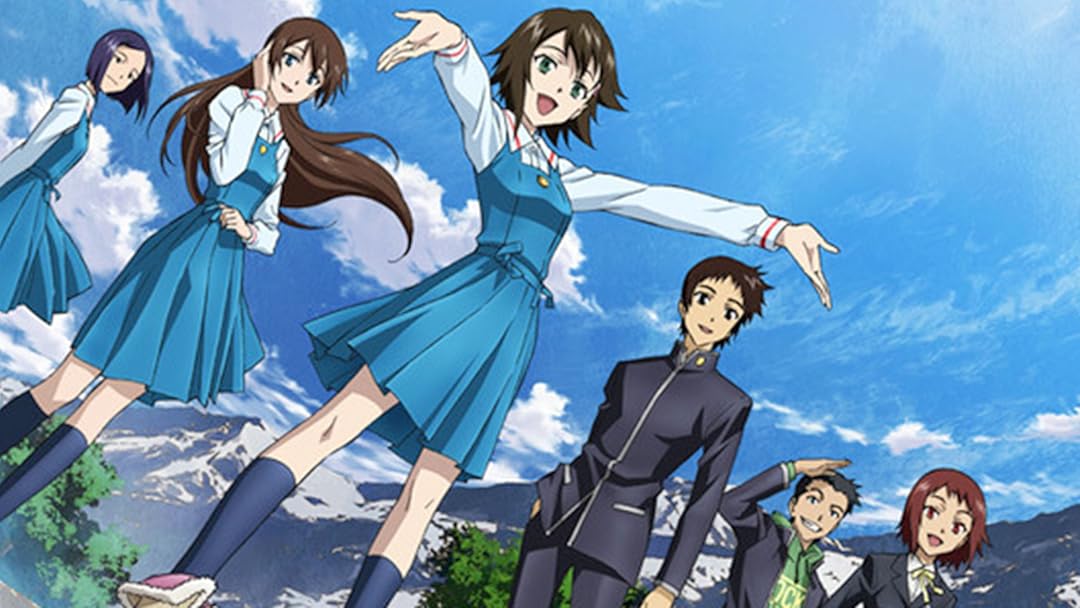
Centering around Shinichiro, a high school student aspiring to be a picture book author, this work depicts the intersecting feelings between him, his childhood friend who lives in the same house, and other mysterious girls.
The greatest appeal lies in its visual direction, which eloquently speaks of unspeakable jealousy and pain through delicate camerawork and meticulous screen composition. Against the backdrop of Toyama’s beautiful yet somewhat cold winter scenery, the clash of pure, uncompromising emotions tightens the viewer’s chest. It is a masterpiece that shakes the heart the moment true tears flow!
Shinichiro Nakagami is the only son of a sake brewer. Aspiring to be a picture book author, he was drawing a picture of an angel one night. As he immersed himself in his art, a vivid image of an angel eventually floated into his mind. The angel was an innocent girl with soft, curly hair.
The next day, as Shinichiro was passing through the school’s backyard, he noticed a humming sound coming from up in a tree. Looking up, he saw a girl picking red berries. She looked exactly like the angel Shinichiro had imagined the night before…
Broadcast in 2008, the TV anime true tears. Just hearing this title is enough to make many anime fans feel a bittersweet tightness in their chests. This is a monumental work, memorable as the first anime where P.A.WORKS served as the primary animation studio. It also became an epoch-making pioneer of the “anime pilgrimage” (seichi junrei) phenomenon, specifically drawing fans to Nanto City, Toyama Prefecture.
Although based on a romance adventure game of the same name, the anime features completely original characters and a unique story. At the beginning, it might seem to follow the royal road of “gal-game” tropes—a romantic comedy with multiple heroines surrounding a protagonist. However, as the story progresses, that impression is brilliantly betrayed. What is depicted instead is the gloom, jealousy, clumsiness, and the raw trajectory of growth as adolescent boys and girls finally confront their “true selves.”
Today, more than a decade after its broadcast, this anime remains etched in the hearts of many as an “unforgettable youth.” From the perspective of a veteran columnist, I will unravel the enduring charm of this masterpiece through three key points.
The greatest charm of this work lies in the extremely human psychological depiction of the heroines, brought to life by Mari Okada’s brilliant script.
The main heroines, Noe Isurugi and Hiromi Yuasa, are exact opposites. Noe is an eccentric girl who has become unable to shed “tears” due to a tragic event in her past. On the other hand, Hiromi is an honor student living with the protagonist, Shinichiro Nakagami. Yet, beneath her perfect exterior, she harbors suppressed, intense emotions and a complexity that sometimes reveals a genuinely “ugly” side.
Anime heroines are often expected to be endlessly pure and innocent, but this work defies that expectation. The jealousy and spite Hiromi displays, and the cowardice Noe hides behind her eccentric behavior—these actions sometimes backfire, but their sheer “unmanageability” is exactly what gives viewers a painfully realistic experience.
Then there is the protagonist, Shinichiro, who is sometimes criticized by viewers for being “indecisive.” However, his hesitation is extremely life-sized for a teenage boy. Caught between the expectations of those around him and complex relationships, he ultimately squeezes out the words: “I will do everything properly” (Zenbu, chanto suru kara). That was his first step into adulthood—putting an end to ambiguous relationships and taking responsibility as a human being. Going beyond the simple framework of a romance game where someone “wins” or “loses,” this work boasts a perfect structure as an ensemble drama where everyone realizes their “true self.”
When discussing true tears, one cannot overlook its masterful, almost literary use of “metaphors.” In the story, the chickens “Raigoumaru” and “Jibeta,” which appear in the picture book Shinichiro is drawing, function as metaphors for the characters themselves.
The cruel reality that “chickens are birds that cannot fly” overlaps with the figure of Noe, who had retreated into her shell and refused to become an adult. This anime deliberately avoids explaining everything through dialogue. Through the movement of the characters’ gazes, the pregnant pauses, and the fairy-tale elements of the picture book, the creators intentionally leave “margins” that rely on the viewer’s imagination.
In the final act, Noe realizes that “Jibeta couldn’t not fly; he chose not to fly.” That was the moment she overcame her past trauma, planted her feet firmly on the ground, and accepted becoming an adult. Stepping aside for someone else, shedding tears for someone else. Because it contains not only entertainment value but also such high “artistry” and deep “themes,” this anime possesses a rich flavor that makes you want to watch it over and over again.
Enveloping this dense drama is the astonishing animation and background art by P.A.WORKS. The setting of winter in Toyama—old wooden houses, the rough Sea of Japan, the quietly falling snow. This harsh yet beautiful depiction of nature perfectly links with the cold, transparent emotions of adolescence. In particular, the scene where Shinichiro pedals his bicycle through the snowy road, and the numerous impressive “freeze-frame” shots, are as beautiful as paintings. Combined with the transparent melody of the OP theme “Reflectia” by riya (eufonius), these visuals are intensely burned into our memories.
Furthermore, this work deserves high praise for the outstanding presence of its “supporting characters.” Above all, the story of Shinichiro’s best friend, Miyokichi Nobuse, and Aiko Ando, the girl he loves, delivers an emotional impact that rivals the main cast. Knowing that Aiko loves Shinichiro, Miyokichi’s pure and clumsy affection in choosing to stay by her side anyway is deeply moving. His display of manliness and his sorrowful expression when parting are charming enough to make even viewers of the same sex want to cheer for him. It is never a muddy tug-of-war; they simply pass each other by because they care so much for one another. Such “sincere youth” overflows into every corner of the screen.
The work known as true tears does not provide a sweet happy ending where everyone simply gets what they want. The conclusion may be polarizing, but this writer is convinced that there was no other way for them to move forward in the truest sense.
Those who lost in love, and those who were united—all shed their own “true tears,” grow up just a little bit, and look up at the clear, boundless sky. That poignant yet refreshing afterglow teaches us the “beauty of falling in love.”
If you are tired of easy romantic comedies and are looking for a serious, pure human drama that will shake the depths of your heart. true tears will undoubtedly become a precious piece of art that stays with you throughout your life. Why not feel the crisp winter air of Toyama once again?
(C)2008 true tears製作委員会