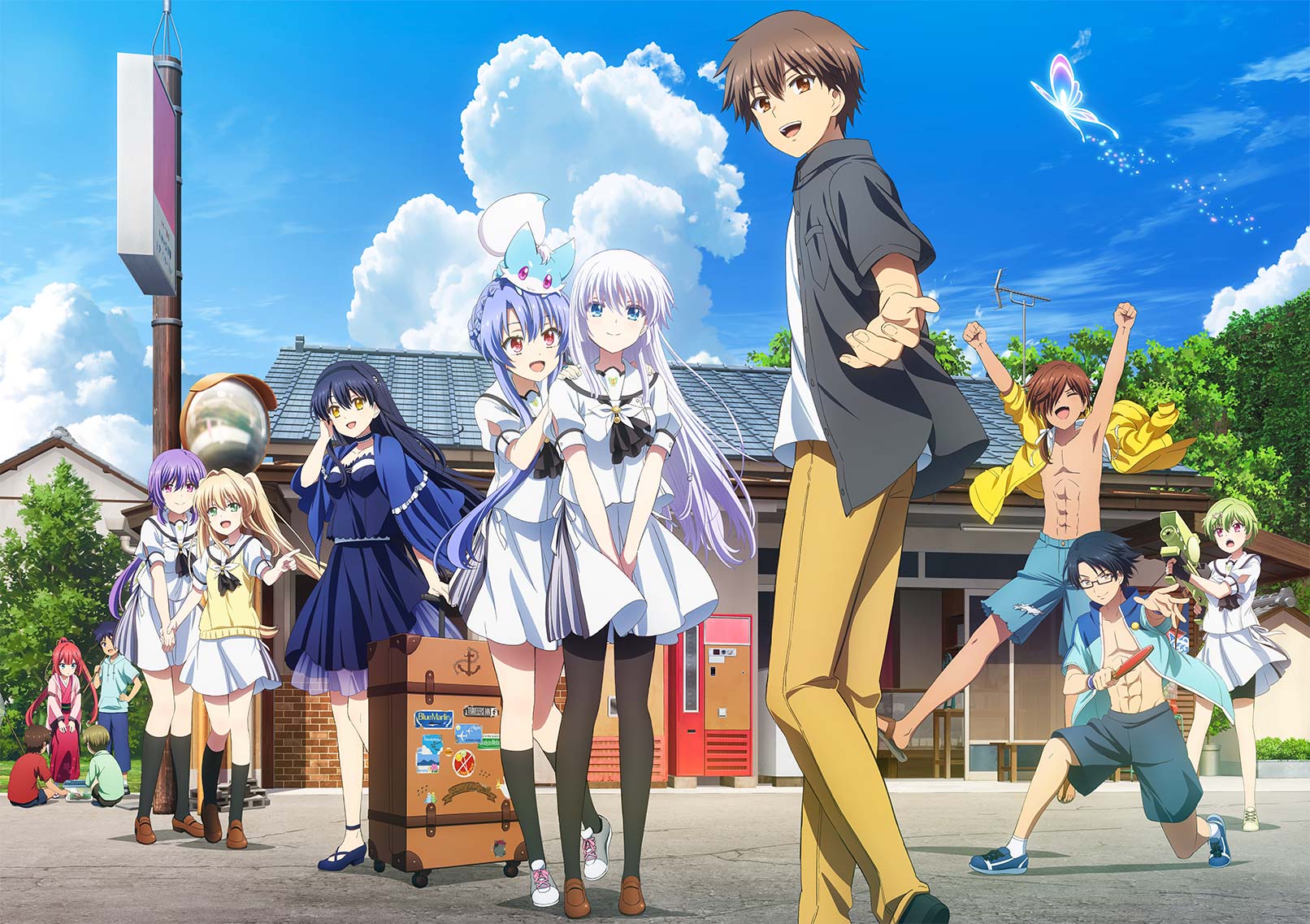
"TARI TARI" Teaches Us the Preciousness of Detours — The Score of Youth Echoing in Enoshima with "Chorus, Sometimes Badminton"
tarumaki
Enter the Moment
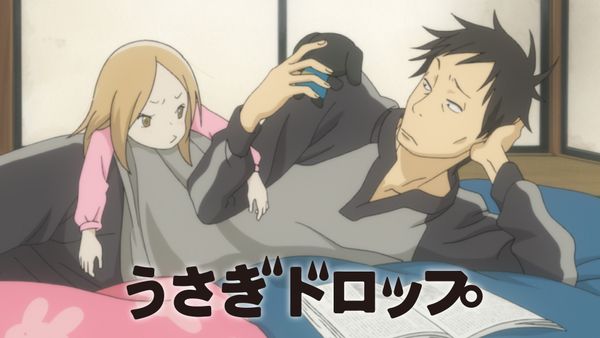
This series depicts the clumsy co-living life of Daikichi, a single man who takes in Rin, a young girl who turns out to be his grandfather’s illegitimate child.
The greatest appeal lies in the reality of childcare—which is not just an idealized version—and the daily loveliness that outweighs the struggles. While there are things one must sacrifice, there is even more to be gained. The sight of the two groping their way to build the form of a “family” lights a gentle flame in the viewer’s heart; it is a supreme “healing” (Iyashikei) masterpiece.
Daikichi, a 30-year-old bachelor, meets a strange 6-year-old girl named Rin at his grandfather’s funeral. Daikichi is shocked to learn that she is actually his grandfather’s illegitimate child. While the relatives pretend to discuss who will take Rin in, they are actually just pushing the responsibility onto each other. Unable to stand by and watch, Daikichi impulsively declares he will take her in.
Daikichi has a strong sense of justice but can be a bit careless, while the young girl Rin possesses a surprising inner strength despite her age. Thus begins their bumpy life together, moving forward like a three-legged race.
“What if you suddenly had to raise a child starting tomorrow?” Whether you are single or already have children, please imagine it for a moment. What about work? Meals? Picking up and dropping off at nursery school? And above all, could you love that child as “family”?
The anime Bunny Drop (Usagi Drop). It is a story about a 30-year-old bachelor, Daikichi Kawachi, who takes in Rin, the 6-year-old illegitimate daughter of his late grandfather, and walks together with her. Being his grandfather’s illegitimate child means that, on the family register, Rin is Daikichi’s “aunt.” This cohabitation life starting from such a strange relationship seems like a slapstick comedy, but in reality, it is a human drama depicting a serious and warm “parent-child bond.”
More than 10 years have passed since its broadcast, but this work is still handed down as a “monumental child-rearing anime.” Today, from the perspective of a veteran columnist, I would like to dig deep into the preciousness of the days woven by Daikichi and Rin, and the “essence of family” that this work teaches us.
The greatest charm of this work lies in the figure of the protagonist, Daikichi, who is clumsy but sincere. He is by no means a perfect “ikumen” (active father). He is neither handsome nor wealthy. However, he was the only one who did not let go of the hand of Rin, whom the relatives treated as a nuisance. “Do you want to come to my place?” From that one word uttered in the heat of the moment, his days of child-rearing—and self-rearing—begin.
Daikichi decides to transfer to a department without overtime for nursery school pick-ups and drop-offs, dropping out of the career track. The process of realizing that “time spent with a child is also my own time,” rather than lamenting that “my time is gone.” This change of heart is probably why this work resonates with many viewers, especially the child-rearing generation. Daikichi raises Rin with the resolve to be a parent, but at the same time, he is saved by Rin’s innocent smile and casual words, and is made to grow as an adult. “Daikichi is Daikichi.” These words uttered by Rin seem to poke at his conflict of not being able to become a “father” title-wise, but perhaps they were proof of full trust beyond titles, meaning “Daikichi is my precious person.”
At first glance, Bunny Drop looks like a “story of pseudo-parent and child,” but its essence is a “story of relationships.” Not only Daikichi and Rin, but also Kouki’s mom who is a single mother, Daikichi’s family, and Rin’s biological mother. Various forms of families appear, influencing each other and exploring their respective “forms of family.”
Especially impressive are the words of Kouki’s mom. “As long as Daikichi-san is there, Rin-chan will be okay.” This is a powerful affirmation that the time they have accumulated makes them a “real family” more than blood ties or legal parent-child relationships. Many viewers may feel anger towards Rin’s biological mother. However, her existence highlights Daikichi’s unconditional love and delves deeper into the theme of “what it means to be a parent.”
What a child needs is not fine furniture or a wealthy life. The absolute sense of security that “someone who protects me is by my side.” Rin’s happy sleeping face in Daikichi’s small apartment eloquently tells that truth.
What cannot be avoided when talking about this work is the pros and cons regarding the ending of the original manga (Part 2). The anime version beautifully concludes by depicting up to “Part 1,” Rin’s childhood. However, in the original work, a big change visits the relationship between the grown-up Rin and Daikichi, which became a factor for some fans to criticize it as “creepy” or “lolicon.”
In my personal opinion, the anime version is one completed form as a masterpiece depicting “child-rearing and family rebirth.” The gentle touch of the animation like watercolor paintings, the warm background music by Suguru Matsutani, and the OP “SWEET DROPS” sung by PUFFY. Everything is optimized to express the “sparkle of childhood” and purifies the viewer’s heart.
On the other hand, the “terminus of the relationship” that the original work tried to depict is also a truth. How the bond nurtured over a long time by two people with mutual deficits lands. That might be an answer unique to them, which cannot be fully explained by existing frameworks of “parent and child” or “husband and wife.” If you were moved by the anime, please pick up the original work and check that shocking (but in a sense inevitable) ending with your own eyes.
Bunny Drop is an anime that I want adults to watch. It gives encouragement to those raising children, preparation to those who are about to become parents, and nostalgia to those who have finished raising children.
Children are existences like angels, and at the same time, little monsters that test their parents. There are many hardships, but the moment will surely come when even those struggles turn into precious memories. Daikichi and Rin’s daily life reminds us of such ordinary, yet easily forgotten happiness.
If you are chased by daily busyness and are about to lose time facing your children or family. Please watch this work and stop for a moment. Surely, from tomorrow, you will be able to say “I’m off” with a slightly kinder feeling.
(C)2011 宇仁田ゆみ/祥伝社/アニメ「うさぎドロップ」製作委員会