The Evolution Theory of "Flightless Crows" Depicted in "Haikyu!!" — A Classic Yet Innovative Masterpiece: Why Are We So Enthusiastic About Them?
tarumaki
Enter the Moment
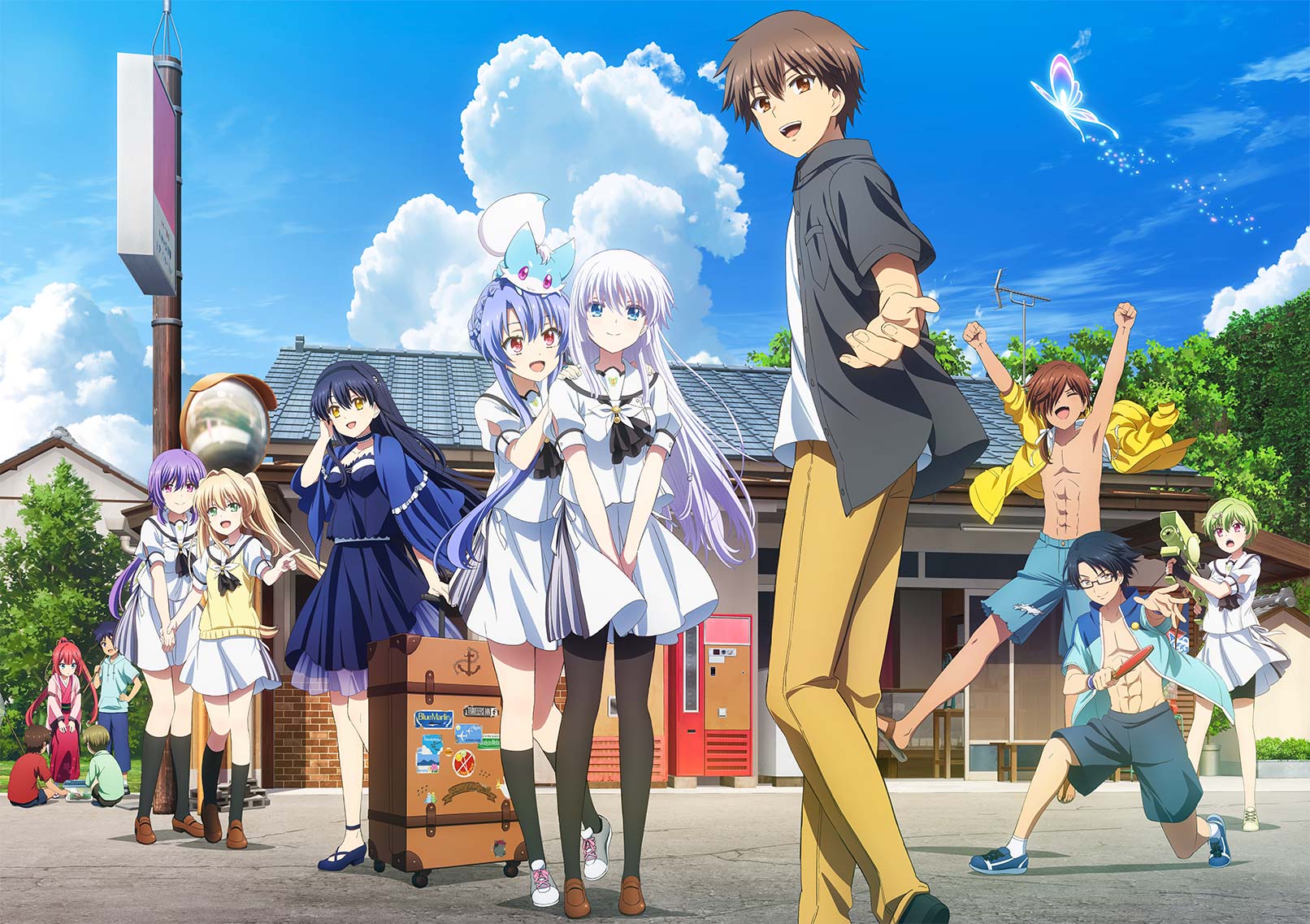
Based on the original work by Key and produced by feel., this series depicts the summer interactions between Hairi Takahara, a young man who visits Torishirojima (Torishiro Island) to sort through his late grandmother’s mementos, and the unique girls living on the island.
The greatest appeal lies in the contrast between the “radiance of daily life” and the “weight of destiny,” which is the true essence of Key’s storytelling. Amidst nostalgic scenery filled with clear blue skies, the sound of waves, and the buzzing of cicadas, the pressing secrets held by the girls and the island’s folklore are gradually unraveled. The dazzling summer eventually comes to an end, but the “memories” waiting at its conclusion are sure to leave footprints in the viewer’s heart that will last a lifetime.
“The only thing I didn’t forget was the dazzling brightness.”
Using his summer vacation, the protagonist Hairi Takahara arrives on Torishirojima to handle the sorting of his deceased grandmother’s mementos. While helping to clean up her keepsakes, he is initially bewildered by his first experience of “island life,” but gradually adapts to it.
He met a girl gazing at the sea. He met a girl searching for mysterious butterflies. He met a girl looking for memories and a pirate ship. He met a girl living in a quiet lighthouse.
He made new friends on the island— And he found himself wishing that this summer vacation would never end.
Summer. Cumulonimbus clouds, the chorus of cicadas, and the endlessly spreading blue sea. When these elements align, a certain type of anime fan expects “something” like Pavlov’s dog. Yes, the presence of a Key work, the monumental “Crying Game” (Nakige) brand.
Summer Pockets, which we will discuss today, is a new summer story presented by Key. Set on a remote island, it is a memory of a single summer woven by boys and girls. The nostalgic scenic beauty and the music that permeates the heart are undoubtedly first-class, strongly stimulating the viewer’s nostalgia.
However, evaluations of this work are split right in two. While there are voices praising it as “the best summer anime,” there are also not a few harsh opinions saying “the characters are cringe” or “it’s too unrealistic and painful to watch.” Why are opinions so divided? And what should “Key-ness” be in the modern age? From the perspective of a veteran columnist, I will cut deep into this controversial topic.
First, the greatest charm of this work, admitted by everyone, is its overwhelming “atmosphere.” The beauty of the animation is noteworthy; the depiction of scenes such as the nature of the remote island, the light of dusk, and the silence of the night is drawn realistically enough to make you feel the “smell of summer” through the screen. The musical pieces, including the theme song “Alkatale,” are also wonderful, and the emotion at the moment when the BGM and visuals fuse is truly worthy of a Key work.
The stage setting of “summer vacation on a remote island” functions as the strongest “healing” space for us who are tired of modern society. Leaving the hustle and bustle of the city, facing the past and oneself in a place where time flows slowly. This narrative structure itself has a kind of therapeutic effect, and many viewers will taste both the admiration for and the sense of loss of “a summer we can never return to.” The power of this “atmosphere” is immense, more than enough to compensate for the minor flaws in the story.
On the other hand, the biggest factor that chooses the viewer for this work is the intense character of the heroines. “Shooting a water gun suddenly upon first meeting,” “Repeatedly saying mysterious onomatopoeia (Mugyu),” “Suddenly standing on a chair and screaming in a diner.” Whether you feel these behaviors are “unique and cute” or “unrealistic and painful (cringe)” is the crossroad of destiny.
To be honest, these are the contexts of “conventions” seen in the heyday of beautiful girl games (eroge/gal-game) in the 2000s. From the perspective of fans from that time, it might be a sense of security (stylistic beauty) saying “This is Key!”, but for the modern viewer demographic or new layers who prefer reality and natural conversation dramas, it is no wonder it appears as a lump of discomfort. Including the protagonist’s behavior (casual speech upon first meeting, lack of distance, etc.), the divergence between “gal-game realism” and “modern realism” can be said to be creating a division in evaluation.
However, from a different perspective, their eccentric behaviors can be taken as the flip side of the “loneliness” and “clumsiness” each holds. Because they are clumsy, they run to eccentricities. Whether you can interpret it that way and snuggle up to their inner selves will be the key to whether you can enjoy this work.
The original game is a multi-ending format with multiple heroine routes, but the anime version reconstructs them into a single story. While this has resulted in a work with good tempo and easy viewing, it has also invited dissatisfaction from original fans, such as “shallow digging into individual heroines” and “dispersed crying points.”
However, I would like to evaluate this composition as a “modern update.” While centering on romantic elements, by comprehensively depicting themes such as “bonds with friends” and “rebirth of family” even more, the aspect of an ensemble drama that can be enjoyed without being devoted to a specific heroine is strengthened. In particular, the acting skills of Aimi Tanaka playing Umi Kato and Konomi Kohara playing Shiroha Naruse are wonderful, and their presence gives depth and persuasiveness to the story.
Summer Pockets reconstructs the grammar of old-fashioned “Crying Games” mildly and smartly for modern anime viewers. It can be said to be a manifestation of Key’s challenge to explore “emotion” in a new era, rather than just clinging to past glory.
Summer Pockets is undoubtedly a work that chooses its audience. Some people will show rejection to the vibe of the characters or the opportunistic developments. That is a healthy reaction. However, if you can overcome that hurdle and surrender yourself to the air of this island. There awaits a gentle and slightly sad time that reminds you of “something precious” you had almost forgotten.
It is free to feel “cringe” and cut it off at episode 1. But if you are attracted even a little by the visual beauty or music, please hang out with their summer just a little longer. Perhaps, when you touch the “true story” beyond that discomfort, tears might spill from your eyes.
The fact that there are pros and cons is proof that this work shakes people’s hearts strongly. Why not find your own “summer vacation” on Torishirojima this summer?
(C)VISUAL ARTS/Key/鳥白島観光協会