“Yamada-kun and the Seven Witches” — The Magic of Kisses, Connection, and Youthful Redemption
tarumaki
Enter the Moment
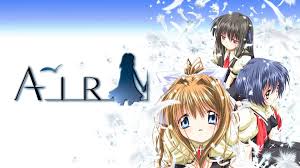
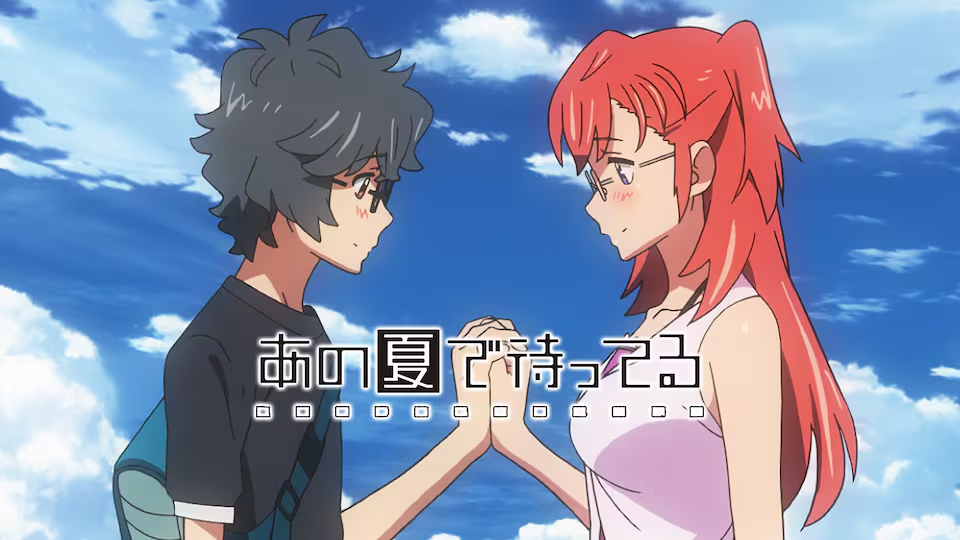
About the Work Produced by Kyoto Animation, this grand tale depicts the cruel fate imposed on a “girl with wings” spanning a thousand years, and the bonds of those who struggle to break her curse.
The greatest highlight lies in how it makes a hopeless tragedy and ultimate mother-child love coexist within the scenery of “summer,” symbolized by clear blue skies and towering cumulonimbus clouds. Viewers will be overwhelmed by the heartbreak as the story accelerates toward the young girl Misuzu’s “Goal,” while simultaneously having their souls shaken by the radiance of life.
Yukito Kunisaki is a traveling puppeteer. He journeys across the land, earning a living by showing people his performance using a mysterious power called “Houjutsu” (Magic).
One summer day, Yukito performs as usual. However, he is mocked by children and fails to earn any money. Collapsed from hunger on a seawall, a girl named Misuzu appears before him.

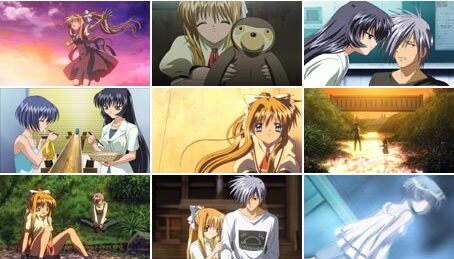
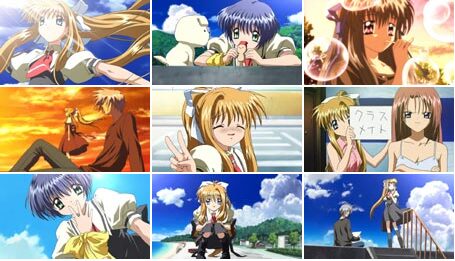
There is an anime that I feel compelled to watch when summer comes. The towering cumulonimbus clouds in the blue sky, the deafening chorus of cicadas, and the endless coastline. If seeing these sceneries makes your chest tighten, you are undoubtedly under the spell of the work called AIR.
Produced by Kyoto Animation in 2005, this work went far beyond the framework of a mere “anime adaptation of a beautiful girl game (gal-game)” and engraved its name in anime history as a piece of art. The original work is by Key. It is a story of cruel fate and family love written by scenario writer Jun Maeda.
Let me be honest. Watching this work is “painful.” The development is so poignant and seemingly devoid of salvation that one is attacked by an intense sense of loss after watching. There must be many fans who want to watch it every year but can’t muster the courage. However, we still cannot help but seek this story.
Why does AIR touch our hearts so deeply? Why do we want to relive the suffering of losing something? Today, from the perspective of a veteran columnist, I will unravel the meaning of the “Wings” depicted in AIR, a masterpiece of the 2000s, and the “salvation” embedded therein.
First, what cannot be avoided when talking about this work is the fusion of the overwhelming visual beauty by Kyoto Animation and the divine music by Shinji Orito and others.
Looking back from 2023, the animation quality has not faded but rather increased its brilliance. Especially the depiction of the “Sky” and “Sea.” The reality that makes you feel the heat and sea breeze through the screen, contrasting with the unworldly beautiful girl characters, visually determines the “ephemeral nature” unique to this work. Some may feel the age in the character design (especially the size of the eyes), but as you keep watching, you should realize that they are not “symbols” but “windows” representing their purity.
And the theme song, “Tori no Uta” (Bird’s Poem). This masterpiece, often called the national anthem of the anime song world, drags the viewer into the world of AIR the moment the intro plays. “The vanishing contrail, we watched it go…” Lia’s crystal-clear singing voice and the numerous BGM tracks like “Natsukage” (Summer Lights) and “Giniro” (Silver Color). These connect directly to the viewer’s memory device, creating a Pavlovian state where just listening to the music loosens the tear ducts. The skill of completely dominating vision and hearing and dyeing the season of “Summer” into the theme color of the work can only be described as magnificent.
The story of AIR consists of three parts: the modern “DREAM arc,” the “SUMMER arc” of a thousand years ago, and the concluding “AIR arc.” At first glance, it might look like a harem anime where the protagonist, Yukito Kunisaki, saves beautiful girls in various places. However, its essence is completely different.
At the core of this story is not romance but “family love,” especially the bond between “mother and child.” A thousand years ago, Kannabi no Mikoto, a winged being (Winged One), was imprisoned because of her wings and met a tragic end. Her innocent wish to “return to the sky” and “meet her mother” became a curse over a thousand years, repeating reincarnation.
The key to breaking that curse lies in the relationship between the modern heroine, Misuzu Kamio, and her aunt, Haruko. The process of two people who are not related by blood shrinking the distance between them, albeit clumsily, and becoming a real “family.” Especially in the final stages, the scene where Haruko embraces Misuzu and resolves to be a mother is a legendary performance in anime history. Aya Hisakawa’s acting has enough heat to forcibly pry open one’s tear ducts.
Yukito’s ancestors, Ryuya and Uraha, and Kanna. Their “family-like bond” is passed down over a thousand years to Misuzu and Haruko, and Yukito (Sora the crow). Family is not just about blood ties. This work teaches us that “love” is about snuggling up even while getting hurt and watching over someone until the very end.
The ending of AIR might be hard to call a happy ending. Misuzu was released from the thousand-year curse, but as a price, she burned out her life. “Goal.” The last word she uttered. How one accepts that will change the evaluation of this work.
I interpret that not as a tragedy, but as complete “salvation.” Misuzu chose to “connect with people” even knowing the fear of getting hurt and losing by connecting with someone. She spent time with the people she loved, Yukito and Haruko, and finally cut the goal tape with a smile. That was liberation from her fate (curse) as a Winged One, and at the same time, a declaration of victory for fulfilling her “life” as a human being.
Also, the perspective of the “Crow (Sora)” is introduced in this work. The frustration of wanting to protect a loved one but being unable to touch or exchange words with them. This overlaps with the perspective of us viewers in front of the screen. Watching over her end while holding the helplessness of being unable to do anything. That might be the only “salvation” we can offer her.
The isolation and sense of entrapment peculiar to the “Sekai-kei” (World-type) genre of the 2000s. The unconscious resignation that humanity might be doomed. While breathing in the atmosphere of such times, AIR fully depicted the karma and hope that “nevertheless, people cannot help but connect with someone.” That is why the pain pierces deep into our hearts and remains as a thorn that never comes out.
AIR is not just a sad story. It is a gentle yet powerful record of a girl who aimed for the sky with all her might while being tossed about by a harsh fate, and the people who tried to support her.
Watching it again now as an adult, you might find yourself following the story not only from Yukito’s perspective but also from Haruko’s perspective. “Parental responsibility,” “The strength of those left behind.” Being able to see such new themes is also why this work is a masterpiece.
If there is anyone who hasn’t seen this work yet, or hasn’t seen it for a long time. Please resolve yourself and return to that summer once more. There, you will find the “blue sky” that never fades and the figures of people who spun love risking their lives.
The sense of loss after watching will surely make you reaffirm the preciousness of living and loving people. And you will look up at the sky and murmur: “May they have harsh days. And for us, a beginning.”
(C)VisualArt’s/Key/翼人伝承会