“There’s No Way I Could Be Your Girlfriend, No Way!” — A Sharp, Funny, and Honest Take on Friendship, Love, and Self-Acceptance
tarumaki
Enter the Moment
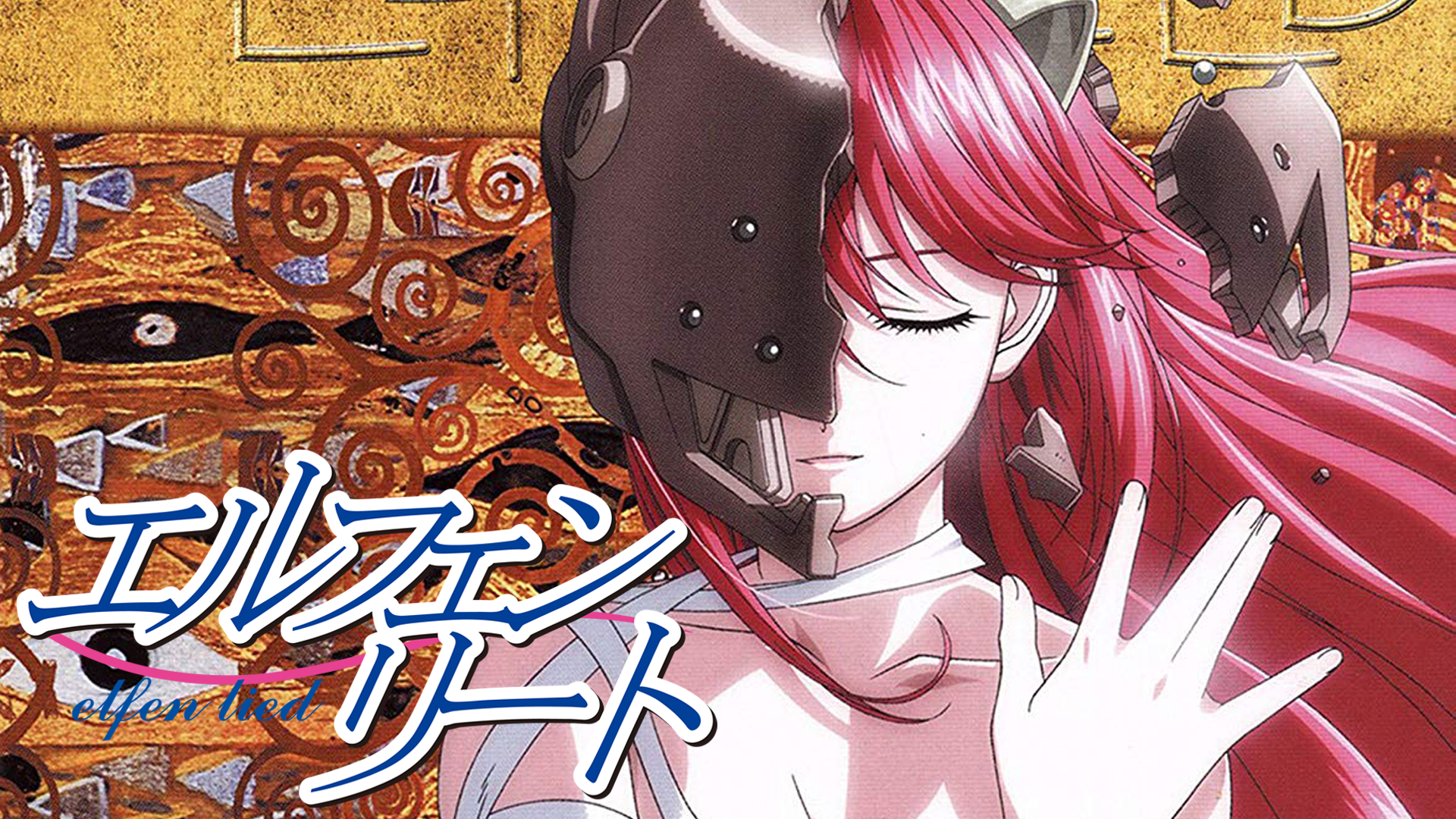
About the Work Broadcast in 2004, “Elfen Lied” is a monumental masterpiece of Sci-Fi dark fantasy produced by ARMS and directed by Mamoru Kanbe, based on the manga of the same name by Lynn Okamoto. The reason this work has not faded even after more than 20 years lies not merely in its extreme graphic depictions. It is because it vividly portrays the fundamental terror of “discrimination” and “alienation” lurking in the depths of the human psyche, as well as the desperate desire for “connection” despite it all.
The Contrast of Stillness and Motion, Ugliness and Beauty: The opening sequence, which boldly pays homage to Gustav Klimt’s masterpiece The Kiss, and the theme song “Lilium,” which possesses a hymn-like serenity. The contrast between the religious beauty created by these elements and the unrelenting violence that unfolds in the main story violently shakes the viewer’s spirit.
The Scream of Oppressed Souls: Why did Lucy come to hate humanity? The gruesome episodes from her childhood flashbacks blur the boundary between perpetrator and victim. The “vectors” she wields are weapons that slice through everything they touch, but at the same time, they look like twisted “hands” extended by a lonely soul who was never allowed to touch anyone.
A Hope Named “Nyu”: Her time as the pure, wordless “Nyu” is a fleeting respite granted to her sinful self. The process by which Kohta’s unconditional kindness becomes the only salvation for Lucy, who had despaired of the world, is heartbreakingly beautiful.
The “Diclonius” are human mutants… possessing horns growing from their heads, and special hands that act as a sixth sense (Vectors). These mutants, harboring the potential to cull humanity, were quarantined and researched in state facilities due to their dangerous abilities. However, due to an accidental mishap, a Diclonius girl named Lucy breaks free from her restraints, slaughters the guards, and escapes the research facility. In the process, she loses her memory. Lucy, now without her past or memories, washes ashore at Yuigahama Beach in Kamakura. There, she meets Kohta and Yuka, is given the name “Nyu,” and ends up living at the “Maple House” (Kaede House) where Kohta resides…
“Gory,” “Erotic,” “Depressing.” Since its broadcast in 2004, these sensational tags have always followed the anime Elfen Lied. Indeed, the scene in the beginning of Episode 1 where a naked girl slaughters facility staff one after another remains in anime history for its visual shock. Limbs fly, blood dances. Its cruelty is more than enough to instantly screen out viewers with no tolerance.
However, as a veteran columnist, let me assert this. If you are shunning this work solely because of its “superficial grotesqueness,” that is a tremendous loss in your life.
The essence of this work is not splatter horror. It is a psycho-suspense depicting the conflict between non-humans and humans, following the lineage of Devilman and Parasyte, and at the same time, it is a story of “pure love” so poignant that lonely souls huddle together. Cute art style and cruel violence, calm daily life and tense escape drama. While almost catching a cold from this tremendous temperature difference (cliffhanger), we cannot take our eyes off the screen.
Today, I will unravel the true nature of “love” and “sadness” hidden under the bloodstained outer skin of Elfen Lied, which still boasts cult popularity around the world nearly 20 years after its broadcast.
What is essential in talking about this work is the existence of Lucy (Nyuu), a girl with amnesia picked up by the protagonist Kouta. She is a new human species called “Diclonius.” She has two horns on her head and possesses the ability to kill and injure humans with invisible tentacles called “vectors.”
However, when spending time with Kouta, she is an innocent and cute girl who cannot speak words and only meows “Nyuu.” This gimmick of “split personality” has a meaning beyond a mere setting in this work. If she had remained a ruthless murderer from beginning to end, this would have ended as a mere monster panic work. However, by depicting the innocent figure of “Nyuu,” the viewer touches the fundamental desire to “be loved” within her.
A peaceful cohabitation life with Kouta. That is the “ordinary happiness” she should have originally desired. However, once pursuers appear, she returns to the ruthless “Lucy” and slaughters enemies without mercy. The more cruel this contrast is, the more we are questioned. “Are those who have committed sins not allowed to be happy?” “Is there sin in those who were hated from birth and taught only to kill?”
This double structure set by the original author, Lynn Okamoto, violently shakes our ethics and emotional balance. The sweeter the peaceful daily part is, the more the poison of “murderous impulse” lurking behind it approaches with increased tension and tragedy.
What Elfen Lied depicts is the “structure of discrimination” through the fictional existence of Diclonius.
The Diclonius appearing in the work are abandoned by their parents and treated as experimental animals in research facilities just because they were “born with horns.” The line in Episode 8, “I need someone more unfortunate than me because I am unfortunate,” is like a knife that sharply pierces the theme of this work. Humans try to feel relieved by hitting those weaker than themselves. Abused children hurt even weaker ones. This negative spiral of violence is not a story of a fantasy world, but our real society itself.
The protagonist Kouta has had his beloved sister and father killed by Lucy in the past (although his memory is sealed). Normally, he is in a position to hate Lucy the most. However, in the end, he chooses to accept her after remembering everything. “I can’t forgive you. But if you hurt people, I’ll be sad.” This attitude of Kouta is depicted as the only hope to break the chain of negativity.
The “ugliness” and “kindness” of the creature called human, which cannot be divided by poetic justice. Because both are contrasted to such an extent, this work leaves deep claw marks on the viewer’s heart. By depicting discrimination against “non-humans,” it paradoxically questions “what is human.” Its depth reaches the realm of philosophy.
One of the major factors that make this work a “God Anime” is its artistic direction and music.
The opening theme “Lilium.” Lyrics in Latin and a sacred melody reminiscent of church music. And the visuals are drawn with motifs of Gustav Klimt’s masterpieces (such as The Kiss and Danaë). “Eros (sexuality)” and “Thanatos (death),” and “Femme Fatale (destined woman)” depicted by Klimt. These elements link perfectly with the worldview of Elfen Lied.
There may be criticism that “it’s too sexual” regarding beautiful girls being drawn naked. However, the nudity here functions as a symbol of “innocence” as they were born, or “fragility” that is easily hurt, rather than mere fan service. The structure of the human body that feels even architectural beauty, and the fleeting life dwelling there. The visual beauty of the opening makes us foresee that the story about to begin is not just a killing spree, but a story of a kind of religious “salvation” and “ruin.”
In the final episode, the sound of the music box stops, and the clock starts moving. And a silhouette standing beyond the entrance. How to interpret that last scene is left to the viewer. Is it a happy ending, or a prelude to ruin? However, the momentary exchange of hearts between Kouta and Lucy is engraved in our chests as an undeniable “truth.”
Elfen Lied is not a work that can be recommended to everyone. It might be too strong a drug for those who have no tolerance for grotesque depictions or those who are not good with unreasonable developments.
However, if you are a person who tries to see the “essence” behind superficial stimulation. If you wish to touch the story of human karma and the love that wraps it. This work should become a “treasure” you will never forget in your life.
The intense sense of loss (Elfen-loss) that attacks you after finishing watching. Sadness enough to make the world look gray for a while. But perhaps that sadness is the proof that we are human.
If you haven’t seen it yet, please press the play button with some preparedness. There, a cruel and overly beautiful world is waiting.
(C)岡本倫/集英社・VAP・GENCO