"Legendz: Tale of the Dragon Kings" is a Potent Drug Disguised as a Kids' Anime — From Hilarious Beginnings to a Finale of Despair and Tears
tarumaki
Enter the Moment
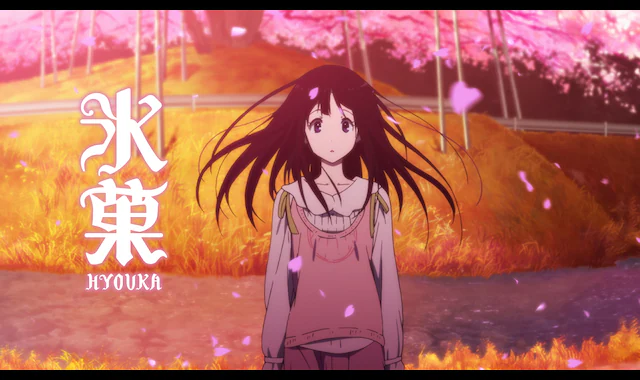
About the Work Based on the “Classic Literature Club” mystery novel series by Honobu Yonezawa, “Hyouka” is a mystery anime depicting “everyday mysteries,” produced by Kyoto Animation in 2012. The greatest appeal of this work lies in its stunning visual beauty and the human drama that carefully scoops up the “pain” and “frustration” lurking behind the glamorous façade of youth.
The TV anime adaptation of Honobu Yonezawa’s original “Classic Literature Club Series”!
Houtarou Oreki, a first-year high school student whose motto is “energy conservation,” ends up joining the “Classic Literature Club,” which is on the brink of abolition, due to a certain turn of events. There, he meets the curious heroine, Eru Chitanda, along with his inseparable friends from middle school, Mayaka Ibara and Satoshi Fukube. Set in Kamiyama High School, this is a youth school mystery where these four reason their way through numerous incidents.
“I’m curious!” Houtarou’s peaceful, gray high school life was completely transformed by this single phrase!!
“If I don’t have to do it, I won’t. If I have to do it, make it quick.”
This is the motto of the protagonist, Oreki Hotaro, who strictly adheres to “energy conservation.” This story is about how his gray high school life gradually but surely transforms into a “rose-colored” one due to a single phrase from a girl: “I’m curious!” This is Hyouka, an anime produced by Kyoto Animation based on the novel by Honobu Yonezawa.
Even after more than 10 years since its broadcast, this work continues to be loved by many anime fans as a monumental work of “daily life mystery” or as a masterpiece of “youth ensemble drama.” At first glance, it may seem like a quiet story set in a high school Classics Club where no flashy incidents occur. However, what is depicted within that silence are the painfully realistic subtleties of emotions such as jealousy towards talent, expectations, resignation, and faint romantic feelings of young people.
As a veteran columnist, I assert that this work is not merely a mystery-solving anime. It is a kind of “art piece” where meticulously laid foreshadowing, literary dialogue, and Kyoto Animation’s overwhelming visual beauty fuse in a miraculous balance. Today, I will unravel the profound charm of Hyouka from three perspectives to understand why it captures our hearts so deeply.
The greatest feature of Hyouka is that it deals with “daily mysteries” that occur suddenly in school life, rather than heinous crimes like murder cases. “Why were we locked in the club room?” “Why is the same book borrowed every Friday?” These mysteries may seem trivial at first glance, but when Hotaro unravels the truth with his excellent deductive skills, “human karma” and “sorrowful feelings” are always hidden there.
The episode “Hyouka,” which is also the title of the series, is particularly symbolic. A mystery of the Classics Club that happened 45 years ago. What emerges in the process of exploring the truth is the turbulent historical background of the student movement in the 1960s and the sorrowful scream of a boy who was sacrificed in it. “Ice cream” = “I scream.” When viewers learn the meaning contained in this wordplay, they receive a shock as if they were shown a profound historical drama going beyond the framework of a mere mystery.
This work depicts the baton of people’s feelings continuing from the past to the present, borrowing the structure of a mystery. The heroine, Chitanda Eru, presses Hotaro with her big eyes saying, “I’m curious!”, but it is not just curiosity. Unconsciously, she is trying to salvage the “unspeakable screams” deep in the hearts of others. And Hotaro also learns the preciousness of interacting with others, along with its troubles, while proceeding with deductions in a form of getting involved by her. “Solving mysteries” is not just solving puzzles, but understanding the human heart. Because it carefully depicts that process, even without flashy action, this work stands as supreme entertainment.
What is essential in talking about Hyouka is the exquisite balance of the four main characters and the conflict regarding “talent” they harbor.
Hotaro Oreki, the “detective role” who has genius deductive skills despite being an energy conservationist. Eru Chitanda, the “client” who is the incarnation of curiosity and draws out Hotaro’s ability. And what gives depth to this story is the existence of Hotaro’s friends, Satoshi Fukube and Mayaka Ibara.
Especially the characterization of Satoshi Fukube is excellent. He calls himself a “database” and possesses abundant knowledge, but he is aware that he lacks the ability to derive conclusions himself. “A database cannot draw conclusions.” Inside him, as he says this with a laugh, swirls a strong complex towards the “genius” Hotaro and the pride of trying to be his best understanding friend. His actions and the conclusion in the Cultural Festival arc (“The Order of Kudryavka”) depicted the bitterness of youth cruelly enough. The pressure held by the word “expectation” and the disappointment in himself for not being able to respond to it. It is not an easy message like “if you try hard, it will work out,” but the question of how “have-nots” should live always lies in this work.
On the other hand, Mayaka also struggles, hitting the wall of talent in manga production. Their figures should pierce deeply into the hearts of many viewers who struggle to become something but cannot become anyone. And the unaware cruelty of Hotaro who solves mysteries indifferently, whether knowing their conflicts or not. The “difference” and “expectation” they hold for each other. The mixture of these complex emotions can be said to be the true value of this work, which draws a line from mere slice-of-life anime of a close group of friends.
Finally, I must touch upon the overwhelming visual expression by Kyoto Animation. It is said that “God is in the details,” and the animation quality of Hyouka embodies those words.
The sparkle in Chitanda Eru’s eyes, the expression of fluttering hair, the contrast of light and shadow. In particular, the psychedelic and fantastic direction that embodies the mental image when Hotaro deduces is visually very fun, sublimating the “time to think,” which tends to be plain, into a rich visual experience.
And above all, the last scene of the final episode, “The Doll that Took a Detour.” The beauty of the Living Doll procession amidst the falling cherry blossoms, and the conversation between the two at dusk. The color design and direction in this scene are not an exaggeration to say they are famous scenes remaining in anime history. No clear words of love are exchanged between Hotaro and Eru. However, the rose-pink atmosphere created by the entire screen and the heat of the gazes staring at each other eloquently tell of “something” that has sprouted between them.
“Would you take care of the business side for me?” (Implied: Will you stay with me in my hometown?) The words Hotaro almost said but swallowed. Or Eru’s expression that might have been expecting it. By not telling everything and leaving margins, it stirs the viewer’s imagination infinitely. This is the awesomeness of Hyouka as a “literary anime” that can withstand adult appreciation. Even if you watch it again 5 or 10 years later, universal beauty that never fades certainly exists there.
Hyouka is a rare work where the fun of solving mysteries, the anguish of youth, and the beauty as visual art become a trinity.
A boy who advocated “energy conservation” interacts with others, gets hurt, worries, and steps into a “rose-colored” world. That record of growth reminds us of our former youth days and, at the same time, gives us the courage to live now.
The anime version ends partway through the original work, but its conclusion is very beautiful and shows a perfect landing as a single work. If there is anyone who hasn’t seen this work yet, that is very lucky. Because from now on, you can be sucked into those eyes of “Chitanda Eru” and experience the supreme time of unraveling mysteries with Hotaro.
And after finishing the anime, please pick up the original novel (Classics Club series) by Honobu Yonezawa. By touching the story of them that was not depicted in the anime, especially the further abyss depicted in Even Though I’m Told I Have Wings Now, you should be able to understand the true value of the work Hyouka more deeply.
When you are tired of gray days, please visit the world of Hyouka. There, surely, a sweet and cold taste of youth that melts your own heart is waiting.
(C)米澤穂信・角川書店/神山高校古典部OB会