“Made in Abyss” — The Beautiful Despair and Eternal Curiosity of Humanity
tarumaki
Enter the Moment
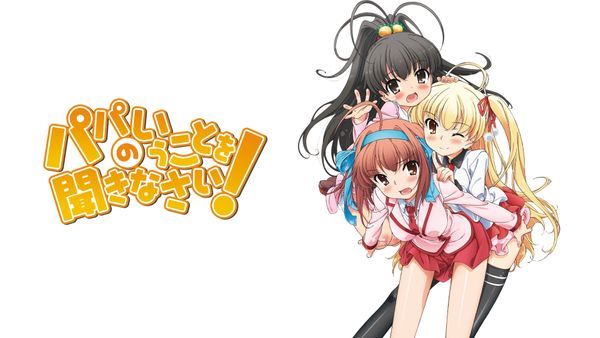
About the Work Based on the light novel by Tomohiro Matsu, “Listen to Me, Girls. I Am Your Father!” (commonly known as PapaKiki!) is a home drama themed around a “pseudo-family” that was adapted into a TV anime in 2012.
The greatest appeal of this series lies in the characters’ desperate efforts to become a “family,” hand in hand, even when faced with harsh realities. Realistic struggles and devotion: It goes beyond the typical trope of “living with cute girls.” The story depicts the severe realities a college student faces, such as childcare expenses, balancing school with raising children, and housing issues. A story defining “family”: It conveys the universal theme that a family is made not by blood relations, but by spending time together and cherishing one another. This message is carefully depicted through a daily life filled with laughter and tears.
Yuta Segawa, a college student, suddenly ends up becoming the guardian of his three nieces in place of his sister and her husband!
The eldest, Sora: A 14-year-old middle school student with brownish semi-long hair tied with a ribbon. The second, Miu: A beautiful elementary school girl with blonde twintails. The youngest, Hina: An angelic three-year-old attending nursery school.
Set in a small six-tatami mat apartment, this is a noisy yet heartwarming at-home love comedy depicting their life together.
“Listen to Me, Girls. I Am Your Father!” (Papa no Iukoto wo Kikinasai!) What do you imagine when you see this title and the key visual of three cute sisters? A slapstick romantic comedy? or a calculatingly cute “moe” anime? To be honest, I thought so too at first. I was cynical, thinking, “It’s probably just a harem anime for lolicons.”
However, when I watched the first episode, and then the fateful second episode, that prejudice was shattered into pieces. What was depicted there was an overly harsh reality and the desperate figure of young people confronting it. And a story of “family rebirth” that cannot be told without tears.
A protagonist who has just become a university student suddenly ends up raising his three nieces. Communal living of a family not connected by blood (or half-connected) begins in a single six-tatami mat apartment. Today, from the perspective of a veteran columnist, I will unravel the true charm of this masterpiece left by the late Tomohiro Matsu. Are your handkerchiefs ready? No, for this work, you might need a bath towel.
The protagonist of this work, Yuta Segawa. He is not just a dense and indecisive guy often found in “light novel protagonists.” Although he looks unreliable at the beginning of the story, when faced with the tragedy of his sister and her husband’s sudden death (disappearance), he makes a surprising decision. “I will take in the three sisters who are about to be passed around among relatives.”
He is still a student himself, and his financial power and living foundation are not solid. Still, he struggles muddily and desperately tries to become a father figure to protect his “family.” That figure is painful to watch, but at the same time, overwhelmingly cool. His principle of action is consistently “love for the three sisters,” leaving no room for the retort “Reality isn’t this sweet.” He is a good young man with absolutely no unpleasantness, who doesn’t run away into a lolicon harem development but earnestly faces “child-rearing” and “life.” This attitude elevates this work from a mere moe anime to a top-class human drama.
And the cuteness of the three sisters Yuta tries to protect is also a great charm of this work.
The eldest daughter, Sora, is a second-year middle school student. She is a tsundere girl who has been in love with Yuta for five years, but her feelings are more single-minded and deeper than anyone else’s. Her bravery in trying to behave stoutly as a mother figure strikes a chord. The second daughter, Miu, is a beautiful girl who looks mature for a fifth-grader. She actually harbors a complex circumstance of being the only one not related by blood among the sisters, but she possesses a brightness that doesn’t let you feel it and a kindness to support her sister’s love. The third daughter, Hina, is a 3-year-old angel. With an innocent smile, she is like the sun illuminating the family that is about to sink into sadness.
They too are living desperately in Yuta’s small apartment while holding the sadness of losing their parents. The development after the second episode is shocking, but the story of their “rebirth” starting from there is sure to burst your tear ducts. Seeing the young girls trying their best to do what they can without being selfish, viewers will before long harbor feelings not of “moe” but of “parental affection.”
In the world of Listen to Me, Girls. I Am Your Father!, there are no villains at heart. Yuta’s friend Nimura who supports him, Raika-san whom he admires, the landlady, and the people in the shopping district. Even the relatives who tried to take the sisters acted with their own logic and affection.
In the harsh reality, the warmth of people permeates. There is the good old Japanese humanity of “helping each other when in trouble.” Especially, the support from Nimura and Raika-san, members of the university circle, is generous, and without them, Yuta’s life would have collapsed. The duo of Nimura, who is handsome inside and out, and Raika-san, a beautiful eccentric, adds good spice to the story.
Compared to the original novel, there are many cut episodes and setting changes in the anime version, and voices of fans lamenting “No second season?” are heard. However, even viewed as a standalone anime, its composition is splendid. Within the limited length of one cour, it carefully depicts the process of family bonds being tied, giving warm emotion at the end. The OP theme “Happy Girl” and ED theme “Coloring” also match the atmosphere of the work, bringing back famous scenes every time you listen to them.
Listen to Me, Girls. I Am Your Father! is a good work that is too good to be shunned by its title or visuals.
It is a record of love and rebirth, where a family once broken by sudden misfortune reties its bonds in a different form. Whether connected by blood or not, if there are people who care for each other, that place can become a “family.” This work teaches us such an obvious, yet easily forgotten truth.
If you are tired of daily life and want to touch human kindness, please watch this anime. Their noisy yet warm daily life unfolding in a six-tatami room will surely heal your heart.
And, I express my heartfelt gratitude and condolences to the original author, Tomohiro Matsu. Thank you for leaving us such a wonderful family.
©松智洋・なかじまゆか/集英社・PPP