The Eternal "Moment" Played by "Your Lie in April" — How Colorful Sorrow Changed Our World
tarumaki
Enter the Moment
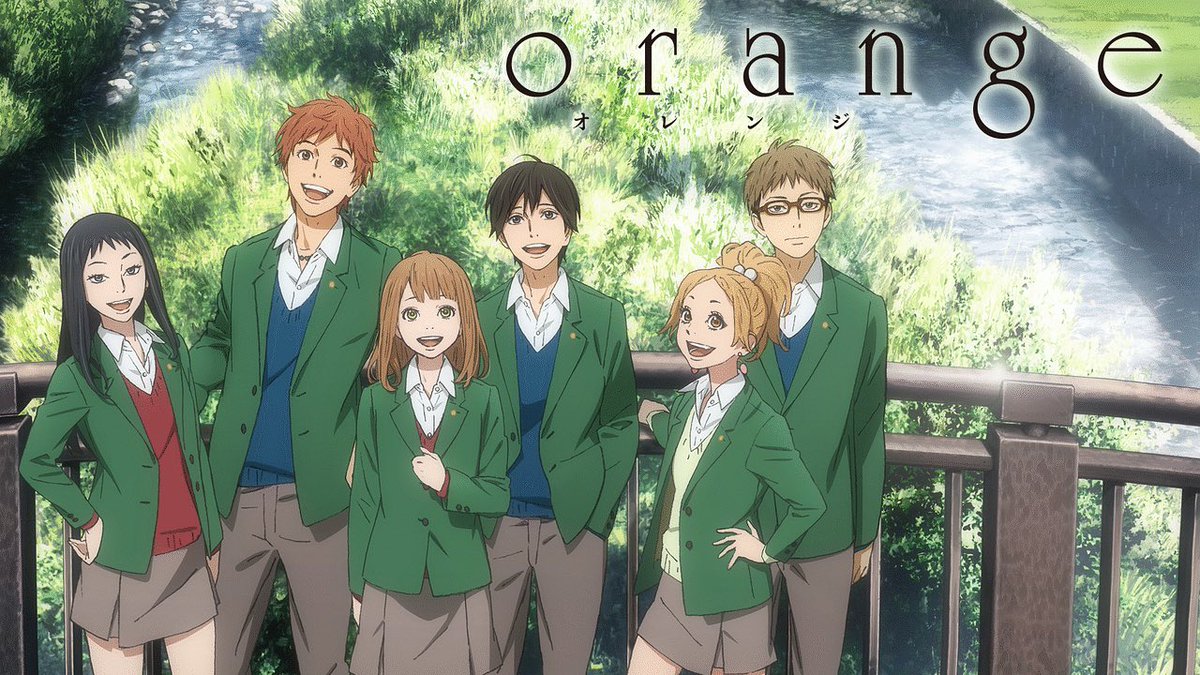
About the Work Based on the smash-hit manga by Ichigo Takano, which has sold over 4.7 million copies, “orange” is a sci-fi youth romance story adapted into a live-action film in 2015 and a TV anime in 2016. Set against the beautiful backdrop of Matsumoto City in Nagano Prefecture, it is a heartbreaking yet powerful narrative where the present and the future intersect.
The series’ greatest appeal lies in its vivid human drama, portraying the heavy theme of “past regrets” through the strong bonds of friendship.
In the spring of her second year of high school, a “letter” arrives for Naho. The sender was herself from 10 years in the future.
At first, she thought it was a prank, but as the events written in it happen one after another in reality, she realizes the “letter” spells out what is about to happen. That she will fall in love with the transfer student, Kakeru. And that Kakeru will pass away in the winter of his 17th year.
Knowing the regrets and wishes of the “26-year-old Naho” who lost Kakeru, what can the “16-year-old Naho” do to change the future?
“If you received a letter from yourself 10 years in the future, what would you do?”
Youth sci-fi, time leap story, school romance drama. There are many words to describe the anime Orange, but I feel that no genre classification is sufficient to describe the essence of this work.
Let me be honest. Pointing out that “the paradox of time travel is concerning” or “the animation is a bit unstable” regarding this work is quite boorish. Are you not missing the overwhelming heat of “emotion” (Jo) that this story emits by being distracted by minor flaws in the setting, missing the forest for the trees?
This work is not sci-fi about changing the past, but a story of miracles born of “hope.” What unfolds in the beautiful scenery of Matsumoto City, Nagano Prefecture, is not just a bittersweet love pattern. There lies the death of a best friend, regret towards parents, and a prayer like whittling down one’s soul to “save a precious person.”
The protagonist Naho, the transfer student Kakeru, and Suwa and the others who support them. Their clumsy, frustrating, yet painfully straight youth thrusts the “preciousness of living” and the “weight of choice” upon us adults. Today, from the perspective of a veteran columnist, I will unravel the true message held by this masterpiece.
One of the factors making the evaluation of this work difficult is the characterization of Kakeru, the key person of the story. Looking at reviews online, harsh opinions such as “Menhera (mentally unstable),” “Mother’s boy,” and “It’s irritating that he’s so gloomy” are scattered about him.
However, I dare to say. “Do you people not understand human pain?”
Imagine the circumstances Kakeru is placed in. Separation from his father (a background of domestic violence is also suggested), growing up in a single-mother household, and his mother’s suicide caused by him breaking a promise with her on the first day of his transfer. What he is carrying is not just adolescent worries. It is a cross too heavy, feeling “it is as good as me killing my mother.”
It is natural to become mentally unstable. Unable to accept the kindness of those around him honestly, becoming desperate, and being attracted to death in moments. That is not “weakness,” but a “realistic” reaction of a 16-year-old boy exposed to a harsh reality. Rather, the fact that he goes to school and tries to laugh with friends under such circumstances is close to a miracle. The voice actor’s performance was also wonderful, brilliantly expressing the danger and fragility Kakeru possesses despite being young. His unreliability is directly connected to the reality of the character Kakeru.
The episode where he dated Ueda-senpai is also often a target of criticism, but if interpreted as a desperate cry of the heart wanting to “distract from loneliness” or “be needed by someone,” it resonates painfully. Instead of dismissing Kakeru as a mere “damned man” (hopeless guy), shouldn’t the correct way to enjoy this work be to watch over how a wounded soul regenerates or collapses?
The “letter from the future,” which is the greatest feature of this work. If you perceive this merely as a “strategy guide” or a “book of prophecy,” you will misjudge the depth of this work. I analyze the role of this letter as psychological approaches: “Empowerment” and “Reflection.”
The 16-year-old Naho Takamiya has a reserved and withdrawn personality. To her, the letter from the 26-year-old Naho gives concrete guidelines for action along with the wish to “save Kakeru.” This is exactly “Empowerment,” drawing out potential abilities through external influence. Because her future self pushes her back, the current Naho can summon courage and take a step forward. Giving him a bento, walking home together, inviting him to the fireworks festival. Each action is trivial, but they are also acts of breaking her own shell.
At the same time, the letter urges Naho to “Reflect.” By knowing the regrets of the future, saying “I wish I had done that back then,” Naho objectively re-examines her current actions (possesses a bird’s-eye view). The sadness behind Kakeru’s smile, the true meaning of his words. Noticing them and thinking deeply. In the middle of the story, a gap begins to arise between the description in the letter and reality. This is proof that Naho’s reflection and actions have begun to change the future. “The future might be changeable.” That conviction nurtures a bud of hope within her.
Walls that Naho alone could not overcome in the past. Feelings that didn’t reach. By mediating them through the “personal letter of love” called the letter, they go beyond the settlement of the past and turn into the power to nurture the future. This structure elevates the work Orange from a mere sci-fi romance drama to the realm of life philosophy.
In talking about this work, the existence of Hiroto Suwa is absolutely indispensable. Honestly speaking, looking across anime history, there are few men as “good” as him.
In the original history (the future of the parallel world), Suwa marries Naho, has a child, and builds a happy family. However, knowing “Kakeru will commit suicide” and “the future where he is united with Naho” through the received letter, he chooses the path to save Kakeru’s life without hesitation. That means accepting the possibility of letting go of his own future happiness (marriage with Naho).
Pushing the back of the girl he likes to be united with another man (his best friend). It’s easy to say, but how much conflict and affection would it take to do such a thing? His kindness is true love and friendship that seeks nothing in return. Because Naho is so earnest and Kakeru is so precarious, Suwa’s “greatness” stands out. Without him, it would have been absolutely impossible to save Kakeru.
Also, the point that this work adopted the setting of “parallel worlds” instead of “rewriting the past for a happy ending” is excellent. Even if the past is changed, the world of the 26-year-old Naho and friends who sent the letters (the world where Kakeru is gone) does not disappear. “It is painful for those left behind when someone passes away without fulfilling their destiny.” That fact does not change, but the fact that Kakeru is alive in another world line becomes a great salvation for those left behind as well. This setting, which affirms the “feelings” in each world line rather than a single-path alteration like Steins;Gate, might become the standard for the coming era.
The depiction of Matsumoto’s great nature is also magnificent. Beautiful mountains, clear air, and a vast starry sky. They gently wrap their youth and sometimes color it poignantly. The final episode, the scene where Kakeru tries to jump into a truck but stops. “I don’t want to die,” “I don’t want to erase the memories with everyone.” He was able to think so because of the bonds with Naho, Suwa, and the others. The future can be changed. Thoughts, actions, bonds—when these combine, miracles happen. What I felt in the last scene was not just emotion, but deep “relief.” I am filled with gratitude to the original author, Ichigo Takano, for preparing an ending where I could truly think, “I’m glad, I’m really glad.”
Orange teaches us the importance of “this moment, right now.”
Words left unsaid, actions not taken, signs not noticed. These accumulate and can become irrevocable regrets. We do not receive letters from the future. That is why we must continue to think, worry, and choose for ourselves.
If there is someone troubled around you. Or if you yourself are holding regrets. Please watch this work. Surely, it will push your back. Saying, “It’s not too late yet.”
If anyone is avoiding it thinking it’s just a bittersweet romance anime, that is a great loss in life. Instead of looking for minor flaws in the setting, please listen to the cries of the characters’ hearts. There, you should surely find the “emotion” and “kindness” you had forgotten.
The movie version is also wonderfully done, so please watch it together after finishing the TV series. May the future of Naho, Kakeru, and Suwa be filled with happiness.
(C)高野苺・双葉社/orange製作委員会