"Ranking of Kings" and the Strongest Weapon Called "Weakness" — A Tale of Cruelty and Love Hidden in a Picture Book World
tarumaki
Enter the Moment
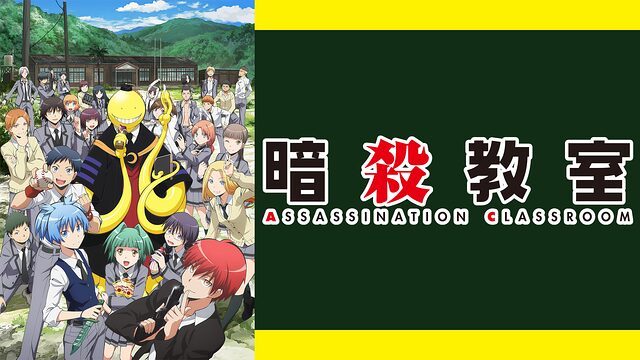
Based on the manga by Yusei Matsui, “Assassination Classroom” is a smash-hit series adapted into an anime in 2015. With the unconventional premise of “killing your teacher,” it is a comical yet touching school drama that depicts the growth of its students.
The appeal of this series lies in what the students learn from Koro-sensei under the peculiar circumstance of “having to assassinate their teacher.” Koro-sensei turns the goal of assassination to his advantage, respecting each student’s individuality and sincerely facing their inferiority complexes and worries. As the ultimate teacher, he instills in them not only assassination techniques but also the strength to live and self-confidence.
As the story unfolds through comical daily life, high-level assassination missions, and the students’ growth—and as the true purpose hidden behind Koro-sensei’s kindness is revealed—the narrative evokes deep emotion.
One day, the moon suddenly exploded, leaving seventy percent of it vaporized. The super-organism claiming to be the culprit—and threatening to blow up the Earth by next March—arrived, for some reason, in a junior high school classroom. Surprisingly, he insists on teaching there.
Possessing abilities beyond human understanding and unkillable even by the military, world leaders are forced to entrust the assassination of this monster to that specific class… Class 3-E of Kunugigaoka Junior High School.
The first semester began with this suddenly appearing, incredibly bizarre homeroom teacher. The students of Class E, labeled as dropouts or the “End Class,” build new bonds with friends and gradually gain confidence through the unprecedented special lessons of the “Assassination Classroom” and various trials.
Now, the first semester has ended, and the final day of summer vacation has arrived. As the second semester begins, will the students of Class 3-E be able to succeed in the mission to assassinate their homeroom teacher, “Koro-sensei,” before the deadline of graduation…!?
“Stand up, bow, lock on!” With such a command, the class scene begins with simultaneous shooting. The title is Assassination Classroom. The homeroom teacher is a super-creature who flies at Mach 20 and destroyed the moon. The mission is “to kill the teacher before graduation.”
If you look only at the text, it’s an absurd setting typical of shonen manga. Are you dismissing it based only on its setting and appearance, thinking, “It’s just a battle show for kids, right?” If so, you are missing out on reading a very important “textbook” in life.
This work is an extremely sharp “theory of education” disguised as entertainment, and a social drama depicting a microcosm of modern society. While following the lineage of school dramas like Battle Royale and Kirishima, Bukatsu Yamerutteyo (The Kirishima Thing), this work questions the “teacher-student relationship” and the “essence of learning” with a completely new approach. Why is this yellow octopus-like monster called the “model of a teacher”? Why can the act of assassination become “youth”? From the perspective of a veteran columnist, I will unravel its charm and essence.
First, the greatest charm of this work lies in the character design of “Koro-sensei.” The slimy movement of tentacles unique to animation, the facial color that changes rapidly, and the light yet deep voice acted by Jun Fukuyama. Combined, the process of a mysterious monster gradually transforming into a beloved mentor is simply magnificent.
He is an enemy of humanity who threatens to destroy the earth, but at the same time, he is a “Super Teacher” who faces each student head-on and develops their individuality. What is particularly impressive is that he teaches students not only “how to win.” “Tests are a chance to correctly teach the meaning of victory and defeat… the meaning of strength and weakness. Breathe in success and setbacks to your heart’s content!” This line spoken in Episode 16 is a famous quote that can be said to be the hidden “axis” of this work. It is not knowledge gained from cramming overnight, but competing within the same rules and knowing the joy of winning and the frustration of losing that makes a person grow. Koro-sensei teaches this truth—which everyone realizes when they become adults but is difficult to convey to children in words—through “assassination” and “tests” with full force.
By trying to kill Koro-sensei, students cultivate their observational skills, acquire planning skills, and learn the importance of cooperation. Ironically, the act of “killing the teacher” paradoxically becomes an education that nurtures the “power to live.” The brilliance of this structure is the reason why this work is evaluated beyond the frame of a mere gag manga.
The setting of this work, “Kunugigaoka Junior High School Class 3-E,” is commonly known as “End Class E.” It is the very bottom of the school caste, where students with poor grades or bad behavior are gathered and isolated in the old school building away from the main campus. This setting can be seen in other light novels and anime works like Baka and Test, but in this work, the “discrimination structure” is depicted more blatantly and coldly.
The school uses Class E as a scapegoat to incite a sense of superiority in other students and maintain a competitive spirit. This can be read as a poignant satire of the deviation-score supremacy in modern society and the disparate society. It was Koro-sensei who came to such an “abandoned classroom.” He peels off the label of “dropouts” from the students and gives them a new identity as “assassins.” Students who were made to believe “we have no value” regain their self-esteem by holding a sense of mission that “only we can save the world (kill the teacher).”
This hides a kind of punk spirit that wants to destroy the authority of teacher = school system. In Battle Royale, the teacher ordered students to kill each other, but in this work, students try to kill the teacher (monster). This reversal is a “counterattack” of the oppressed students and creates exhilarating catharsis.
“Assassination” and “Youth.” At first glance, these words seem like oil and water, but in this work, they merge beautifully.
The murderous intent students direct at the teacher does not come from hatred. Of course, initially, it was for the reward money, but as the story progresses, it transforms into a “means of communication with the teacher.” Studying, training their bodies, and planning strategies with classmates to kill the teacher. Even if they strike with full force, they are lightly handled at Mach 20 and returned after being “groomed” (Teire). Through that repetition, students build a relationship of trust with Koro-sensei. Students declaring “I will kill you” with a smile, and the teacher accepting the challenge saying, “Try to kill me.” This strange and twisted relationship is, however, undoubtedly tied by a “bond between master and disciple” denser than any other classroom.
Also, the careful composition where the spotlight hits all 26 students within the span of two cours is wonderful. Even students who looked like mobs at first have their own areas of expertise and worries, and they grow through their involvement with Koro-sensei. In the final stages, the development where Koro-sensei’s shadow fades and the students start moving proactively looks like the final goal of parenting and education, “surpassing the parent (teacher) someday,” making one’s heart hot.
The story continues to the second season, and Koro-sensei’s past and the mysteries of the world are revealed, but the first season alone is sufficiently completed as a school drama. There is laughter, tears, and learning. Behind the disturbing title of “Assassination,” a straightforward and dazzling youth is packed.
Assassination Classroom attracts readers with eccentric settings, but in reality, it depicts an extremely classic and universal “coming-of-age story.”
The teacher does not teach something unilaterally, but guides students to think and act on their own. Koro-sensei’s educational policy thrusts upon us the “essence of learning” that we in modern times are forgetting.
If you feel stuck in your daily life or work, please take a peek into the classroom of Class E. There awaits a yellow octopus flying around at Mach 20 and students chasing him with knives and smiles—an exceptionally cheerful and slightly sad “lesson.”
Zero prior knowledge is fine. By the time you finish watching, you will surely come to love Koro-sensei, and you should find the courage to face yourself just a little bit more.